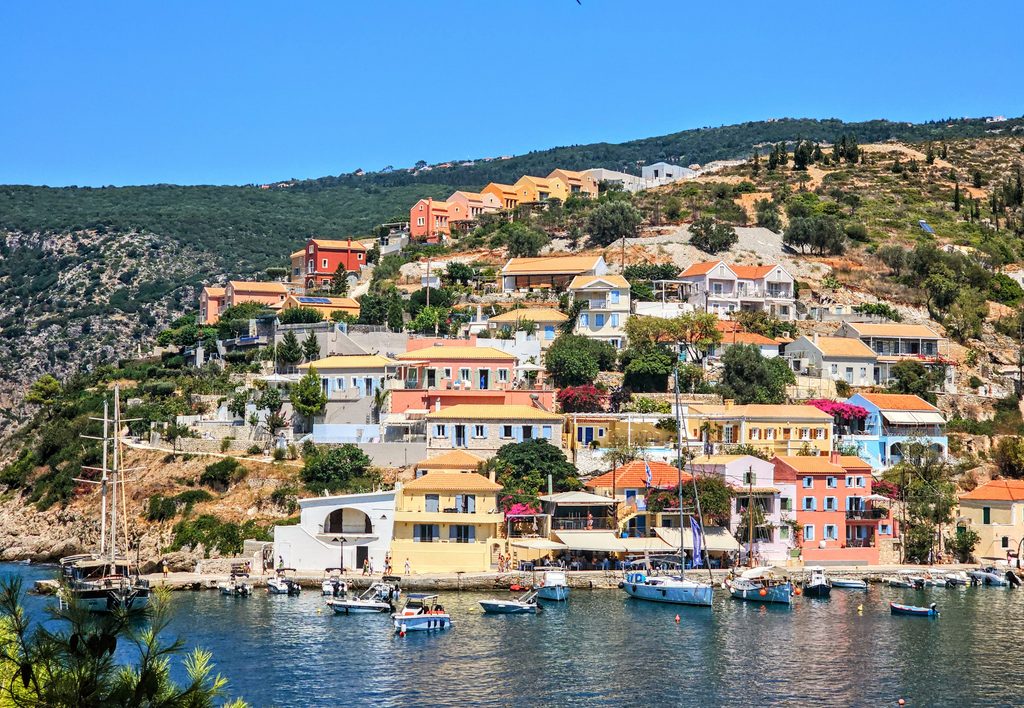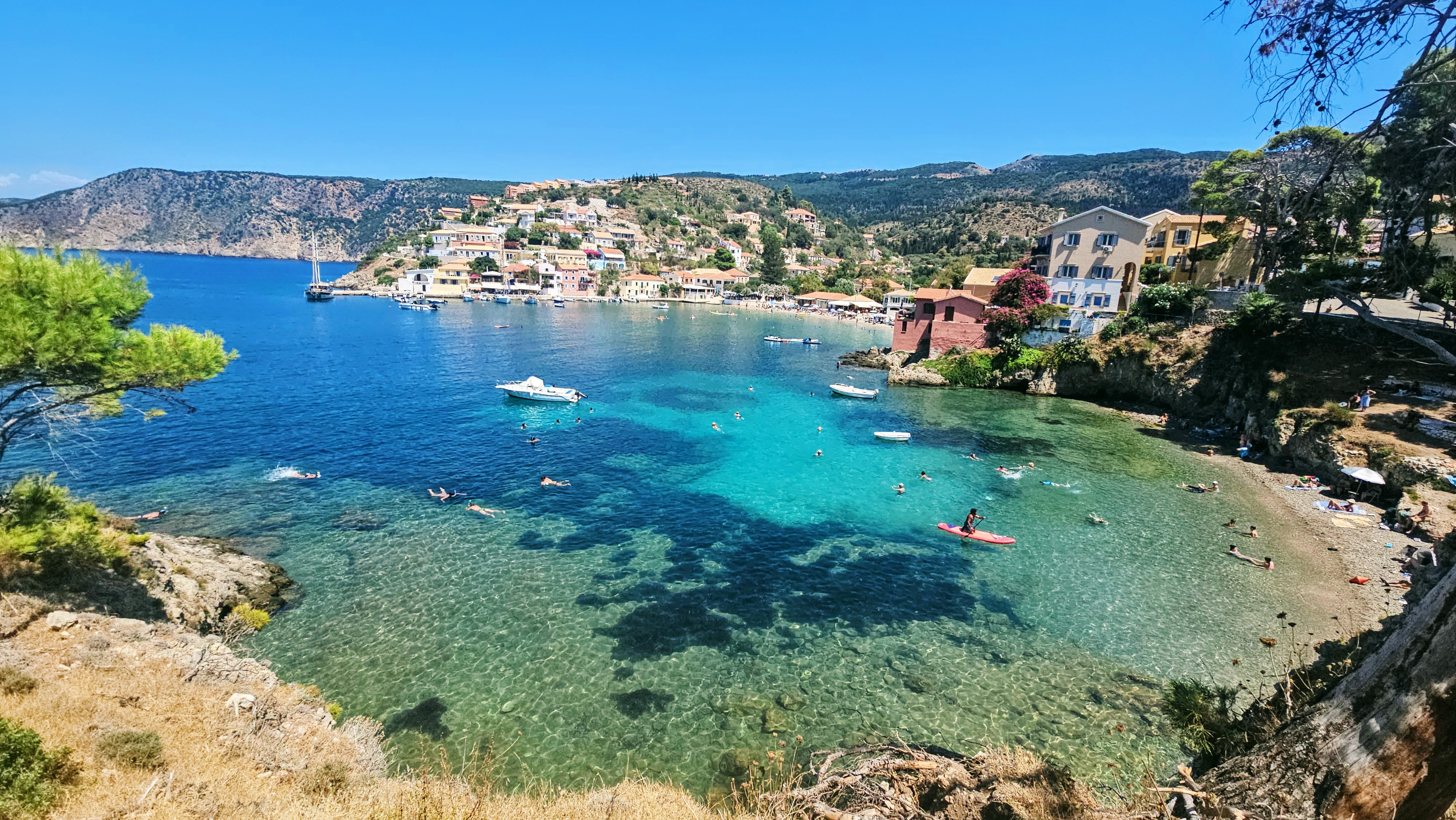
With so many Greek islands to choose from, I can imagine deciding where to go isn’t easy. Kefalonia, though makes a pretty convincing case for itself. It is the largest of the Ionian Islands, with rugged mountains, dramatic cliffs, ridiculously blue water and villages that tumble towards little harbours. It is the largest of the Ionian Islands, with rugged mountains, dramatic cliffs, ridiculously blue water and villages that tumble towards little harbours. It has famous beaches, certainly, but there are also tiny coves, caves, winding mountain roads and stretches of coastline where you can still find yourself swimming with hardly anyone around.
This is an island worth exploring rather than simply arriving at a resort and staying put.
I travelled from Agia Efimia to Assos and Fiskardo, drove the spectacular road down to Myrtos, found a tiny beach mostly visited by locals, explored caves, sailed across the Ionian and ate my way through more feta, olives and tiropita than I care to count.
So if you’re wondering why visit Kefalonia, where to stay, which beaches are worth finding and what there is to do beyond them, this is what I discovered.
And ultimately, the question I kept coming back to:
Is Kefalonia worth the journey?
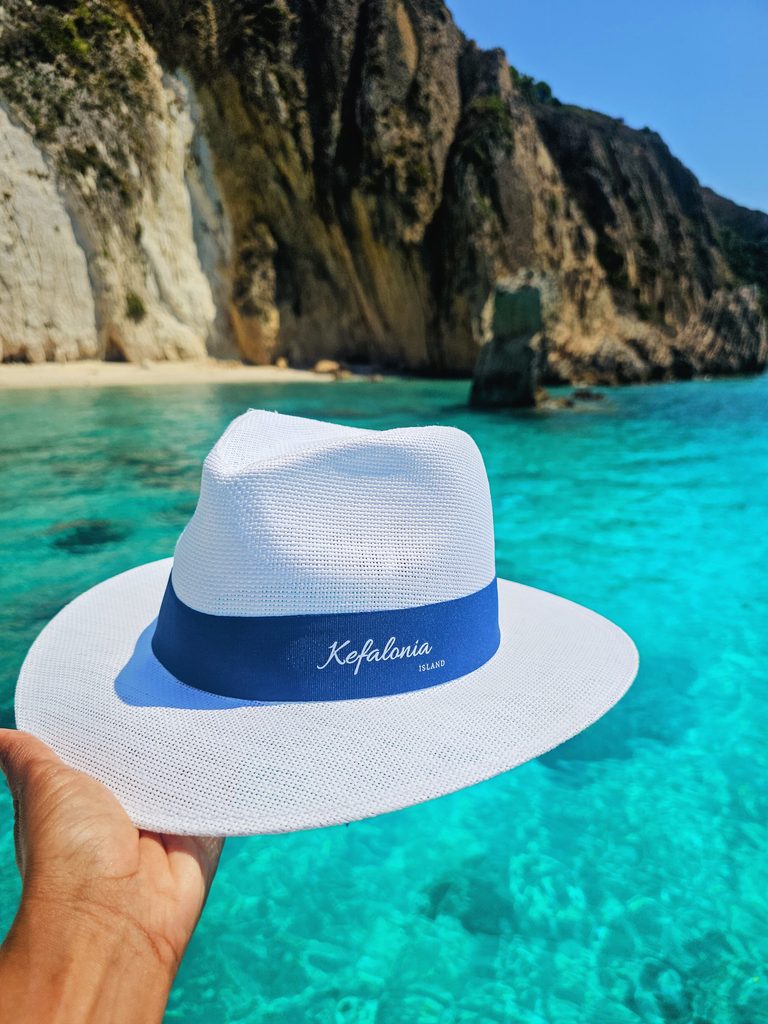
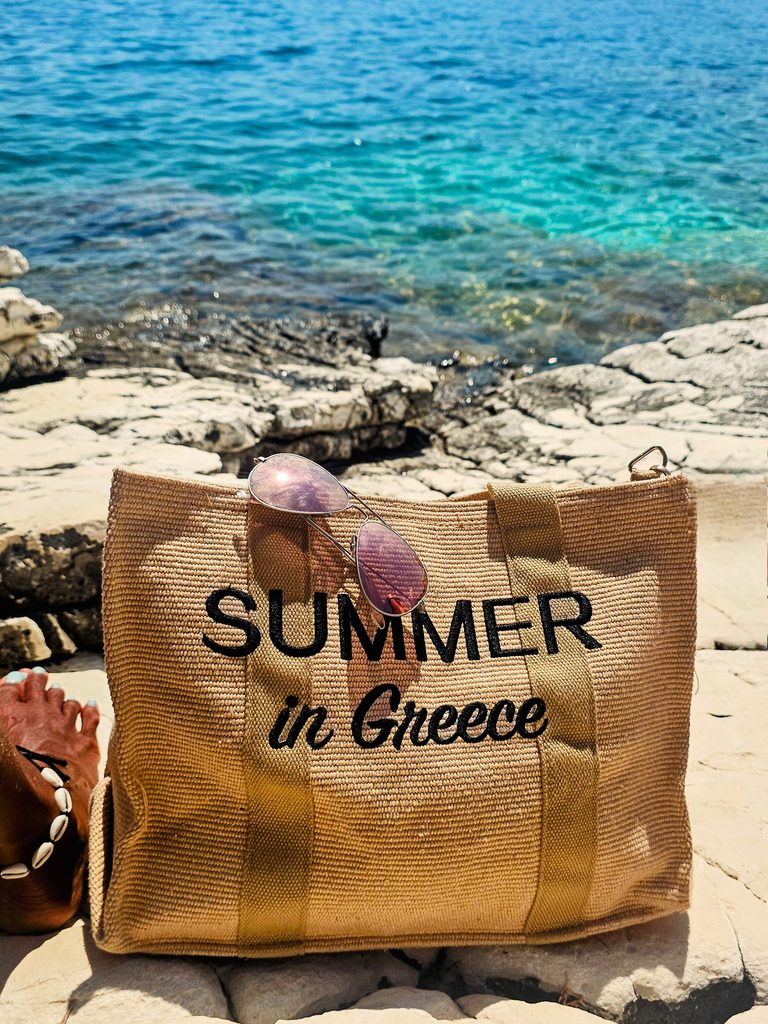
7 Reasons to Visit Kefalonia
1. The landscape – Rugged cliffs, winding coastal roads, dry hills and a Mediterranean landscape completely different from the tropics I know so well.
2. That dreamy blue sea – This was the colour I couldn’t stop looking at. Deep blue from the cliffs, brilliant turquoise closer to shore and sometimes so clear I could see straight through it. From a beach it was beautiful. Sailing across the Ionian aboard Balboa, watching those blues change beneath me, was something else.
3. The beaches – From famous Myrtos to tiny coves around Agia Efimia and the local favourite I found at Lagadakia, Kefalonia gives you everything from dramatic beaches to little places where you can simply throw down a towel and swim.
4. The villages – Assos is gorgeous from above, Fiskardo is all colour, bougainvillea and waterfront life, while Agia Efimia became the village I grew unexpectedly attached to.
5. The food – Feta, olives, tiropita, baklava, seafood, figs straight from the tree, gelato and Greek lunches that somehow turn into an afternoon.
6. The caves – Drogarati and lesser-known Zervati reveal a completely different Kefalonia underground, including some astonishingly clear water beneath the rock.
7. The people – Because when I think about Kefalonia now, some of the moments I remember most have nothing to do with what I went there to see.
A Brief Stop in Zakynthos
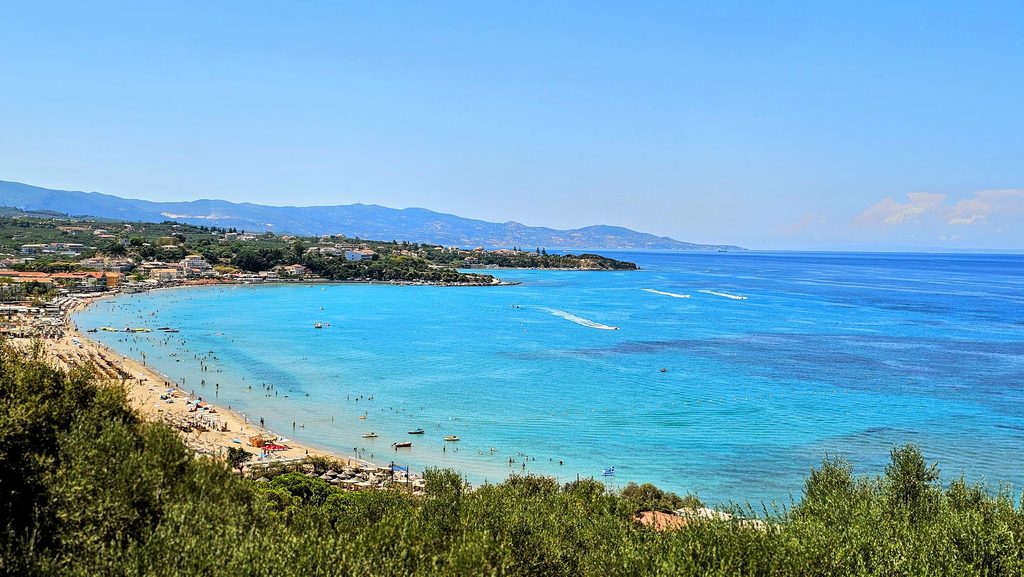
A Brief Stop in Zakynthos
Zakynthos was never really part of the plan. For me, it was a stop on the way to Kefalonia. I hadn’t arrived with a list of things to see or any great ambition to explore the whole island.
There are easier ways to get to Kefalonia from Athens. I deliberately didn’t take one of them. By the time I returned to Athens, I had already flown Kuala Lumpur to Istanbul, Istanbul to Athens, Athens to Tunisia and then back to Athens. I had seen enough airports, security queues and boarding gates.
I didn’t want another flight. So I went by land and sea instead, travelling from Athens towards the Ionian coast, crossing to Zakynthos and eventually taking another boat to Kefalonia. It took longer, obviously.
Then my hotel owner came to pick me up – in an old, battered, roofless Jeep. YEEHAA!
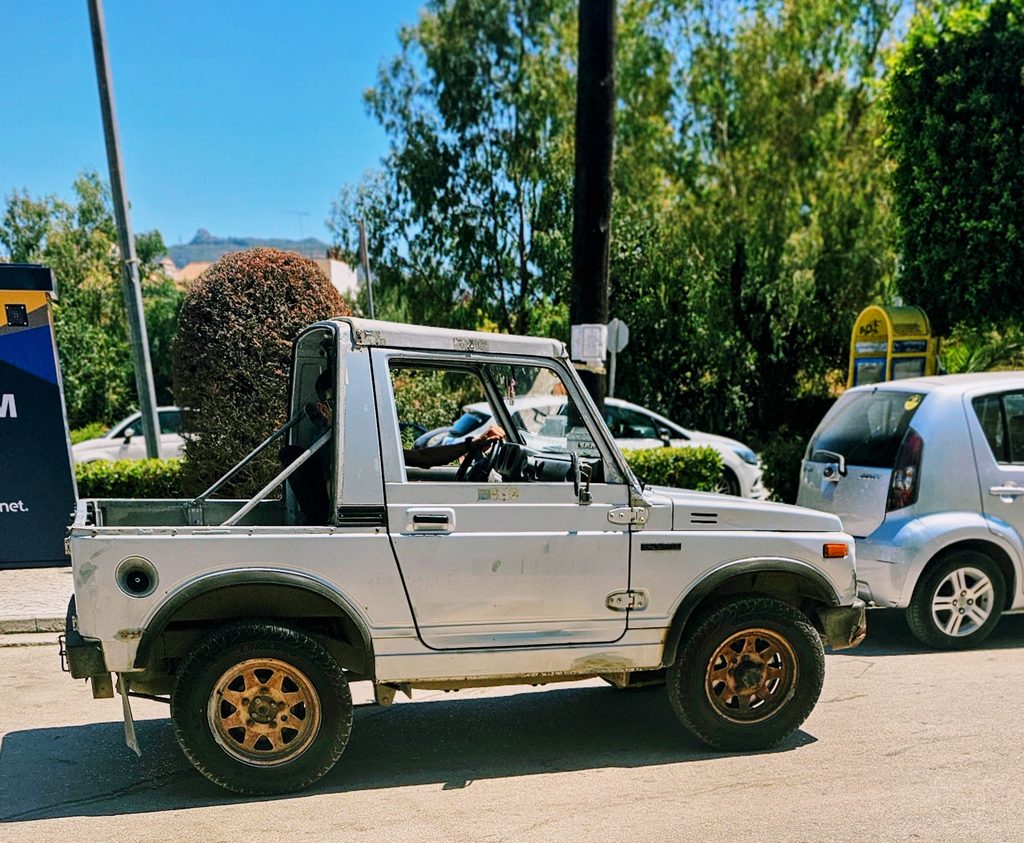
I couldn’t have been happier. This to me is getting picked up in style! For the next twenty minutes, we bumped our way across the island with the wind in my hair and Greece rushing past on either side. After all those airports and flights, this was exactly what I needed.
What a welcome to Zakynthos.
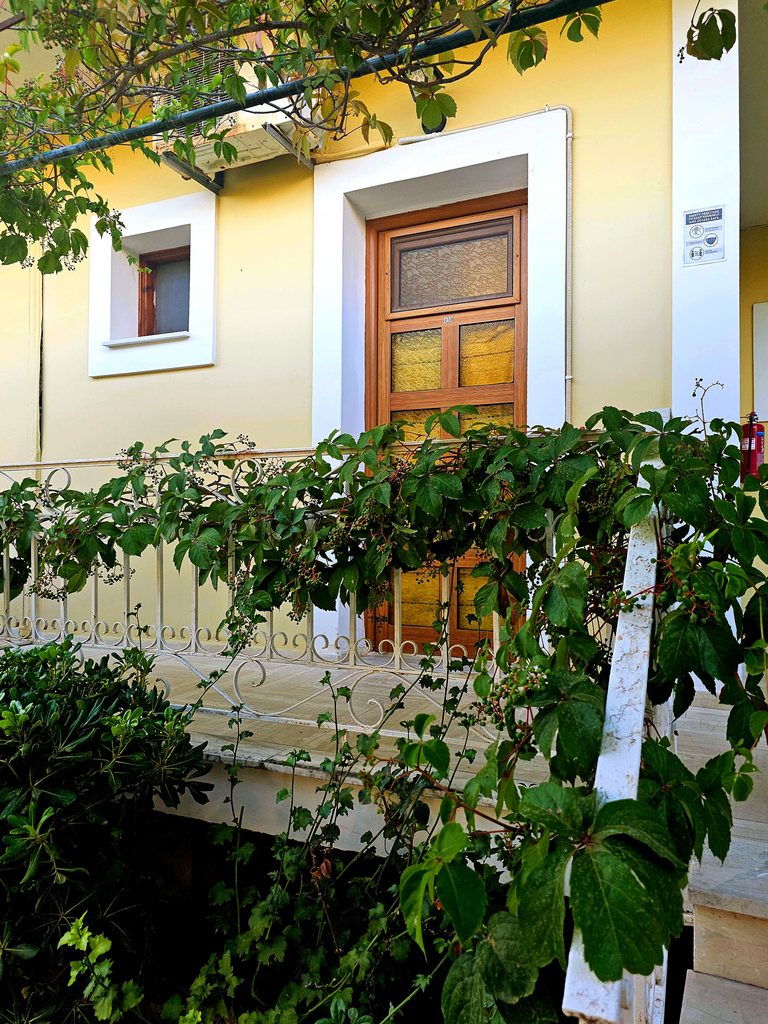
I’d been told the island was touristy, and parts of the town certainly were. There were plenty of souvenir shops and the usual things that spring up wherever holidaymakers gather. However, I’d managed to find a lovely little boutique hotel up on a hill, looking across the bay.
The view was spectacular. At night, I slept with the doors open.
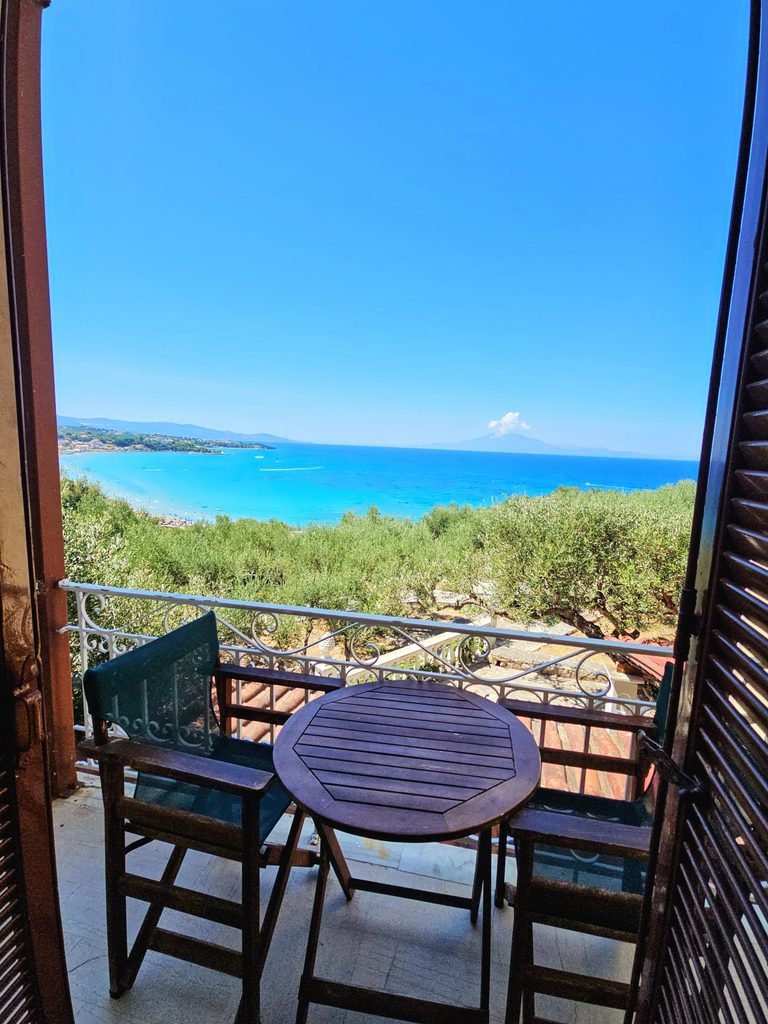
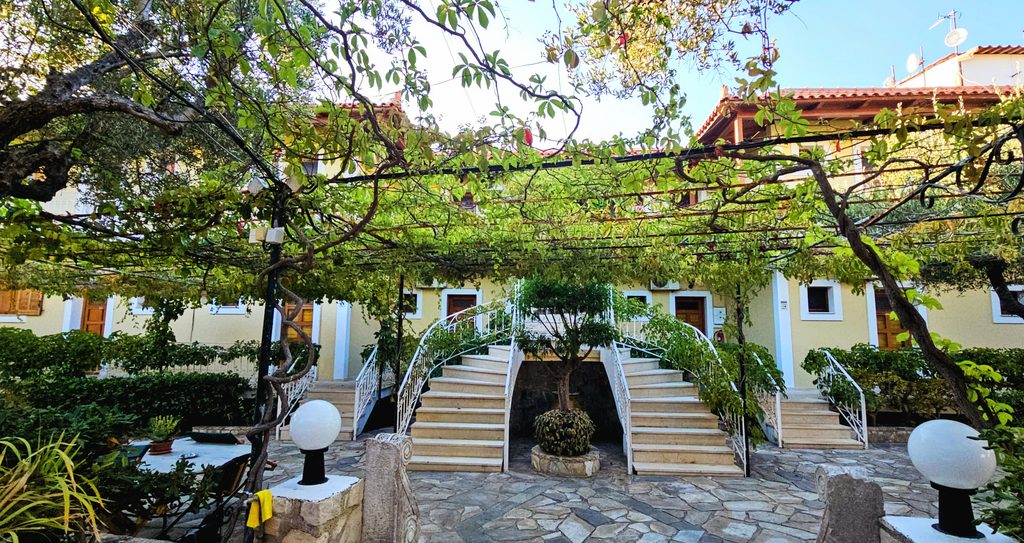
And for someone who hadn’t intended to do very much in Zakynthos, I became remarkably committed to Greek salad.
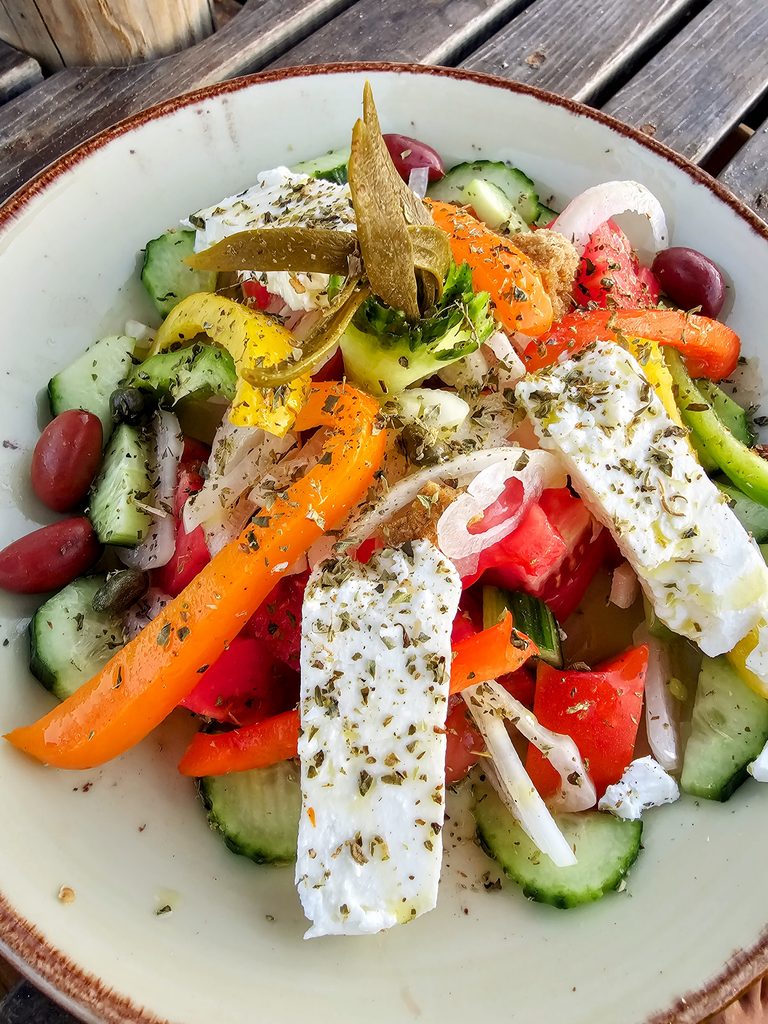
Breakfast. Greek salad. Lunch. Greek salad. Dinner? Quite possibly Greek salad again 😂 I regret nothing.
The feta and olives in Greece are in a different league. I’ve eaten Greek salad countless times outside Greece, but sitting there with thick slabs of feta, tomatoes and those olives made me wonder what I’d been eating all those years.
Yet my favourite memory of Zakynthos had nothing to do with the view or the food. One evening, I went out for dinner alone. The young waitress and I started chatting. Nothing profound. Just one of those conversations that happens when you’re travelling solo and have the time to talk to the person standing in front of you.
We kept talking whenever she came back to my table. Towards the end of dinner, she appeared with dessert – on the house. She told me she’d really enjoyed talking to me. Then, before I left, she asked if she could give me a hug. Of course she could.
I hadn’t even properly explored Zakynthos. I couldn’t tell you I’d discovered its secret beaches or understood the island after one brief stay, but I remember that hug. Funny, isn’t it?
We travel thousands of kilometres for places. Then remember a hug.
Agia Efimia
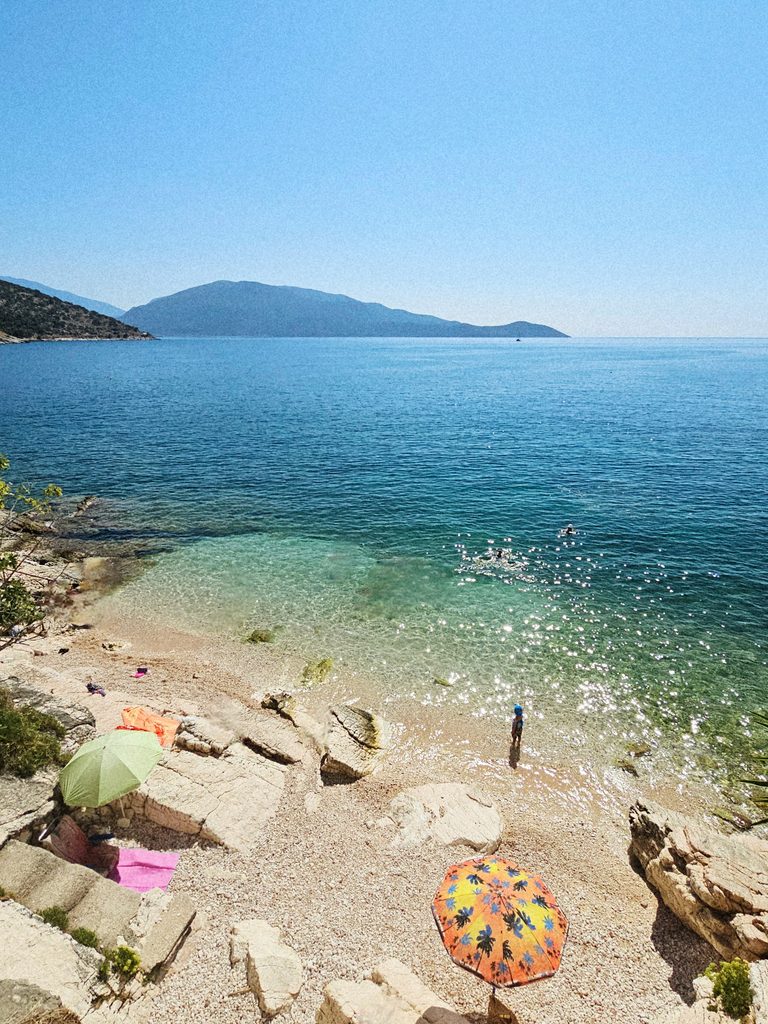
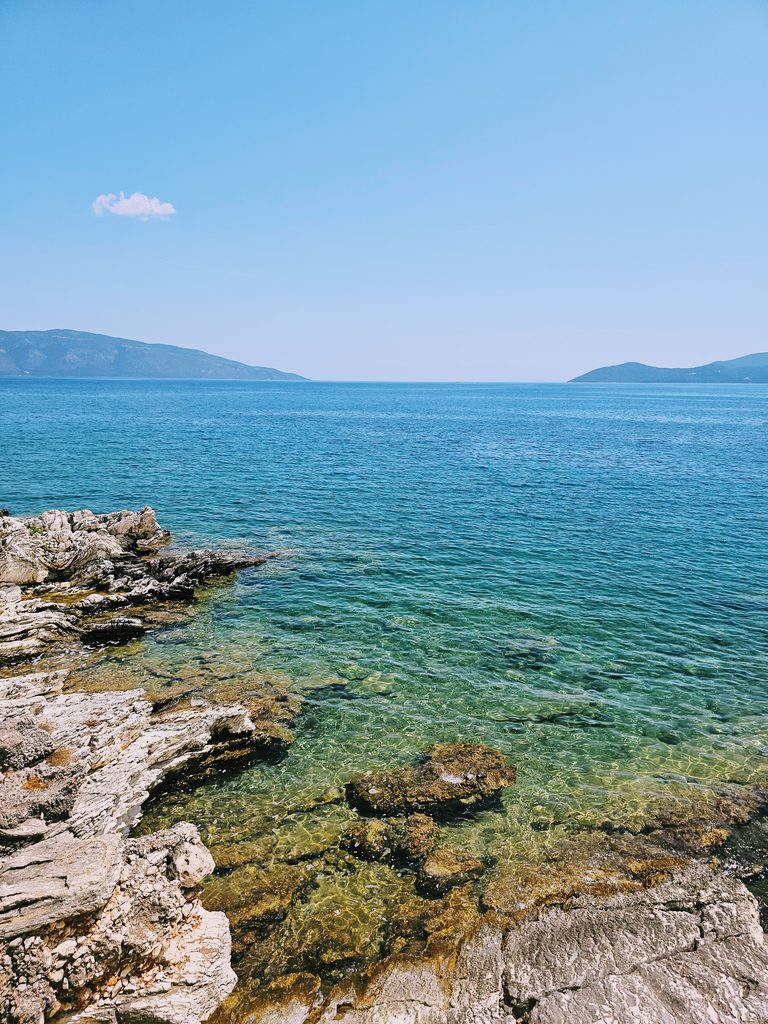
Agia Efimia, Kefalonia: Why This Harbour Village Makes a Great Base
I based myself in Agia Efimia, a small harbour village on Kefalonia’s east coast, and it turned out to be one of my favourite decisions of the trip.
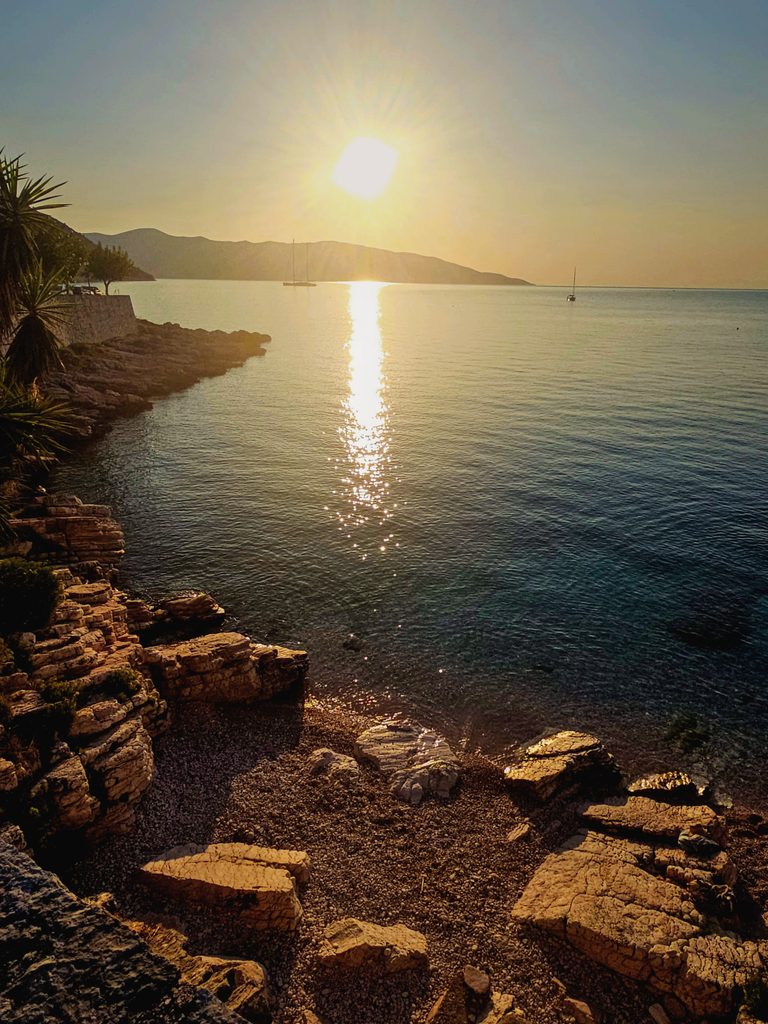
The village curves around a beautiful bay, with sailing boats and yachts moored along the waterfront and the mountains rising behind it. And the sunrises were spectacular.
Some mornings I didn’t need to do anything more than walk along the waterfront and watch the village wake up. Boats moving in and out of the harbour. People opening cafés. The first swimmers getting into the water.
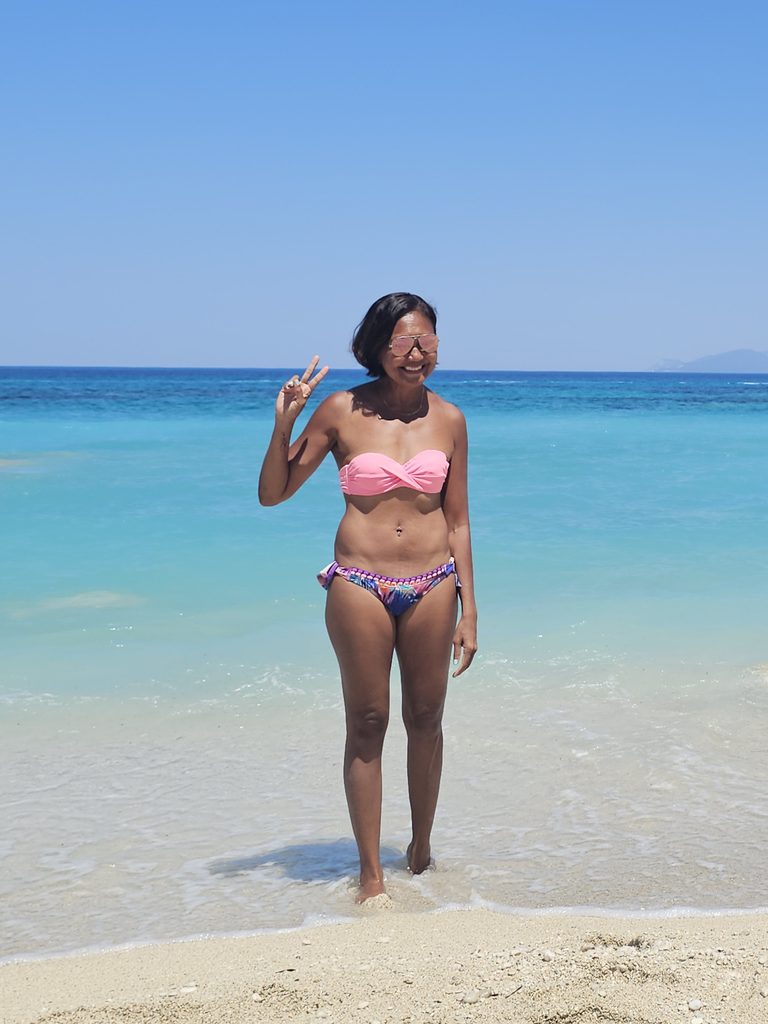
That was another thing I loved about Agia Efimia. I didn’t have to make an excursion out of going for a swim. I’d simply walk along the road, find one of the little bays along the coast and get in. The water was wonderfully clear and, to my Malaysian body, wonderfully cold. I’d swim for a few minutes, get out, warm up under the Greek sun and eventually become hot enough to want to jump straight back in again.
Location-wise, Agia Efimia also worked brilliantly as a base for exploring Kefalonia. Myrtos Beach is nearby, Assos and Fiskardo are further north, while Sami and Melissani Cave lie to the south. For travellers wondering where to stay in Kefalonia, especially somewhere smaller and more relaxed than the island’s main towns, Agia Efimia is worth considering.
There was another reason I kept falling a little more in love with the place. I started going to the same coffee shop almost every morning. Partly for the people. Partly for the mango gelato. And very definitely for the tiropita, the Greek cheese pie that became another minor obsession.
English wasn’t spoken much among the people I got to know there, and my Greek wasn’t going to get us very far either.
I had three important words. Kalimera – good morning. Efcharistó – Thank you. Kalispera– Good evening/ good night. Frankly, that got me surprisingly far.
Remembering people’s names wasn’t particularly difficult either. Almost every Greek man I seemed to meet was called Gerasimos, while the women appeared to be either Maria or Katerina.
I’m exaggerating. Slightly 😍
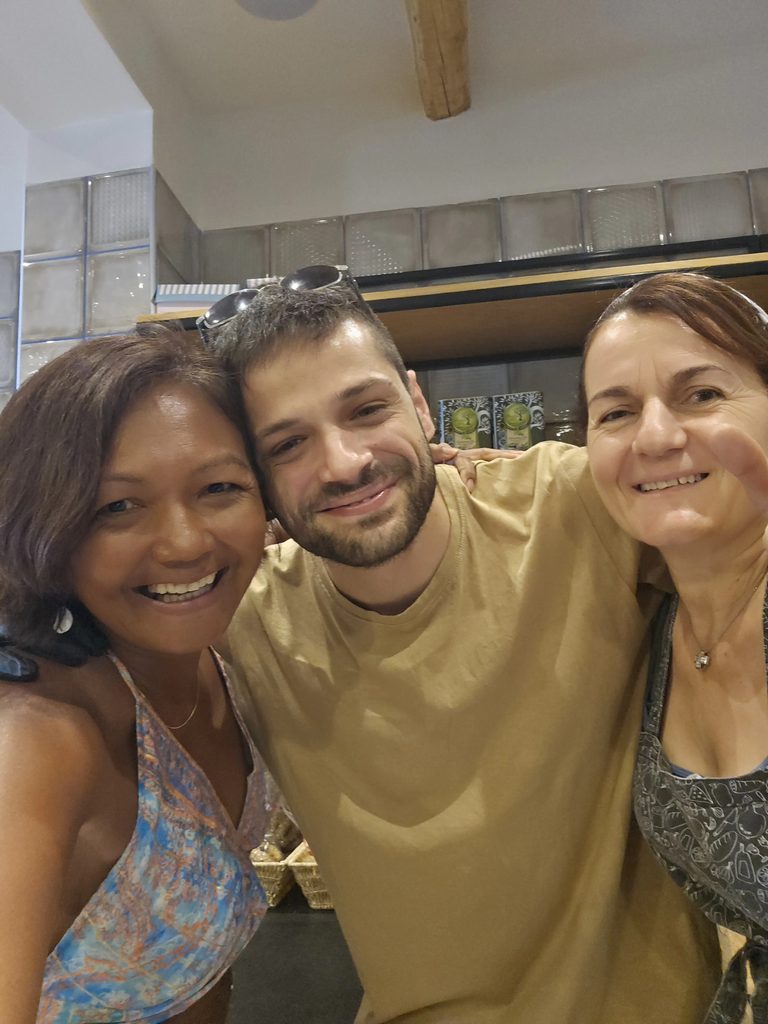
My kalimera became part of the morning. I’d say it walking along the waterfront or arriving at the coffee shop and almost invariably get a smile in return. At the café, I became friendly with one of the sons and his mum. His English wasn’t fluent, but he wanted to learn and was always willing to try. So we talked.
Sometimes slowly. Sometimes with our hands. Sometimes one of us would say something, the other would stare blankly, and we’d start again. It didn’t matter.
I learnt about his ambitions and how much he wanted to grow and build something for himself. He practised his English. I ate my tiropita and gelato and kept turning up. Soon I knew his mum and the staff too. Some mornings I’d sit there far longer than I’d intended, talking to everyone despite the fact that none of us had enough of the other’s language for a particularly sophisticated conversation.
He started calling me his Malaysian sister.
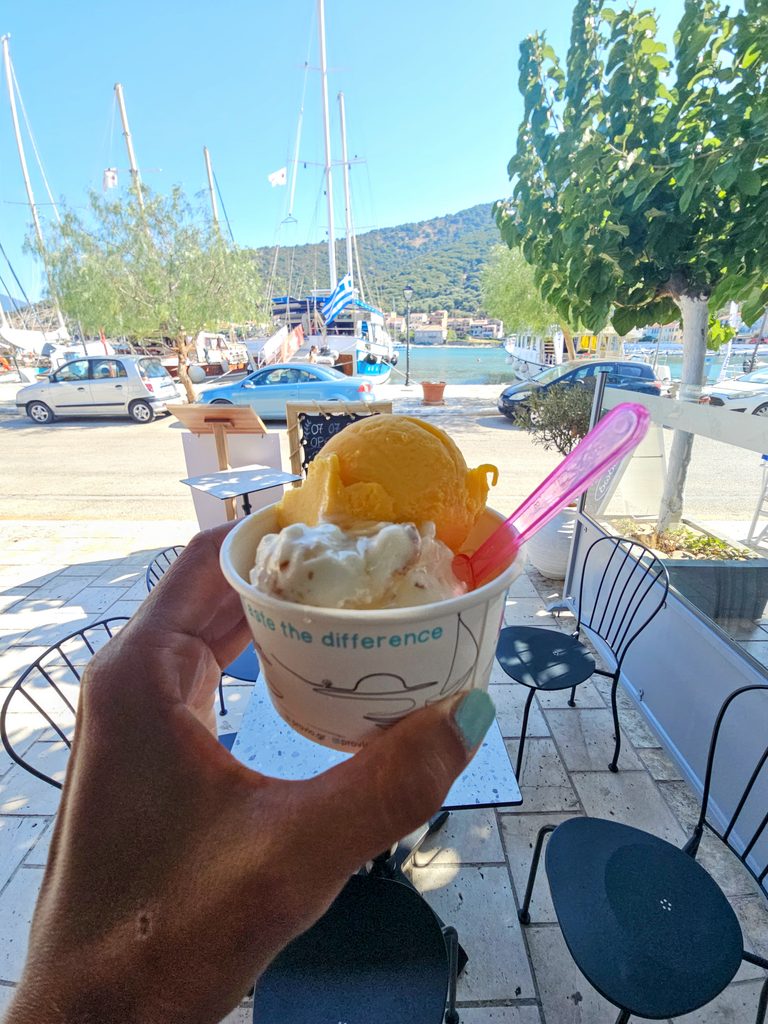
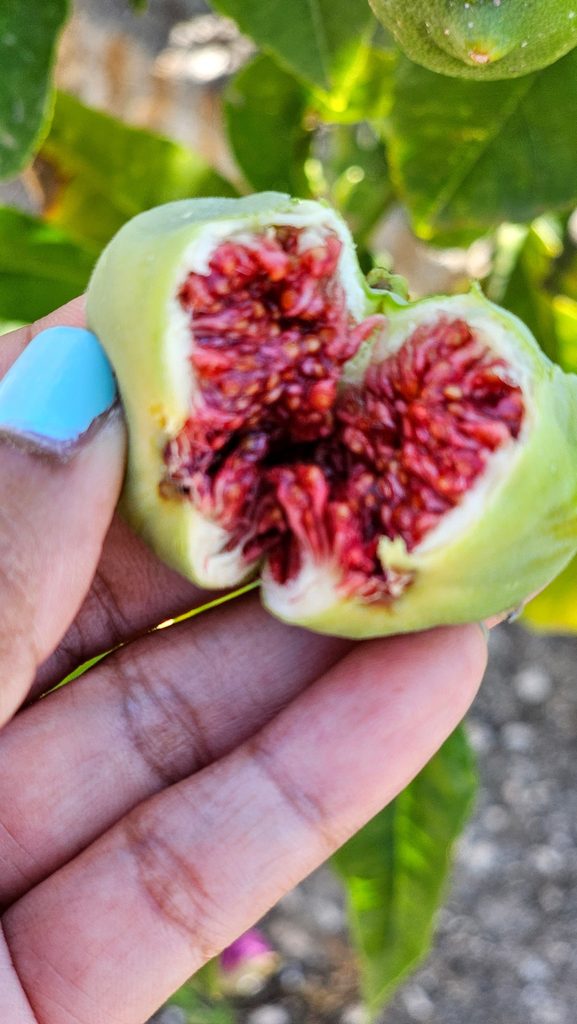
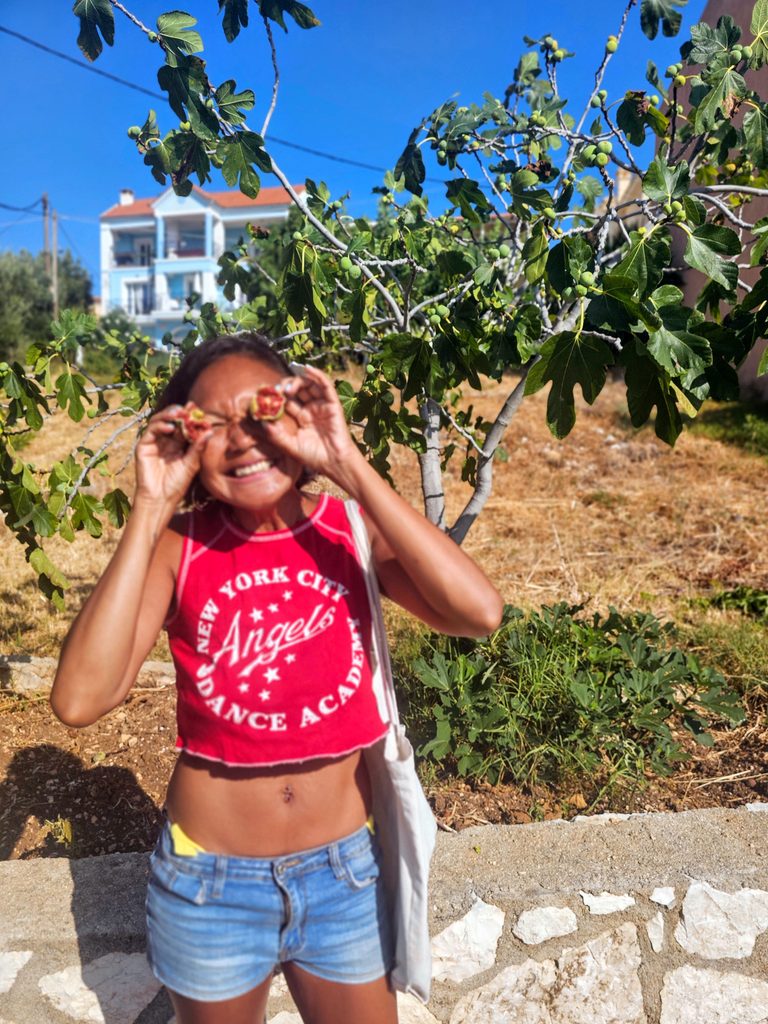
And then there were the fig trees. They seemed to be everywhere. I’d never tasted figs like those in my life. Ripe, soft, ridiculously sweet and warmed by the sun. Every day on my way to the beach, I’d spot a branch hanging low enough, pull it towards me and pick a few figs for the walk.
Some branches required a little more effort. I climbed. Apparently putting a Malaysian woman within sight of ripe Greek figs is enough to make her forget that shops exist.
There was something wonderfully simple about those walks. Swimsuit on, towel over my shoulder, a couple of figs in my hand, heading down the road towards another little bay for a swim. Just another day in Agia Efimia.
Staying in Agia Efimia, Kefalonia: What to Know
- Best for: A relaxed waterfront base with easy access to northern and eastern Kefalonia.
- Where to stay: Agia Efimia has a good choice of small boutique-style hotels, guesthouses, studios and apartments, including waterfront and sea-view options. I loved being close enough to simply walk out in the morning and head towards the harbour or one of the nearby swimming spots.
- Don’t miss: Sunrise over the bay, an early morning walk along the harbour and a swim in one of the small coves along the coast.
- Nearby: Myrtos Beach, Assos, Fiskardo, Sami and Melissani Cave.
- Dining: Plenty of cafés, tavernas, restaurants and bars line the harbour, making it easy to walk out for dinner or drinks.
- Eat: Tiropita (Greek cheese pie), local figs when in season, gelato and plenty of feta and olives.
- Drink: Try Kefalonia’s Robola wine. And approach the stronger Greek spirits with appropriate respect!
- Getting around: It’s easy to walk around, however a car gives you far more freedom for beaches and villages around Kefalonia.
- Atmosphere: Small, relaxed and waterfront focused, with sailing boats and yachts coming and going from the harbour.
- Good to know: The little bays around Agia Efimia are great for a quick swim. The Ionian water is refreshingly cold, but on a hot summer day, that’s half the pleasure.
- Learn at three words: Kalimera (good morning) and efcharistó (thank you) Kalispera (good evening) My Greek didn’t progress much beyond that, but the smiles were worth it.
- Would I stay again? Absolutely.
- Why it makes a great base: Agia Efimia sits on Kefalonia’s east coast, putting some of the island’s best-known places within easy reach. Myrtos Beach is nearby, Assos and Fiskardo are to the north, while Sami and Melissani Cave are to the south. You can spend the day exploring and still come home to a small harbour village rather than a busy resort.
- And before you leave: Swing by Kouklos for tiropita, or try any of their pastries and desserts – they’re delicious. If Grigoris and his mum are there, say kalimera from his Malaysian sister!
Asos
North of Myrtos is Assos, one of the prettiest villages in Kefalonia.
The approach is part of the experience. From above, pastel-coloured houses gather around a sheltered bay, backed by green hills and the remains of a Venetian fortress overlooking the peninsula.
And yes, it is every bit as photogenic as it looks. Assos is tiny enough to wander rather than plan. There are waterfront tavernas, a small beach and streets that invite you to keep walking simply to see where they lead.
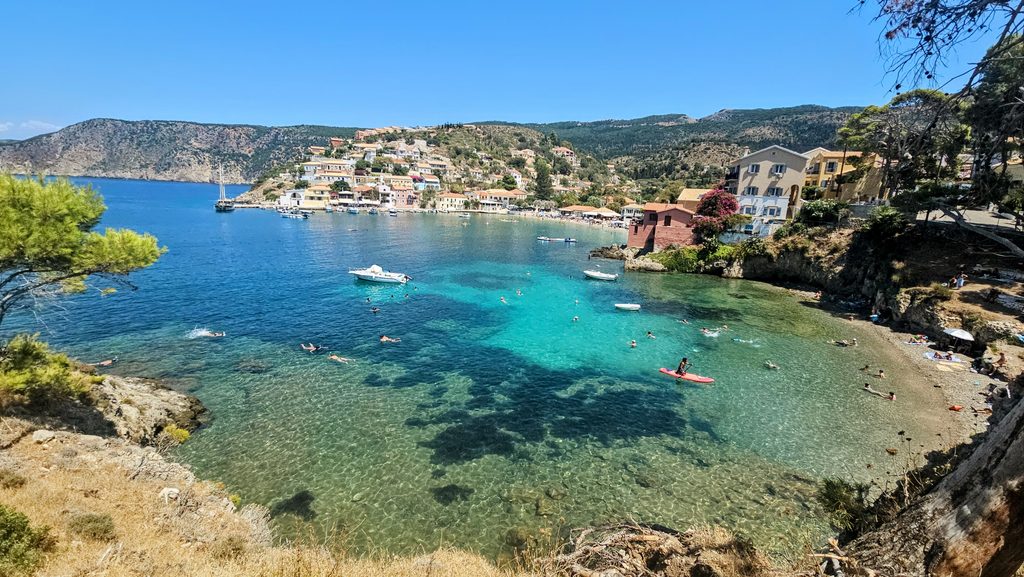
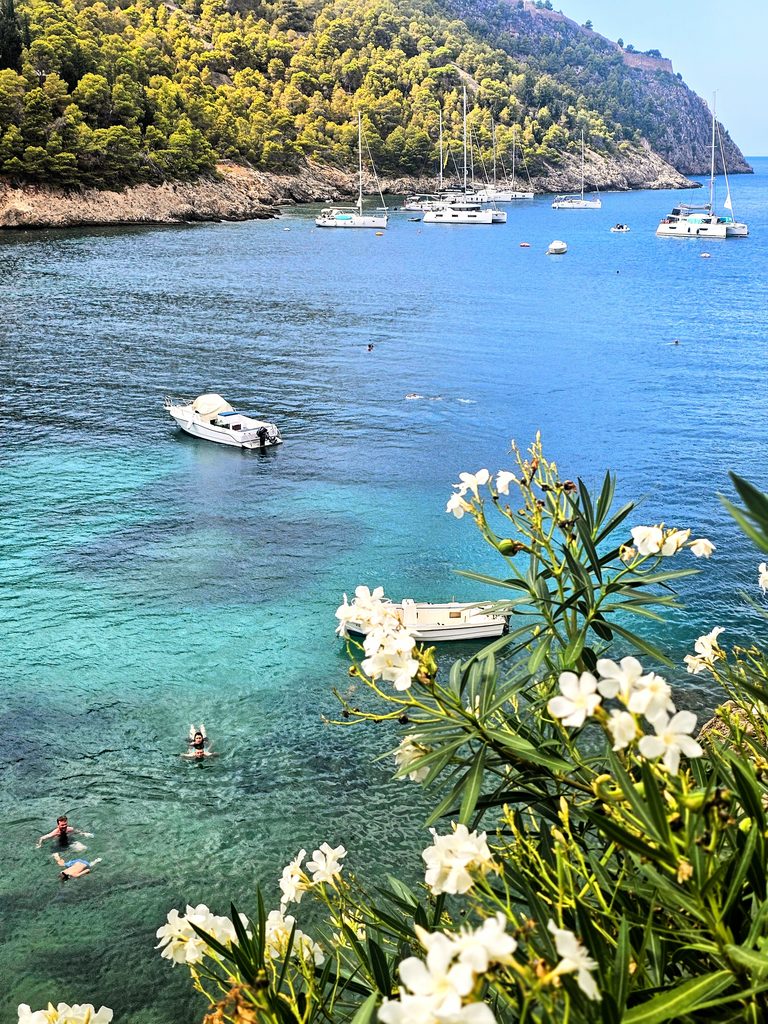
This was the Mediterranean Greece I had pictured before coming: little boats on impossibly blue water, colourful houses, café tables facing the sea and narrow streets that were far more enjoyable to wander without any particular destination in mind.
Asos is small. You don’t need a packed itinerary here. Walk along the waterfront, stop for coffee or lunch, swim in the bay, wander through the village and simply enjoy being somewhere this beautiful. That was my day at Assos.
ASSOS Travel Guide
- Best for: A beautiful, intimate village stay with spectacular views, a small waterfront and easy access to Myrtos Beach and northern Kefalonia.
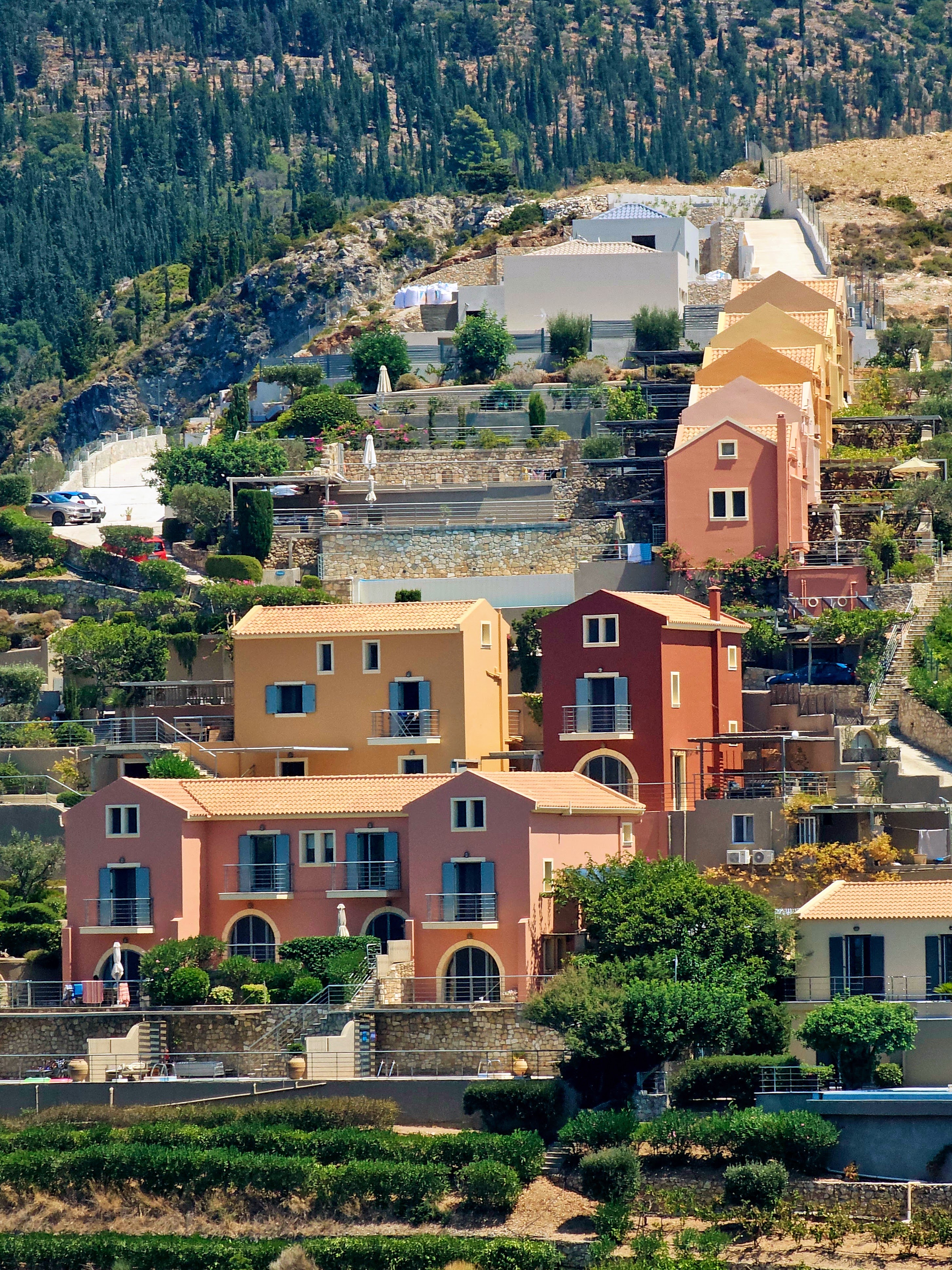
- Where to stay: Assos has small hotels, guesthouses, villas and apartments, many built into the hillside with beautiful sea and village views. Check the location carefully if you want to be close to the waterfront without a steep walk back.
- Don’t miss: The view of Assos from above, a wander along the waterfront, a swim in the bay and the walk towards the Venetian castle.
- Nearby: Myrtos Beach is the obvious one to combine with Assos, while Fiskardo lies further north.
- Dining: Cafés and tavernas sit around the waterfront, making it easy to stop for lunch, coffee or a drink overlooking the bay.
- Swimming: There’s a small beach right in the village, so bring your swimsuit even if you’re only visiting for a few hours.
- Getting around: Assos itself is small and best explored on foot, but it is hilly. Expect slopes, steps and some fairly steep walks. A car is useful for reaching Assos and continuing around northern Kefalonia.
- Atmosphere: Small, colourful and very Mediterranean, with pastel houses, little boats, green hills and intensely blue water.
- Good to know: Assos looks tiny on a map, but the hills can make short distances feel considerably longer. Comfortable shoes are worth it, especially if you’re walking up towards the castle or staying higher on the hillside.
- Best view: Stop at the viewpoints on the road above Assos before heading down into the village. This is where you’ll get that classic view over the bay, village and peninsula.
- How long to spend: A few hours is enough for a wander, swim and lunch. Stay overnight if you want to experience the village at a slower pace.
Fiskardo: Kefalonia’s Glamorous North
Fiskardo is pretty. Very pretty.
Colourful buildings line the waterfront in soft yellows, pinks and creams, with painted shutters and tall windows looking down over the harbour. Bougainvillea seems to have found every available balcony, wall and doorway, spilling bright pink and purple over the old façades.
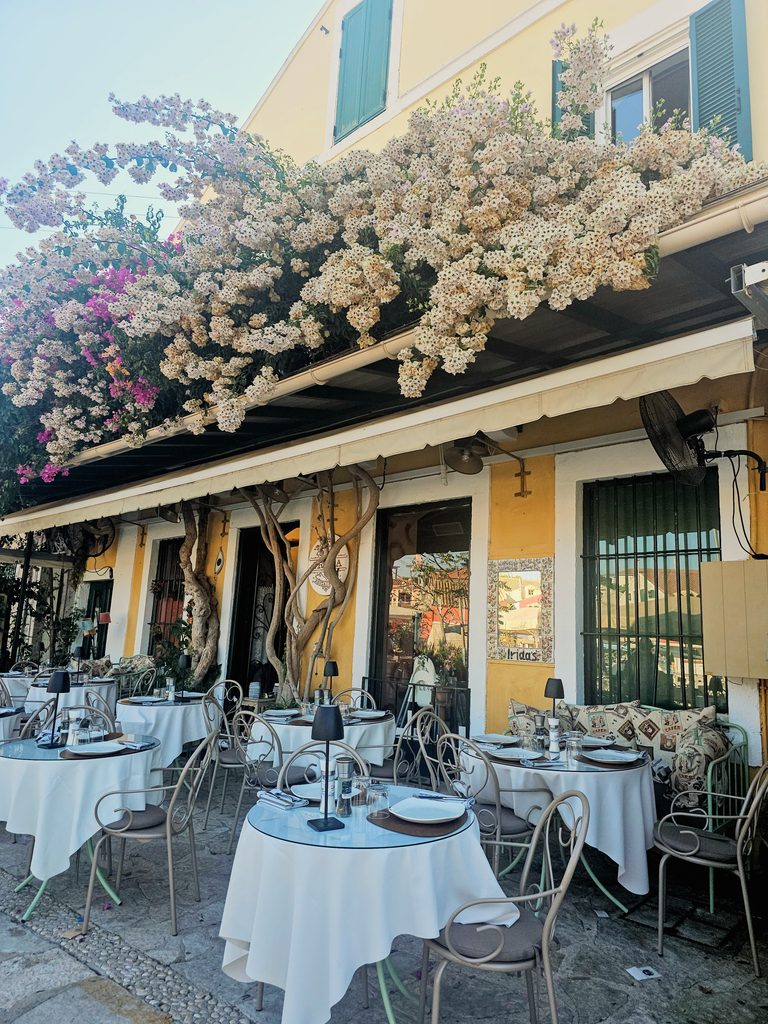
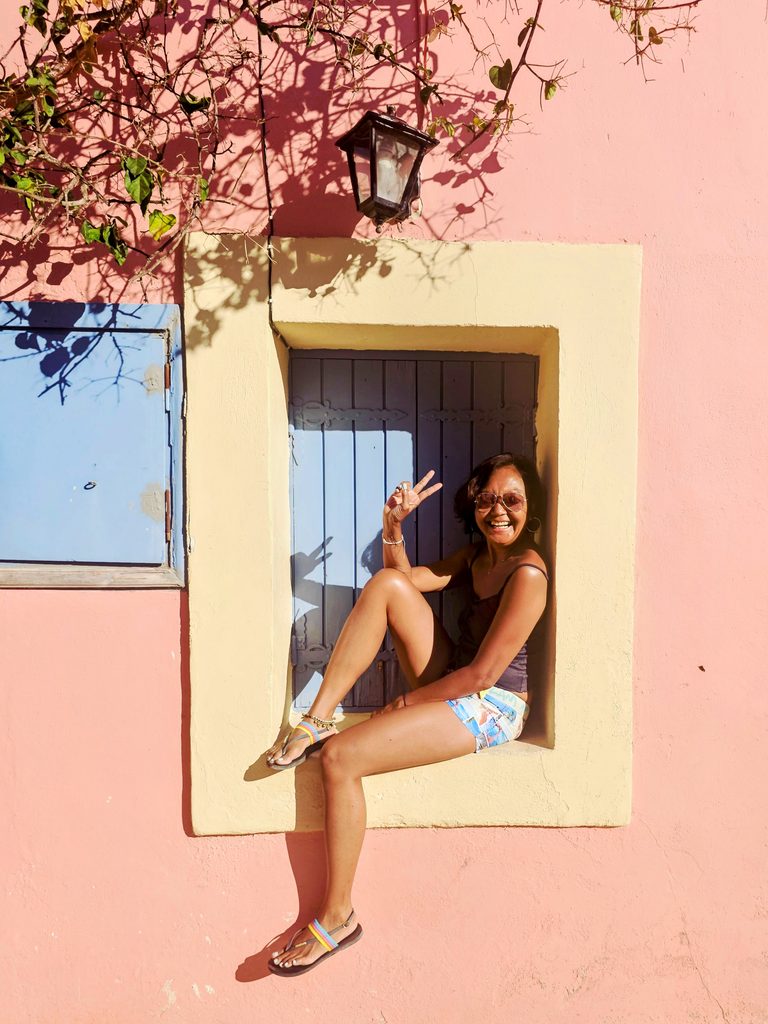
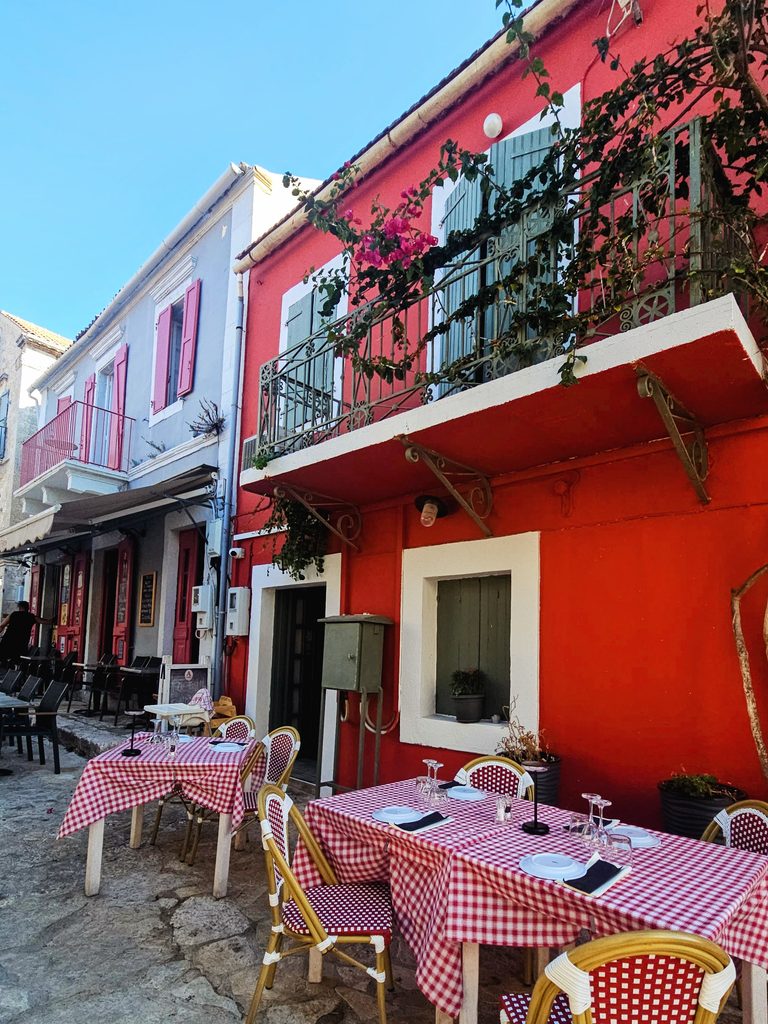
Little boutiques sit beneath colourful buildings, with clothes hanging outside, jewellery catching the sunlight in the windows and shelves filled with local products, ceramics, bags and all sorts of lovely things I absolutely did not need. I went in anyway.
Fiskardo is an easy place to lose a couple of hours doing nothing particularly important. Wander through the little streets behind the waterfront, browse the shops, stop for coffee, then find yourself back at the harbour watching sailing boats and yachts come and go.
Restaurants and cafés line the water, their tables facing the boats. You stop for a Greek salad and tzatziki, order a glass of wine, then maybe an ouzo, and before you know it, lunch has taken up half the afternoon. Very easy to do in Fiskardo!
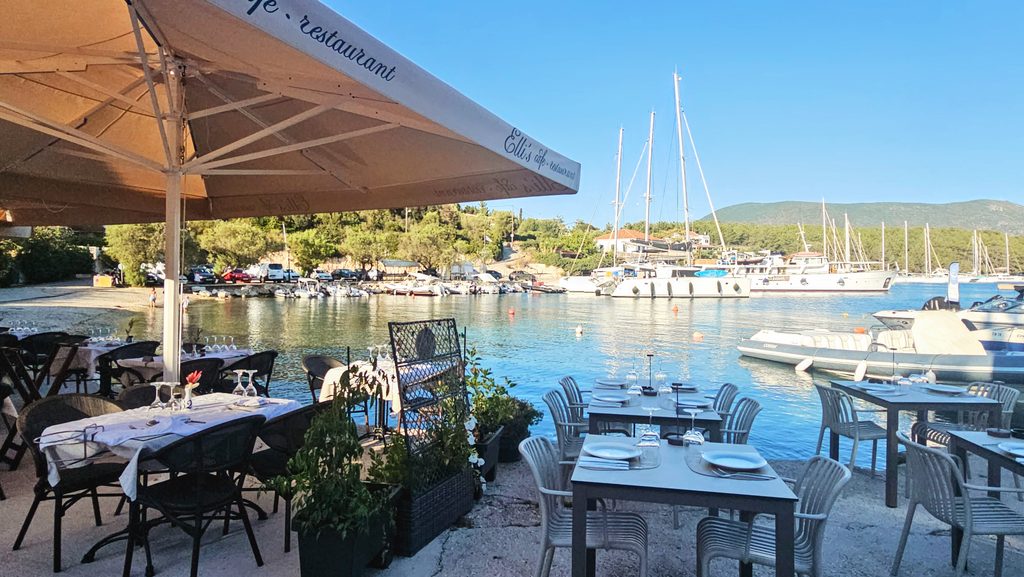
It also reinforced my growing suspicion that Kefalonia could empty a wallet with considerable efficiency.
There is history behind all that prettiness too. Fiskardo was one of the few places in Kefalonia where many of the older buildings survived the devastating 1953 Ionian earthquake, which is why so much of its older architecture remains today.
Don’t spend the whole day shopping and sitting around the harbour. Go for a swim.
Foki Beach is close to Fiskardo, tucked into a sheltered bay surrounded by trees, while Emblisi Beach is another beautiful swimming spot nearby with wonderfully clear Ionian water.
And after all that wandering and shopping under the Greek summer sun, find a waterfront table and order an ice-cold Kefalonian Beer.
Fiskardo Kefalonia: Things to Do, Where to Stay and Travel Tips
- Best for: Waterfront dining, boutique shopping, pretty streets, yachts and a slightly more polished side of Kefalonia.
- Where to stay: Small hotels, boutique stays, villas and apartments are available around Fiskardo and the surrounding coastline. Stay near the harbour if you want to walk out for dinner and drinks.
- Don’t miss: A wander along the harbour and through the little streets behind it. Look up too — the colourful windows, shutters and bougainvillea are half the charm.
- Shopping: Fiskardo is one of the nicest places in Kefalonia for browsing boutiques, with clothes, jewellery, accessories, ceramics and local products.
- Dining: Restaurants, cafés and bars line the waterfront. Stop for Greek salad and tzatziki and don’t be surprised if wine, ouzo and half the afternoon follow.
- Drink: Look out for Kefalonian Beer, brewed on the island, or try a glass of local Robola wine.
- Swimming: Foki Beach and Emblisi Beach are both close to Fiskardo and good options for cooling off after exploring the village.
- Getting around: Fiskardo itself is easy to explore on foot. A car gives you much more freedom for reaching nearby beaches and exploring northern Kefalonia.
- Atmosphere: Colourful, lively and very Mediterranean, with yachts in the harbour, bougainvillea everywhere and plenty happening along the waterfront.
- Good to know: Fiskardo can be busy in summer, particularly around the harbour. Go earlier if you want time to wander before settling in for lunch.
- How long to spend: Give yourself at least half a day. Longer if shopping, lunch and an ouzo start interfering with the itinerary.
- Would I go again? Yes. Although next time I’d probably accept from the beginning that a quick lunch isn’t going to be quick.
Argostoli
Getting to Argostoli from Agia Efimia was memorable. The road climbed and twisted through the mountains, at times running high above the coast with the Ionian Sea far below. The views were spectacular. The drops beside the road were considerably less relaxing.
There were moments when I decided the safest option was simply to look straight ahead. Then you reach Argostoli and Kefalonia changes completely.
This is the island’s capital and its busiest town, with a long harbourfront, local shops, bakeries, cafés, restaurants and people actually getting on with their day. After the little harbour of Agia Efimia, I loved seeing this other side of the island.
Start along the waterfront.
Fishing boats come into the harbour and yachts sit along the quay, while cafés and restaurants run alongside it. Argostoli harbour is also one of the places where loggerhead turtles are regularly spotted, particularly around the fishing boats when they return with their catch.
Then leave the waterfront and walk.
Lithostroto is Argostoli’s main pedestrian shopping street, but I enjoyed the smaller shops and bakeries as much as anything else. This is where you can browse properly: clothes, local products, little food shops, pastries, bread, sweets, coffee.
And tiropita. And tiropita.
By this stage of Greece, I had developed a serious relationship with cheese pie.
The little bakeries were dangerous places for me. I’d walk in intending to buy one thing and immediately start looking through the glass counter.
Tiropita, flaky pastries, syrup-soaked baklava layered with nuts, cakes and things I couldn’t pronounce but was perfectly willing to try.
Having travelled through Türkiye before Greece, baklava was very familiar territory. The Greeks have their own version, and I wasn’t about to get involved in the argument over who does it better.
I was quite happy eating both.
By this stage of Greece, I had developed a serious relationship with cheese pie. The little bakeries were dangerous places for me. I’d walk in intending to buy one thing and inevitably find something else behind the glass that required investigation.
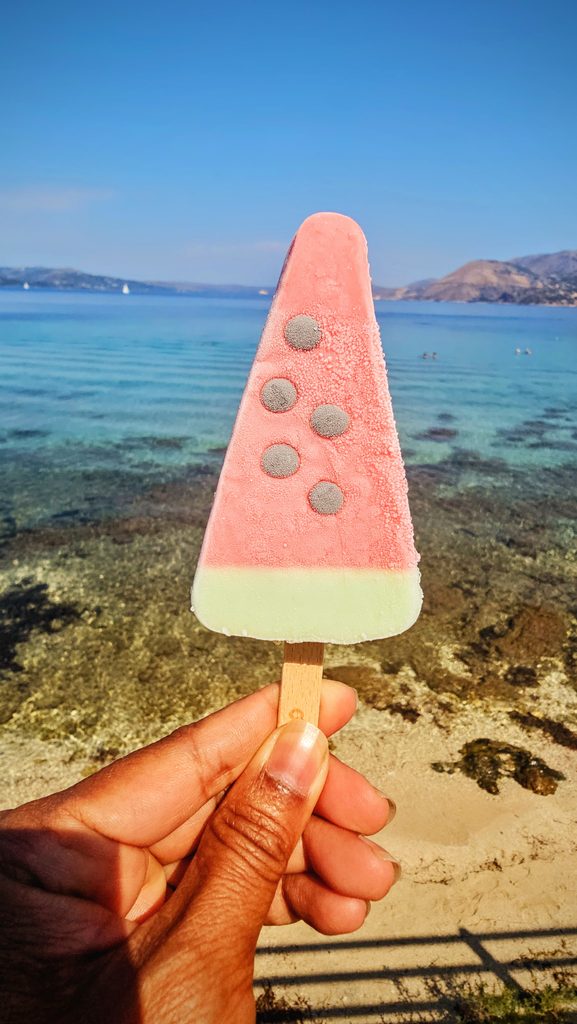
Argostoli also gave me my karpouzi story. I’d discovered these watermelon-shaped ice creams and apparently decided that eating one once wasn’t enough. I went back the next day. And the next. Sometimes two a day.
On the third visit, the man simply gave me one. Free! I still don’t know why. Maybe it was my kalimera. Maybe my kalispera. Maybe he appreciated my commitment to watermelon-shaped ice cream. Or perhaps I just smiled enough.
Whatever the reason, I walked away ridiculously happy.
It’s such a small thing, but these are the moments I remember from Greece. Not somebody providing exceptional service because I’d paid for it. Just a stranger deciding, for whatever reason, this one’s on me.
Vallianos Square, Argostoli’s main square, is surrounded by cafés, restaurants and hotels. Lithostroto runs towards it, making this part of town easy to explore without much of a plan. On a weekend, there’s often baskers performing around the square.
And then there is De Bosset Bridge, stretching right across Koutavos Lagoon. It’s pedestrianised now, so you can walk across and look back towards Argostoli and the hills beyond. Halfway across stands a stone obelisk on a small man-made island, a reminder of the period of British rule on Kefalonia.
If you’ve got more time, continue around the coast towards Fanari, where the Lighthouse of Saint Theodoroi stands right beside the sea. It’s a beautiful little circular lighthouse with Doric columns, originally built during British rule in 1829 and later reconstructed after the 1953 earthquake.
And if you fancy seeing yet another part of Kefalonia without driving, you can take the local ferry across the bay from Argostoli to Lixouri on the Paliki peninsula.
That’s what I liked about Argostoli. Assos makes you reach for the camera. Fiskardo makes you want to browse the shops and sit beside the harbour with a glass of wine. Agia Efimia made me want to stay.
Argostoli made me wander. Into a bakery. Along the harbour. Through the shops. Across the square. Towards the lighthouse. And, apparently, back for another karpouzi.
Saint Theodore Lighthouse (Fanari Lighthouse), Argostoli, Kefalonia
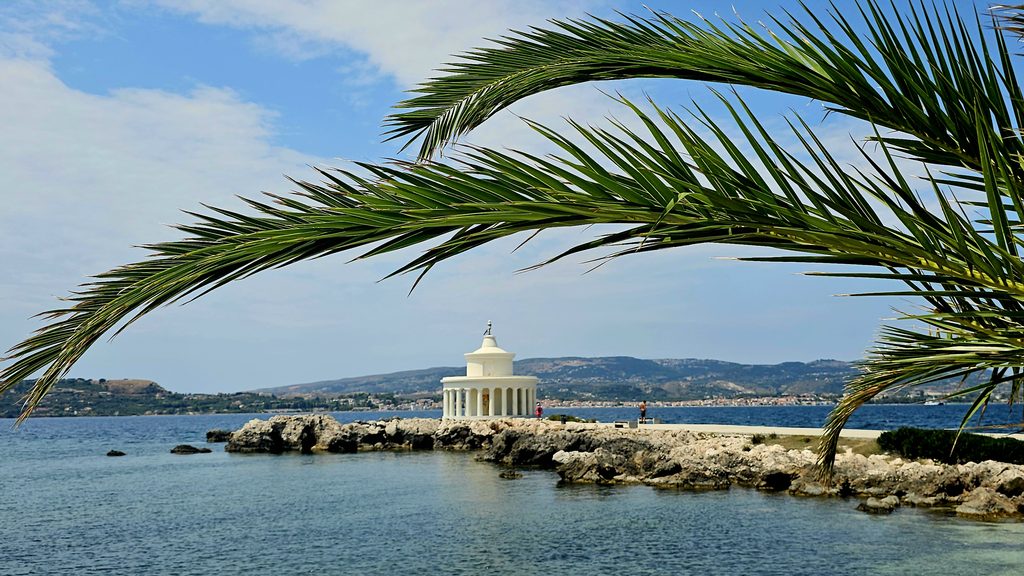
A short drive from Argostoli, Saint Theodore Lighthouse, also known as Fanari Lighthouse, sits right on the edge of the sea. The small circular lighthouse, surrounded by white Doric columns, was originally built during the British administration of Kefalonia and later rebuilt after the 1953 earthquake.
It’s worth the drive for the coastal views alone, and if you’re there later in the day, stay for sunset.
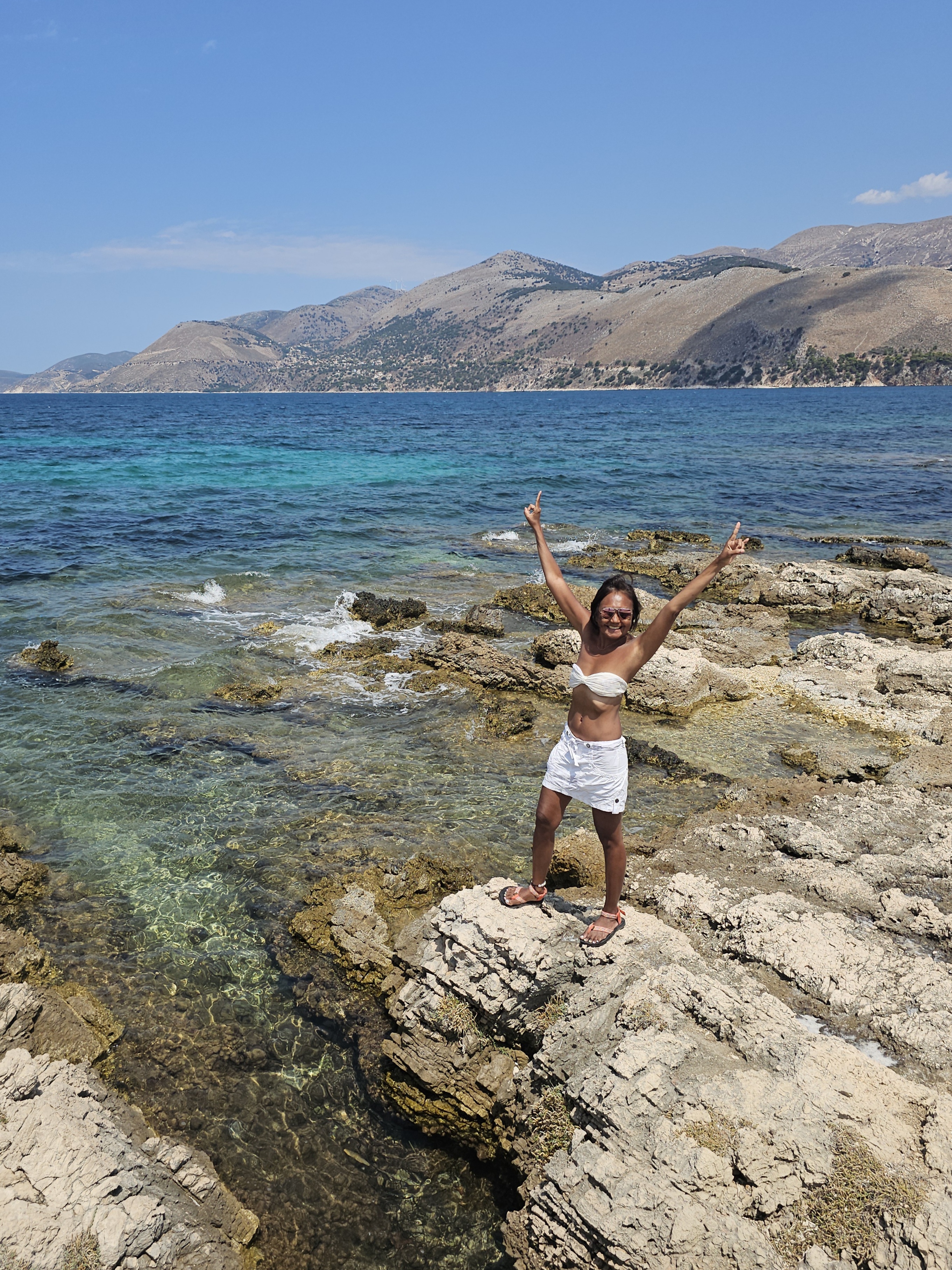
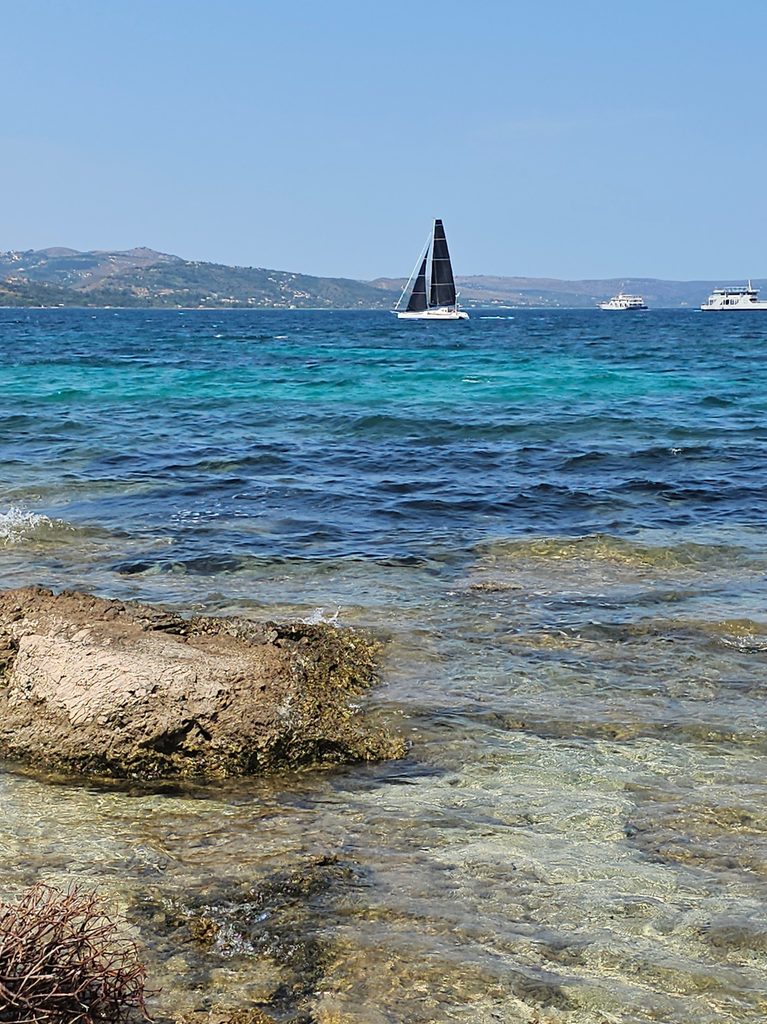
And keep your swimsuit in the car. There are small beaches and rocky swimming spots along this stretch of coast, including Fanari Beach.
Argostoli Kefalonia: Things to Do, Where to Stay and Travel Tips
- Best for: Local life, shopping, bakeries, restaurants and travellers who prefer a livelier base with plenty within walking distance.
- Where to stay: Argostoli has the widest choice of accommodation on the island, from boutique hotels and guesthouses to apartments and waterfront stays. Stay around the centre or harbour if you want to explore on foot.
- Don’t miss: A walk along the harbour, Lithostroto pedestrian street, Vallianos Square, De Bosset Bridge and the Lighthouse of Saint Theodoroi.
- Look out for: Loggerhead turtles around the harbour, particularly near the fishing boats.
- Shopping: This is one of the best places in Kefalonia for local shops, boutiques and everyday shopping rather than purely tourist souvenirs.
- Eat: Stop at one of the little bakeries for tiropita, flaky pastries and syrupy baklava. Greek salad, feta and olives had also become a fairly serious part of my daily diet by this point.
- Dining: Plenty of cafés, tavernas, restaurants and bars around the waterfront, Lithostroto and Vallianos Square.
- Take the ferry: Hop on the local ferry across the bay to Lixouri for an easy side trip and a different view of Argostoli from the water.
- Getting around: The centre, harbour and main shopping streets are easy to explore on foot. A car is useful for the lighthouse, nearby beaches and exploring further around Kefalonia.
- Atmosphere: Busier and more local than Kefalonia’s smaller harbour villages. Come here to shop, eat, wander and see a little more of everyday island life.
- Good to know: Give yourself time to wander beyond the waterfront. Some of my favourite stops were the little bakeries and shops I found simply by walking around.
- How long to spend: At least half a day. A full day gives you time for the harbour, shops, lunch, lighthouse and perhaps the ferry to Lixouri without rushing. I stayed near Argostoli for a week.
- And apparently: If you return to the same shop three days in a row for a karpouzi watermelon ice cream, there’s a chance the third one might be free. I can’t guarantee my method. It may have been the kalimera, the kalispera or simply a very generous man!
Sailing Kefalonia and The Ionian Sea
If Kefalonia is beautiful from land, wait until you see it from the water.
I spent a day aboard Balboa, a private yacht charter, sailing through the Ionian Sea with Kefalonia rising behind us.
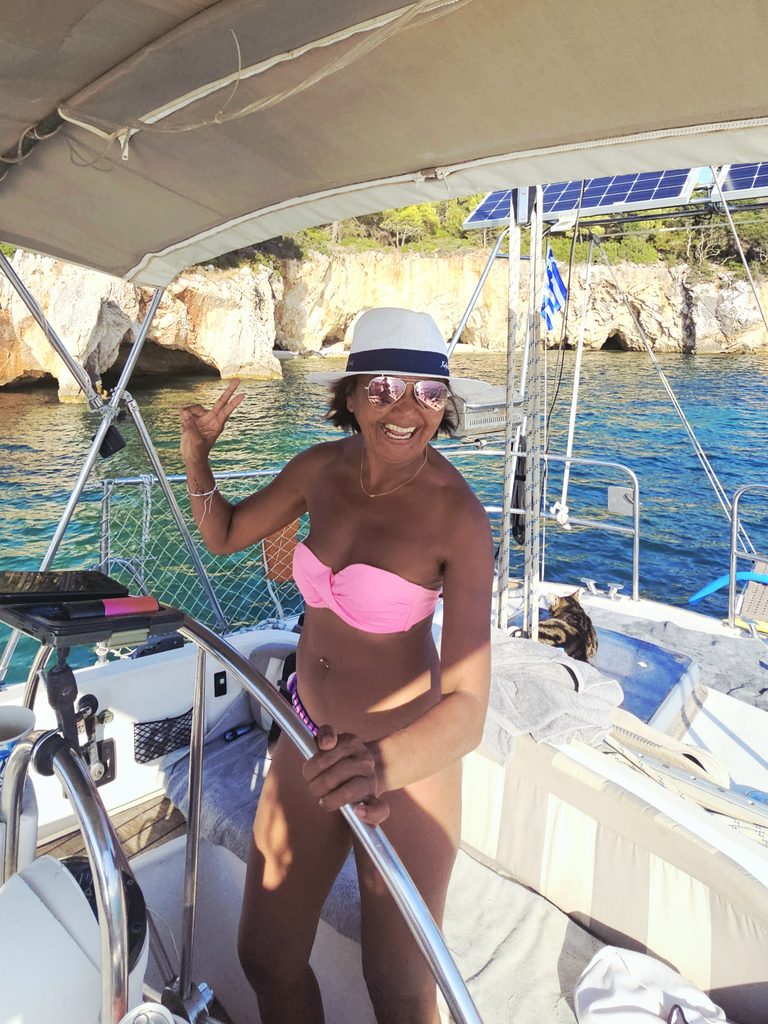
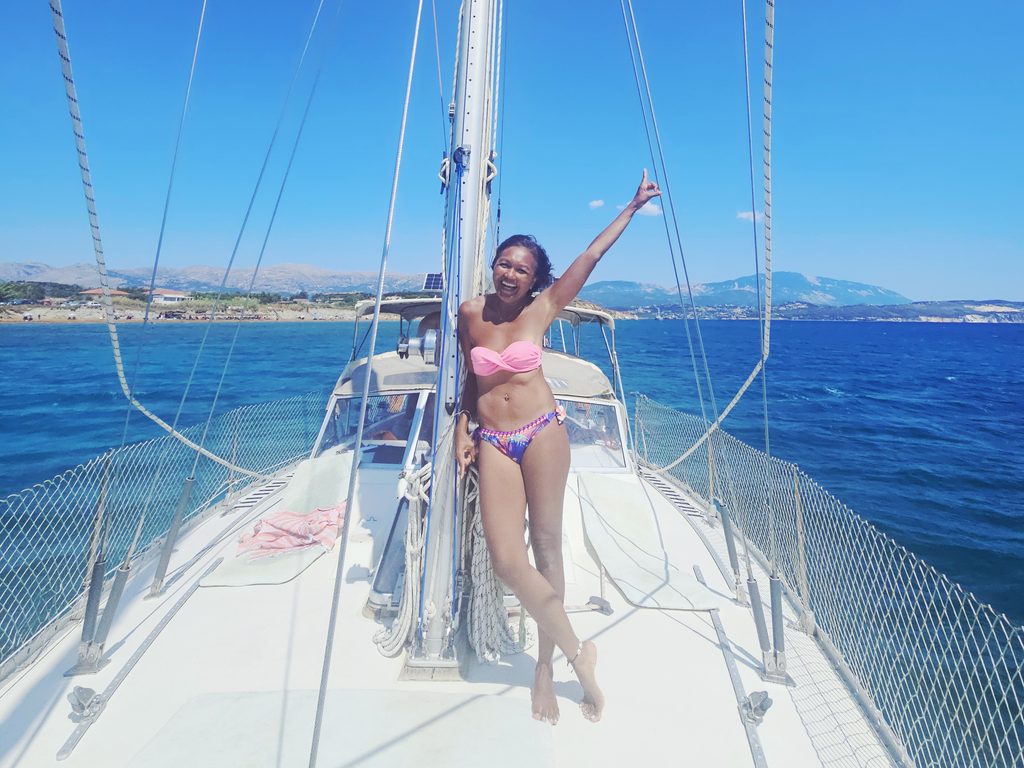
Out there, the colours changed constantly. Deep blue became turquoise, then suddenly the water was so clear I could see straight through it. We passed cliffs, little coves and stretches of coastline that looked completely different from the sea.
And this is where hiring a boat privately really came into its own.
I’ve done the bigger boat trips too, where 20 or 30 people climb aboard, everyone follows the same route and the swim stop ends when somebody blows a whistle or announces that it’s time to leave.
A private yacht is a different experience.
There was no rush to get back onboard because another group was waiting. If we found a beautiful place to swim, we could stay. If somewhere looked interesting, we could stop. There was room to stretch out, talk, eat, jump into the water and simply enjoy being at sea without following somebody else’s timetable.
Yes, it costs considerably more than buying a seat on a group boat.
But if you’re travelling with family or friends and splitting the charter between several people, it’s worth doing the maths. You’re paying for privacy, but more than that, you’re paying for the freedom to make the day your own.
And sailing through the Ionian Sea is one of those occasions when you really do want the freedom to stop.
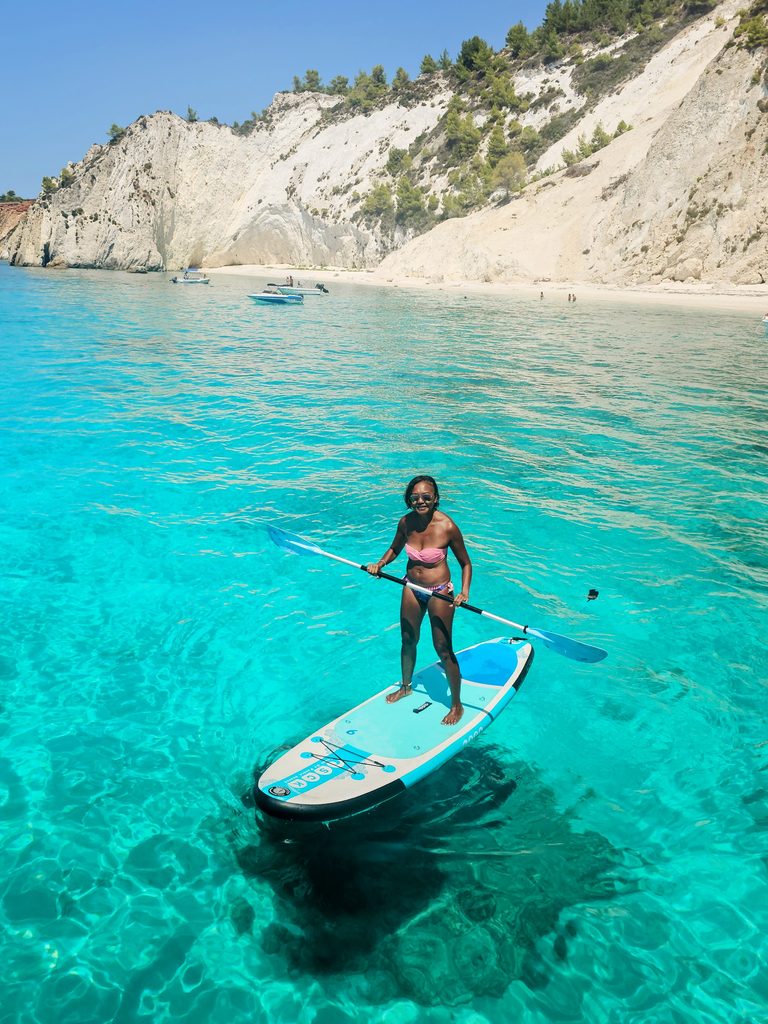
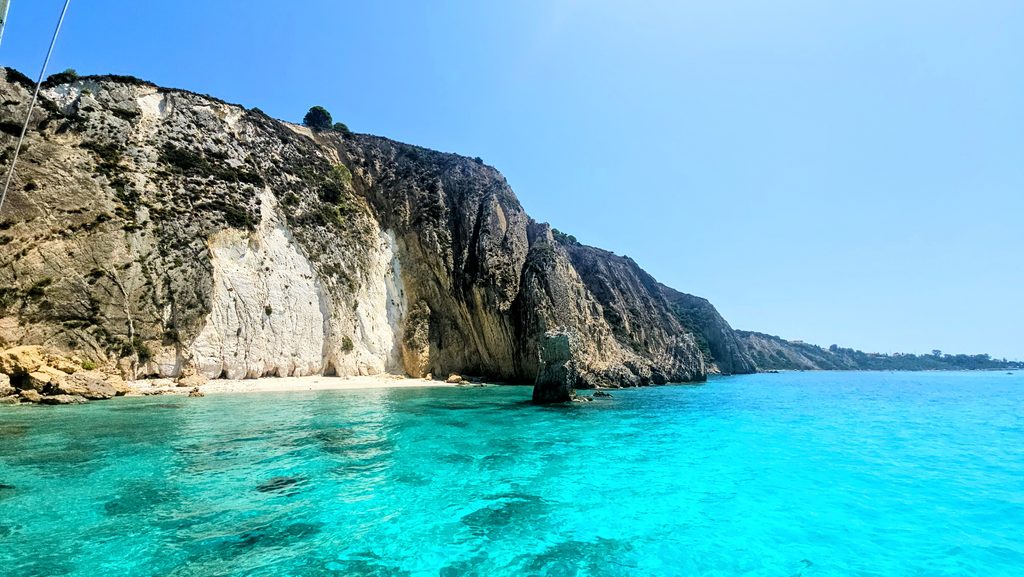
I wrote separately about my full day aboard Balboa, including the yacht, the route and what the private charter experience was actually like.
Read my full Balboa Private Yacht Charter experience here .
Top 5 Beaches in Kefalonia
You can’t really talk about Kefalonia without talking about the water.
The colours were extraordinary. Deep blue one minute, turquoise the next, and in some of the smaller bays, so clear I could see straight through to the bottom.
Coming from Malaysia, what surprised me wasn’t the colour. It was the temperature. The Ionian Sea was cold! Under the Greek summer sun, I actually grew to love it. I’d swim for a few minutes, get out, warm up, then become hot enough to want to jump straight back in again.
Myrtos Beach
Getting to Myrtos was part of the experience. I remember the drive high along the cliffs with the sea far below, before taking the steep road downhill towards the beach. From above, this is the Kefalonia I’d seen in photographs: enormous cliffs dropping towards a sweep of pale shoreline and water in an almost ridiculous shade of blue.
You have to stop at the viewpoints before heading down. The scale of Myrtos makes far more sense from up there.
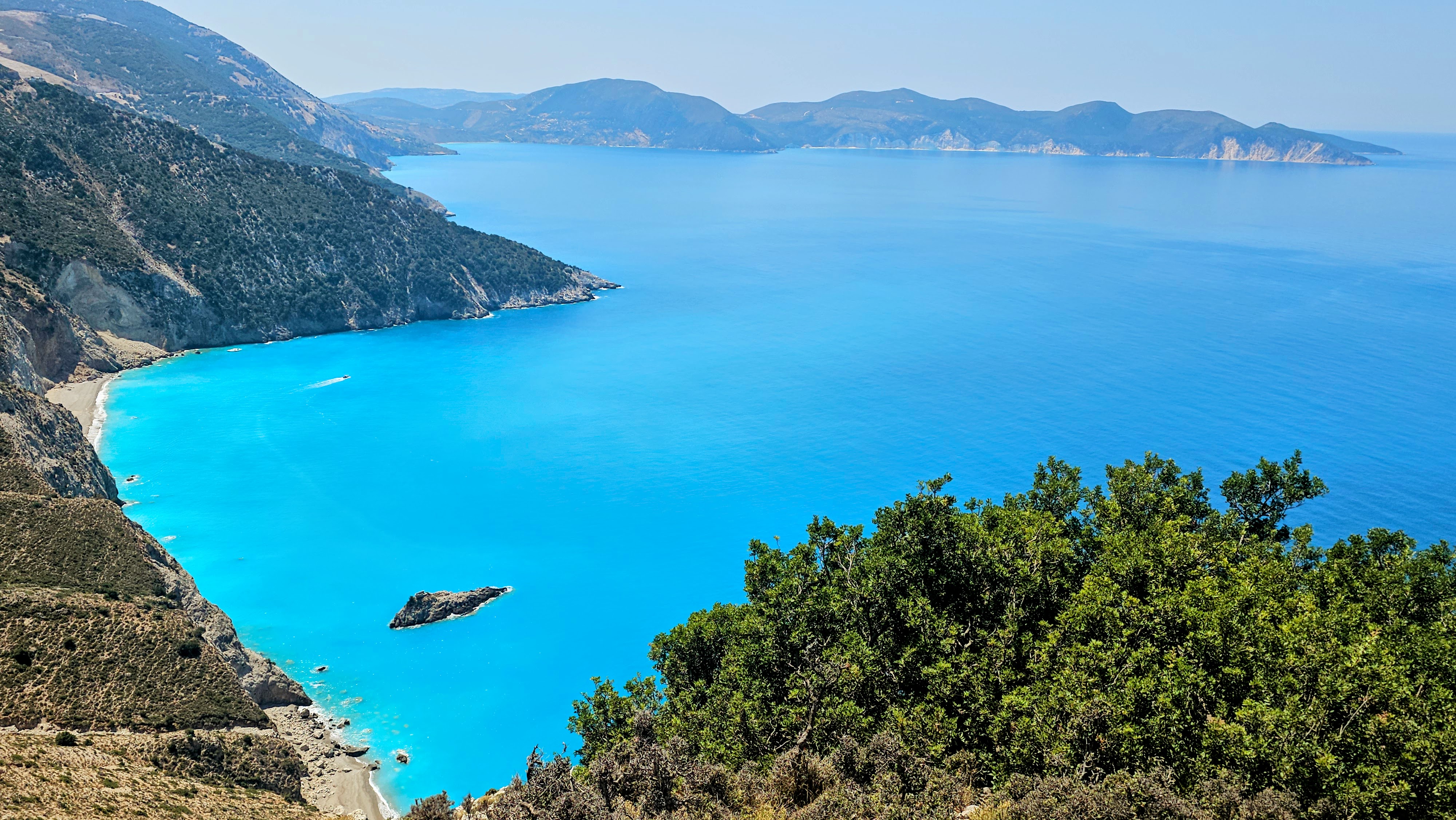
At beach level, though, it was a different scene.
There were rows of umbrellas and loungers, people swimming, watersports out on the water and far more going on than those sweeping photographs from above suggest. There are also options for getting out onto the water and exploring more of the coastline by boat.
And that water.
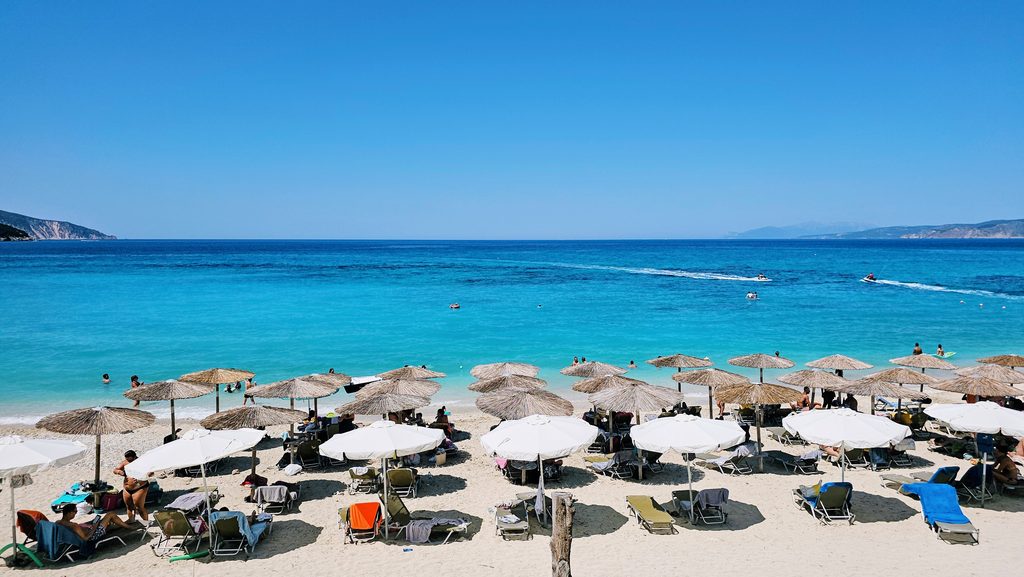
Turquoise close to shore, becoming a much deeper blue further out. Yes, it was cold., but after that drive down and a few minutes under the Greek summer sun, getting into the Ionian Sea felt pretty damn good.
Agia Efimia Beaches and Coves
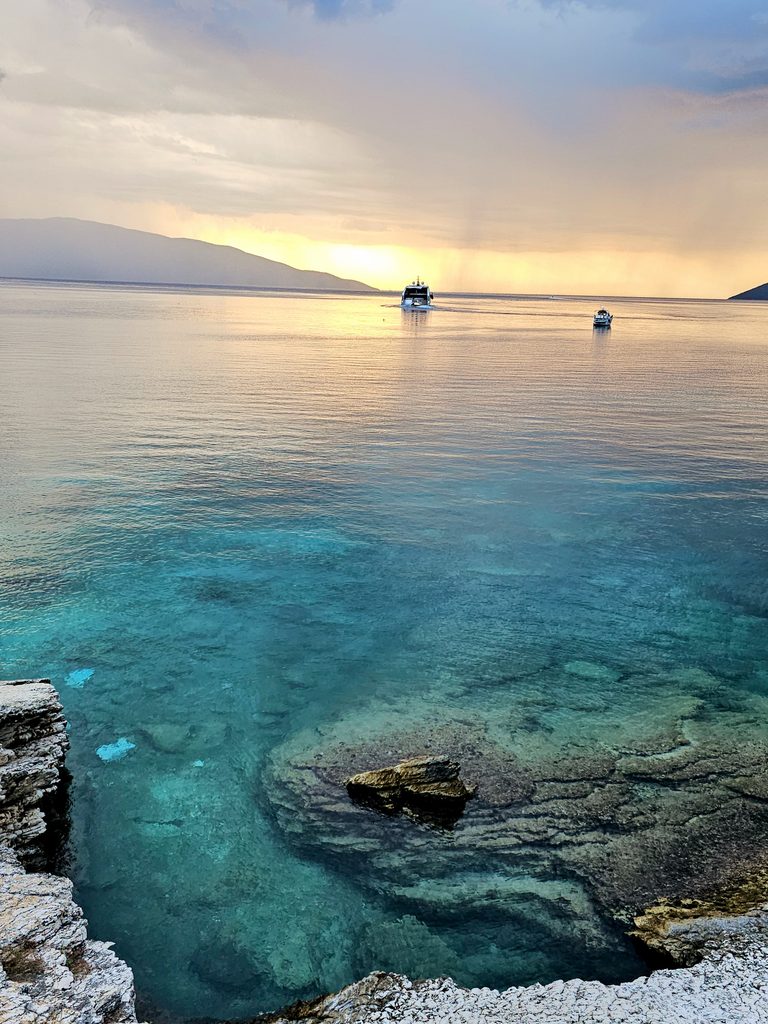
Some of my favourite swims in Kefalonia were much simpler. If you’re staying in Agia Efimia, don’t miss the sunrise over the bay. It was absolutely gorgeous, with the first light coming across the water and the boats sitting in the harbour.
Then go for a morning swim. The water will wake you up rather quickly!
I’d leave Agia Efimia with my bikinis on and a beach bag, walk along the coastal road and choose one of the little pebble bays along the way.
Agia Efimia was gorgeous first thing in the morning. The sunrises over the bay were spectacular, with the early light across the water and the boats in the harbour. I found myself waking up early just to see them.
And then there were the figs. Fig trees seemed to grow everywhere. Every day on my way to swim, I’d pull down a branch and pick a few ripe ones. I’d never tasted figs that sweet before.
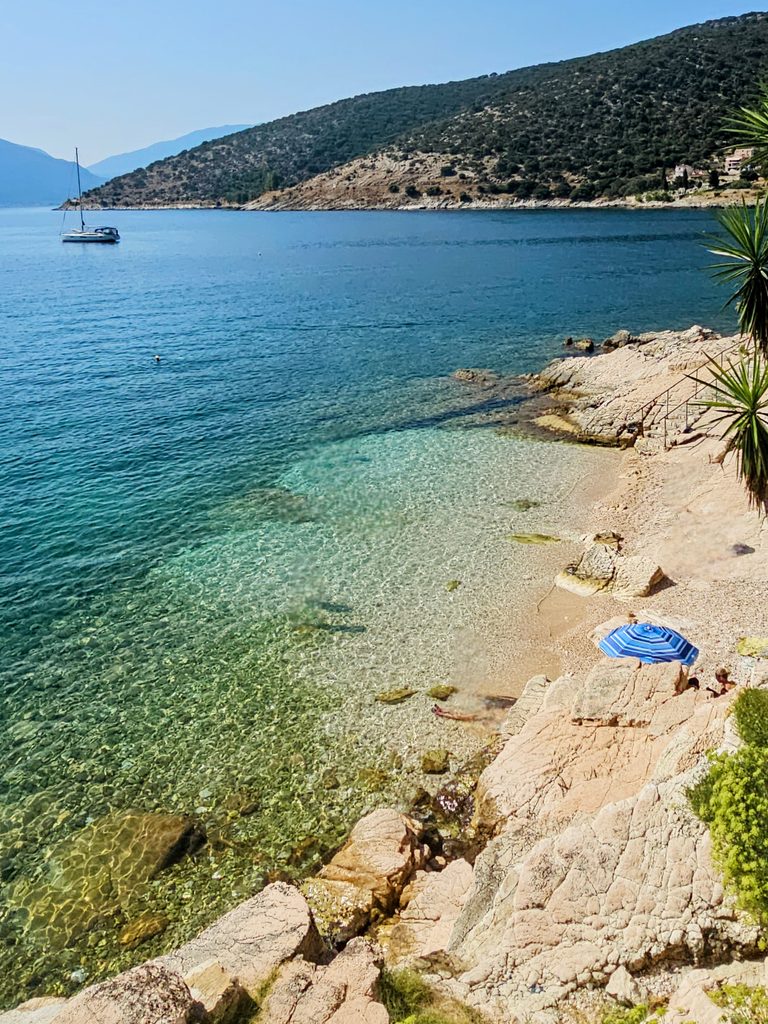
So my journey to the beach often involved a towel, a swimsuit and a couple of freshly picked figs in my hand. Not bad.
Paradise Beach is one of the named swimming spots around Agia Efimia, but don’t feel you have to search for a famous beach here. Part of the pleasure is finding one of the little coves along the coast and simply getting in.
Antisamos Beach
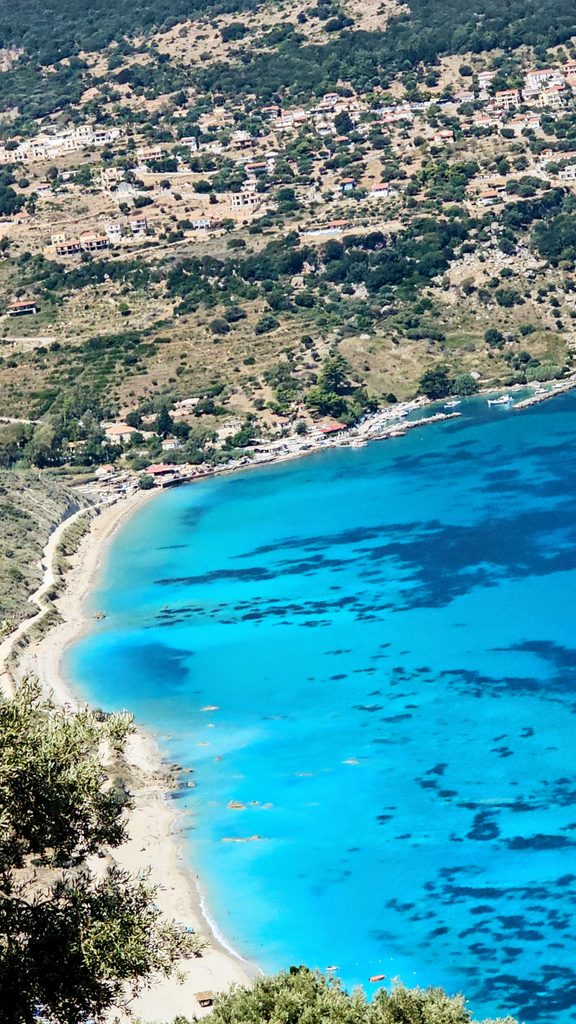
Near Sami, Antisamos sits between steep green hills that seem to run almost straight into the sea. It’s one of Kefalonia’s better-known beaches and easy to combine with Sami and the caves on this side of the island.
The beach is pebbly rather than sandy, with plenty of space to spend a few hours by the water.
Fanari Beach
Fanari Beach, near Argostoli, is a good choice if you prefer a smaller, less organised swimming spot. It’s mostly rocky, with a small section of beach and clear, shallow water overlooking the Gulf of Argostoli.
It’s also close to Saint Theodore Lighthouse, so the two are easy to combine, but Fanari is very different from Myrtos. Don’t come expecting rows of loungers, beach bars or a dramatic sweep of coastline. This is somewhere to bring a towel, find a spot on the rocks and get into the water.
On a hot day, that’s really all you need. Although in my case, a karpouzi watermelon ice cream afterwards improved matters considerably.
Lagadakia Beach
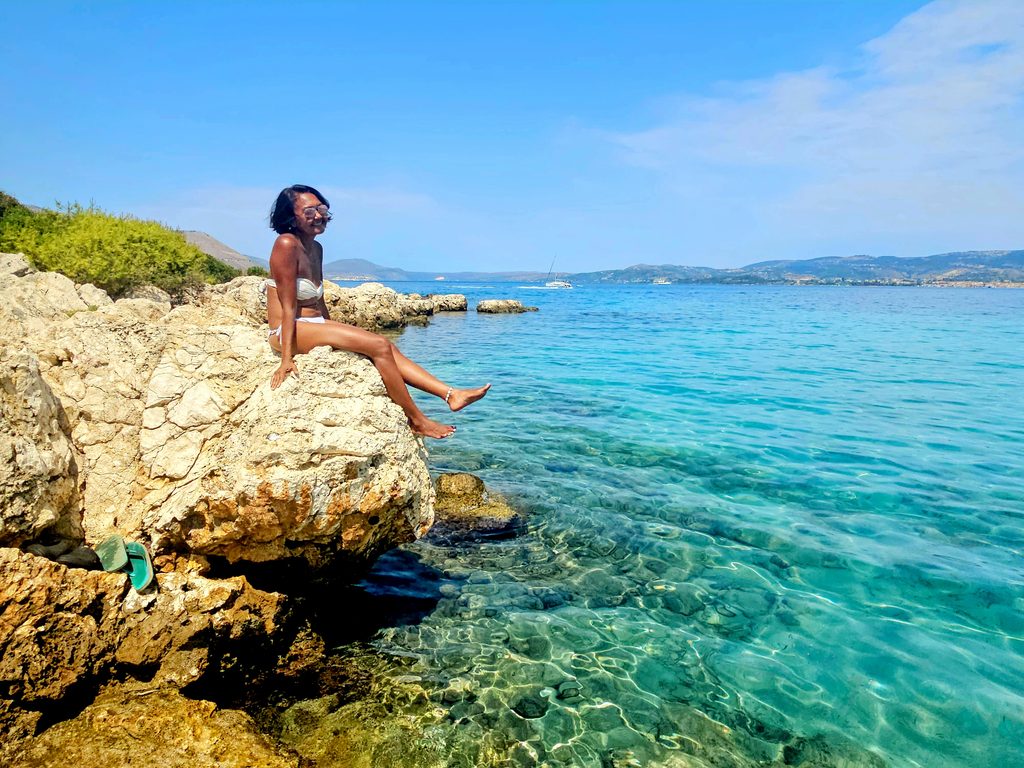
Lagadakia was one of my favourite finds in Kefalonia. Small bay known to mostly locals. The drive there was beautiful. The landscape around the Paliki peninsula became dry and rugged, strangely reminding me of the Australian outback, before suddenly giving way to brilliant blue sea.
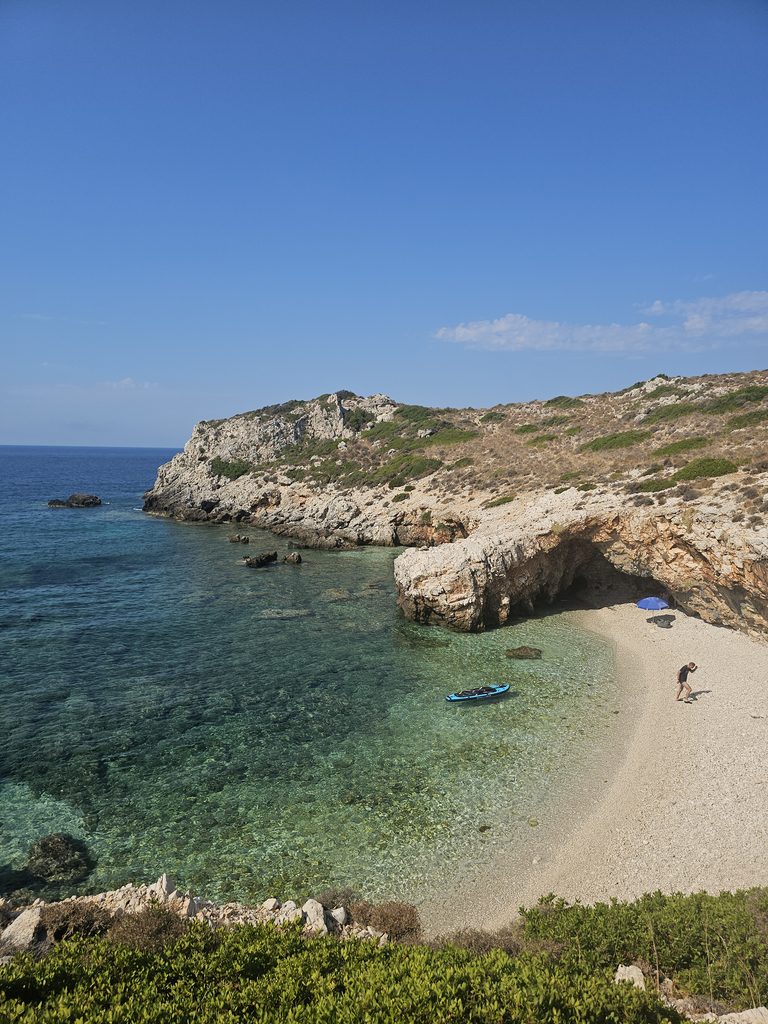
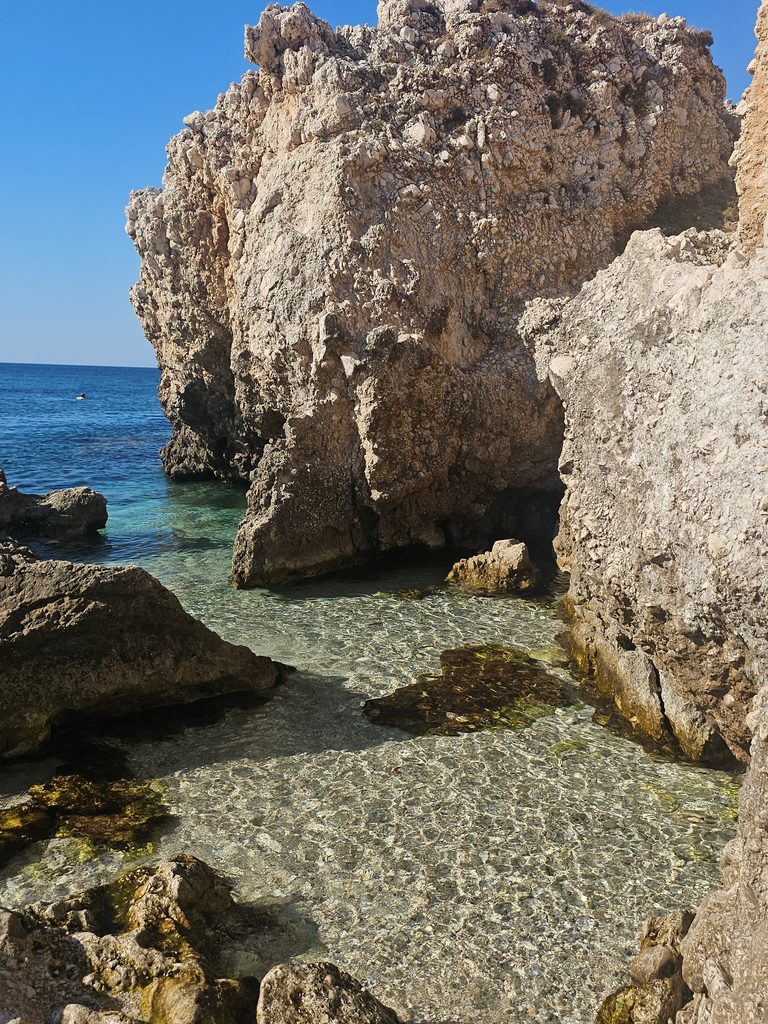
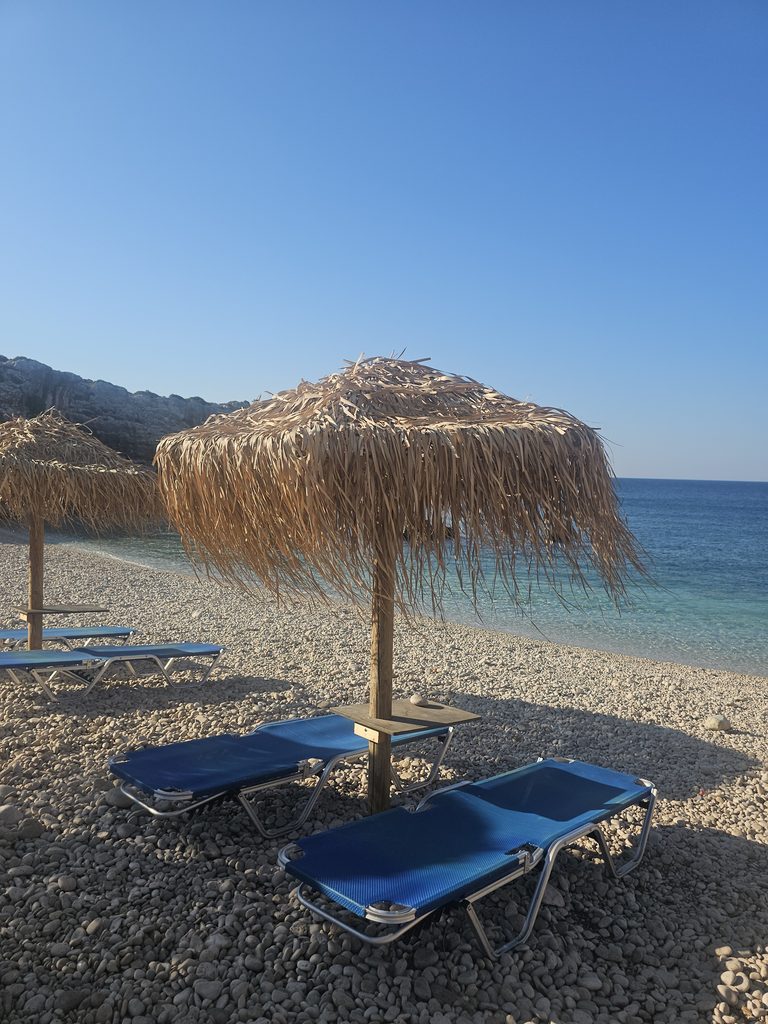
The beach itself is tiny and mostly visited by locals, with parking above and a small canteen serving food and drinks. Walk around the rocks and you’ll find little pockets of pebbly beach and incredibly clear water. Come early before it gets busy. It is just a small bay.
There is no public transport to Lagadakia, so you’ll need your own car or a taxi to get there. No big attraction. No crowds. Just a gorgeous little beach that felt worth finding.
Foki and Emblisi Beaches near Fiskardo
If you’re spending the day in Fiskardo, Foki and Emblisi are two easy beaches to add without travelling far.
Foki is the greener and more sheltered of the two, a small pebble bay surrounded by olive and cypress trees. It’s particularly good for swimming and snorkelling, with caves around the coastline if you feel like exploring beyond the bay.
Emblisi has a different feel, with pale rocks framing beautifully clear water and plenty of spots to swim from. It’s also close enough to Fiskardo to combine with a morning wandering the harbour and shops.
Do Fiskardo first. Have lunch by the waterfront. Then choose a beach and spend the afternoon in the water. Or do both. You’re already there.
Petani Beach
Over on the Paliki peninsula, Petani has another of those dramatic Kefalonia settings: cliffs, pale shoreline and the Ionian stretching out in front of you.
If you’re taking the ferry from Argostoli across to Lixouri or exploring the western side of Kefalonia, it’s one to put on your list.
Caves in Kefalonia: Drogarati and Zervati
Beaches may get most of the attention in Kefalonia, but it is worth heading underground too, especially if you’re already exploring around Sami, on the island’s east coast
Drogarati Cave is the more dramatic of the two. You descend into a huge limestone chamber filled with stalactites and stalagmites, some formed over thousands of years. The acoustics inside are so good that the cave has even hosted concerts. And on a hot summer day, that cool air underground is very welcome.
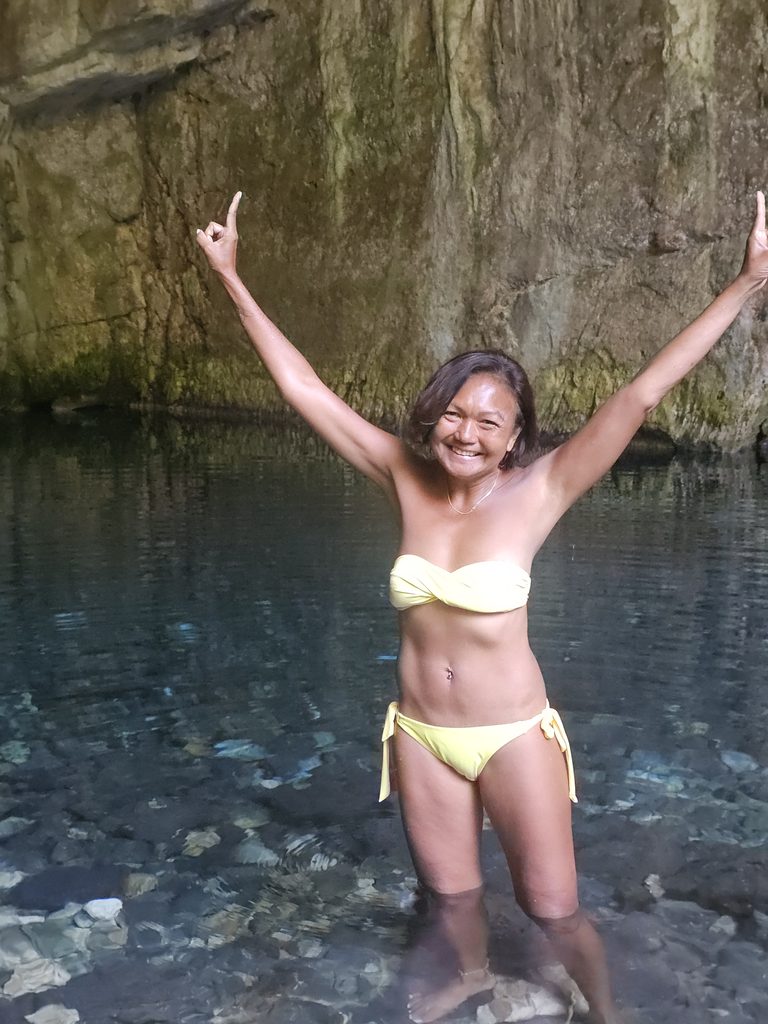
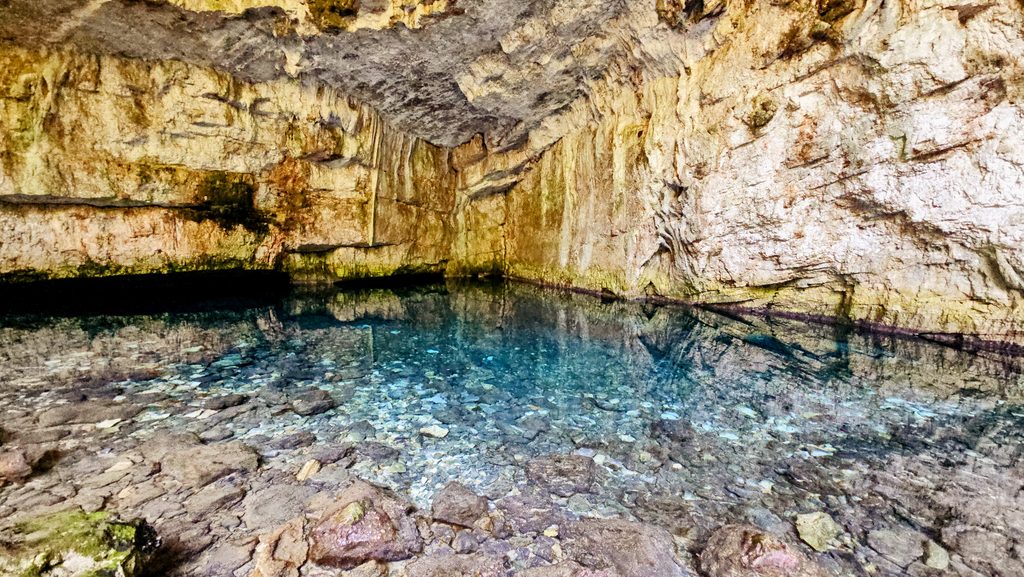
Nearby, Zervati Cave was a completely different experience. Its incredibly clear blue water was far too tempting when I visited, so yes, I went for a swim. Swimming may not be permitted today, so check locally before jumping in!
The famous Melissani Cave is also nearby, although I didn’t visit it on this trip.
Kefalonia Travel Tips
- Enjoy the food. Greek food deserves time. Order the feta and olives with plenty of good olive oil, tiropita, aubergine dishes, grilled seafood and a plate of gavros or marides, those addictive little fried fish. Stop at the bakeries, try the local wine, and don’t be in too much of a hurry to finish lunch.
- Keep your swimsuit with you. There always seems to be another little bay or ridiculously clear patch of water tempting you in.
- Hire a car if you can. Kefalonia is made for exploring, and having your own wheels gives you the freedom to stop at viewpoints, villages and little beaches along the way.
- Allow more driving time than the map suggests. The roads can be winding and steep, but some of those drives are part of the experience.
- Pack water shoes. Many beaches are pebbly or rocky.
- Come prepared for smaller beaches. Some have no toilets, changing rooms or showers, so bring what you’ll need.
- Learn a few Greek words. Kalimera, kalispera, efcharistó. They got me a long way.
- Leave room for detours. Kefalonia is one of those places where seeing something from the road and turning off to investigate can lead to a very good afternoon.
How to Get to Kefalonia from Athens
Getting to Kefalonia from Athens is fairly straightforward. You can fly, travel by bus and ferry, drive and take the ferry, or make a longer journey via Zakynthos.
By air: The quickest way to get to Kefalonia is to fly directly from Athens International Airport (ATH) to Kefalonia Airport (EFL). AEGEAN Airlines and SKY express operate direct flights between Athens and Kefalonia, with a flight time of around an hour. It’s by far the easiest option if you’re short on time.
By bus and ferry: This is easier than it sounds. KTEL Kefalonias operates through services from Athens to Kefalonia, with routes travelling either via Patras and Sami or via Kyllini and Poros, before continuing to Argostoli. Current services leave from Athens’ Kifissos Intercity Bus Station. Check out : Ktel Kefalonia
If you’re arriving at Athens Airport, take the X93 Airport Express bus directly to Kifissos Intercity Bus Station. It operates 24 hours a day and takes around 65 minutes, depending on traffic. Oasa
From Kifissos, board the KTEL Kefalonias service. Depending on the route, the coach travels across mainland Greece to the ferry port, boards the ferry, and continues on Kefalonia. KTEL publishes its current timetables and allows online booking, so check before travelling as departure times change seasonally. Ktel Kefalonia
By car and ferry: If you’re hiring a car in Athens, drive west towards Kyllini and take the ferry to Poros on Kefalonia. This is particularly useful if you’re keeping the car on the island, as having your own transport makes exploring Kefalonia much easier.
Via Zakynthos: You can also travel overland from Athens to Zakynthos and continue by ferry to Kefalonia. This is the route I took. It takes longer, but works well if you want to include both islands in the same trip. Ferry connections between Zakynthos and Kefalonia are seasonal, so check schedules before travelling.
Tip: Don’t rely on an old blog post for bus or ferry departure times. Greek island schedules change with the season, and the latest information is easy to check online before you travel.
Was Kefalonia Worth the Journey?
So, back to the question I asked at the beginning. For me, yes, but not because I found beaches more beautiful than those closer to home. This is where I’m supposed to tell you that yes, of course it was worth travelling halfway around the world.
Kefalonia is gorgeous. The Mediterranean light, that ridiculous blue sea that always seems to be inviting you back in, the cliffs and rugged landscape, the little coves tucked along the coast. Then there are villages like Assos and Fiskardo, all colour, bougainvillea and waterfront tables where lunch can very easily stretch into another glass of wine. The landscape alone deserves that word. Mountains dropping towards an intensely blue Mediterranean, roads curling along cliffs, tiny coves appearing below you – the views will blow your mind.
The sea was constantly tempting me back in, even when I knew exactly how cold that first plunge would be.
And Greece is very easy to love.
I could happily live on Greek salad, feta, olives and tiropita. I loved the long lunches, the little bakeries, the waterfront tables, the kalimera from strangers and how easily a conversation could begin even when neither of us had enough words.
Was it expensive? Yes. Could I find equally beautiful beaches much closer to Malaysia for considerably less money? Absolutely. However, I don’t think one cancels out the other.
Kefalonia has its own character. It doesn’t look or feel like a tropical island in Southeast Asia. The landscape is different. The villages are different. The food, architecture, Mediterranean light and rhythm of the day are different.
Would I fly from Malaysia to Kefalonia just for beautiful beaches? Probably not.
That’s the truth. I have extraordinary islands much closer to home. The water is warmer, getting there is easier and my money goes considerably further.
Kefalonia isn’t a tropical island trying to compete with Southeast Asia. Its beauty comes from somewhere else.
It’s in that rugged Mediterranean landscape. The dry hills and cliffs against impossibly blue water. The colourful villages. The boats in little harbours. Bougainvillea spilling over old buildings. Figs growing beside the road. A glass of wine that turns lunch into an afternoon.
And then, of course, there were the people I met along the way. Perhaps that’s where I finally landed with Kefalonia.
I wouldn’t travel halfway around the world looking for a better beach. I’d travel a very long way to experience somewhere completely different from home.
An it’s Greece. of course.