Santubong Wetland River Cruise isn’t the sort of wildlife experience that shouts for attention.
Just thirty minutes from Kuching, this small locally run boat trip takes visitors through one of Sarawak’s richest mangrove ecosystems in search of endangered Irrawaddy dolphins, crocodiles and proboscis monkeys. There are no crowds, no oversized boats and no promises that wildlife will appear on cue.
That was exactly why I booked it.
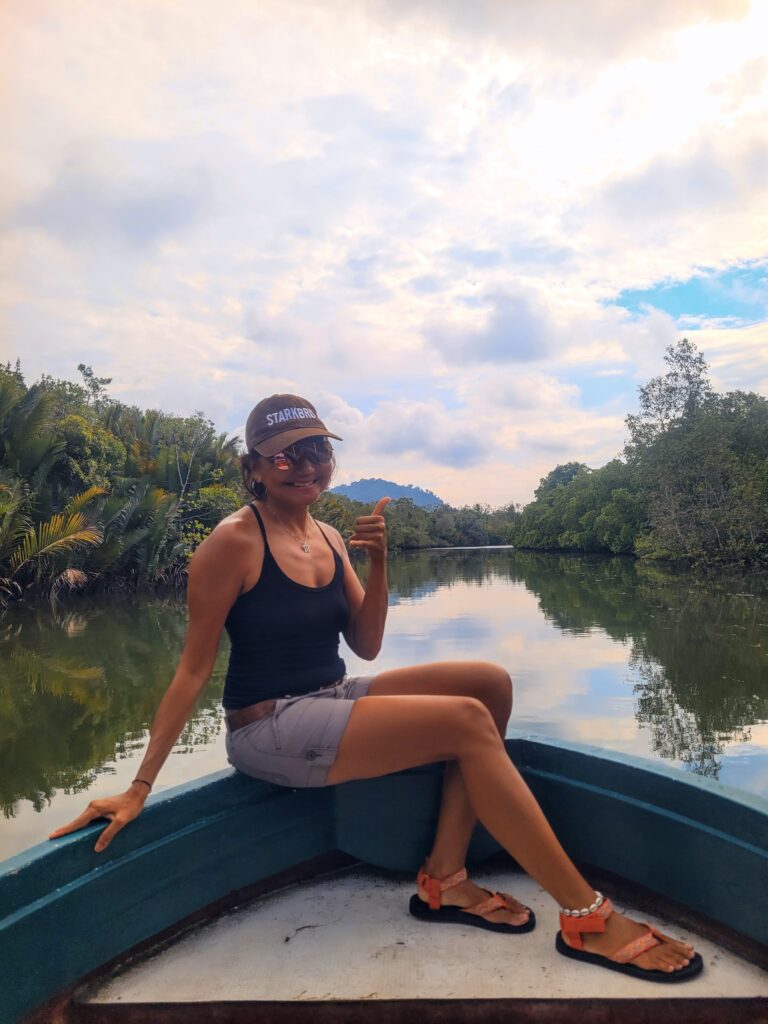
I smiled when I saw the boat, anchored next to a wooden jetty right next to someone’s home.
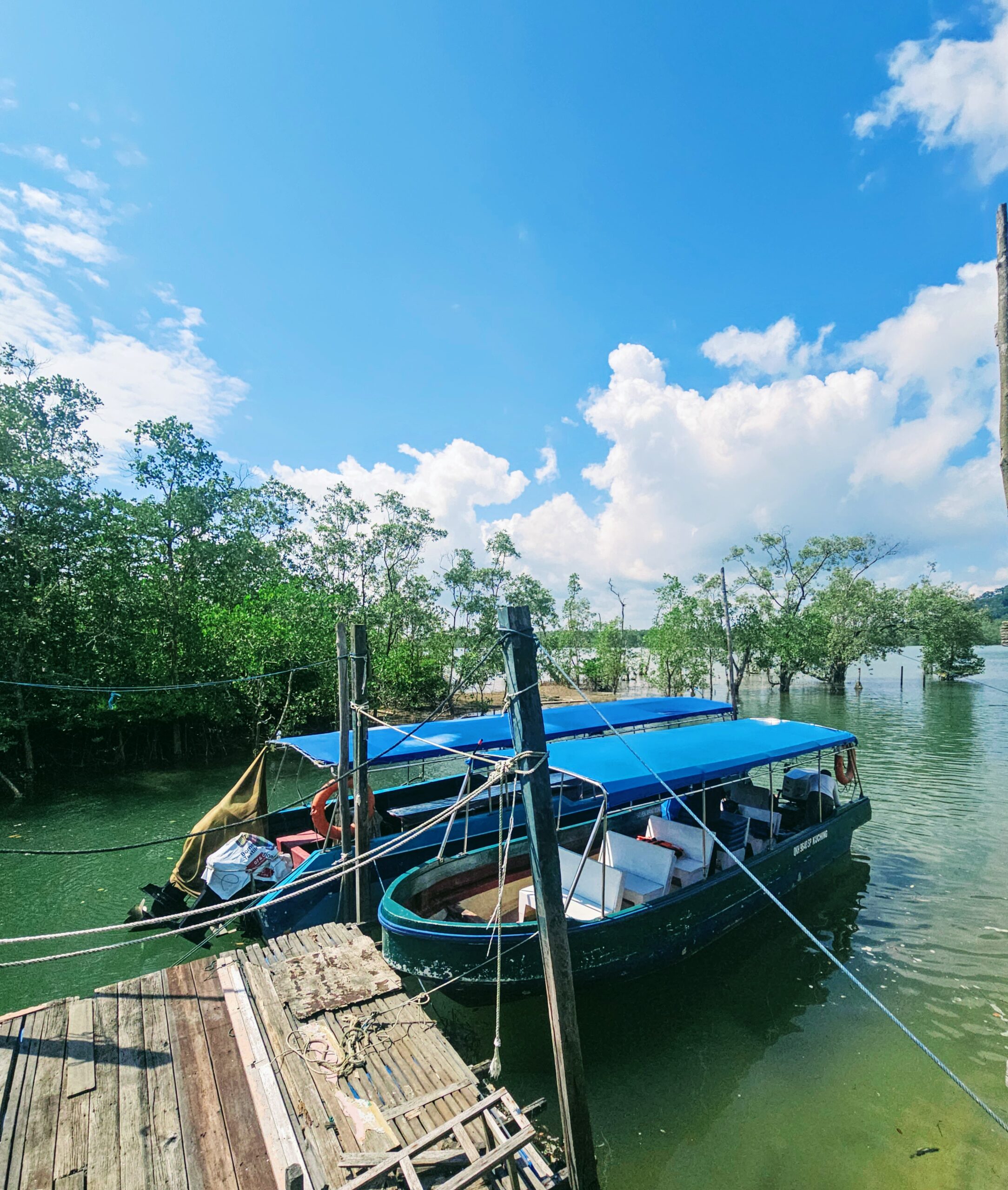
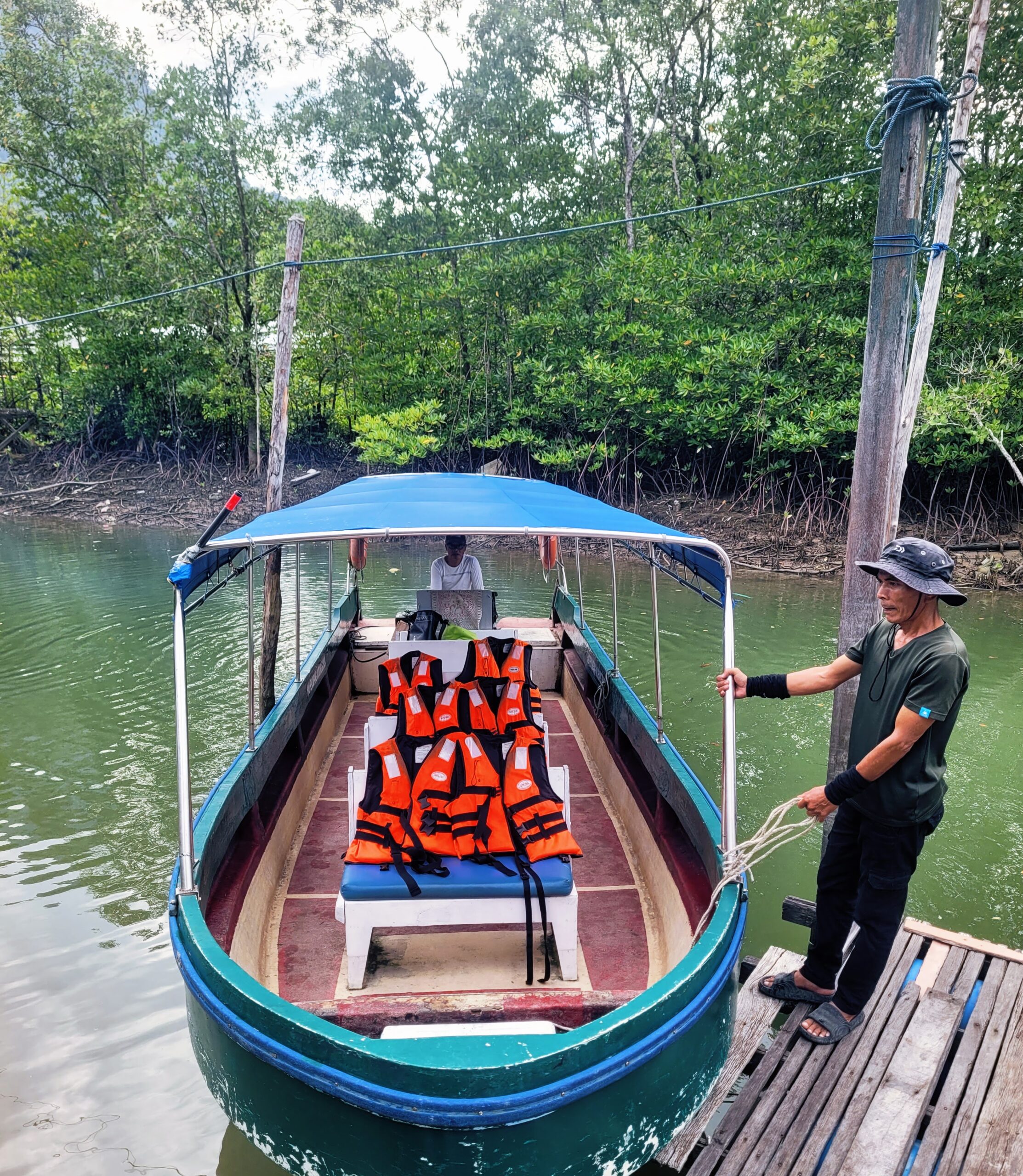
Small. Confortable. Practical. It is a suitable boat for the Santubong River.
There were life jackets stacked on board, a canopy overhead, and no crowd fighting for space or camera angles. After years of travel, I have learnt to trust experiences like this. The ones that do not try too hard usually end up feeling the most real.
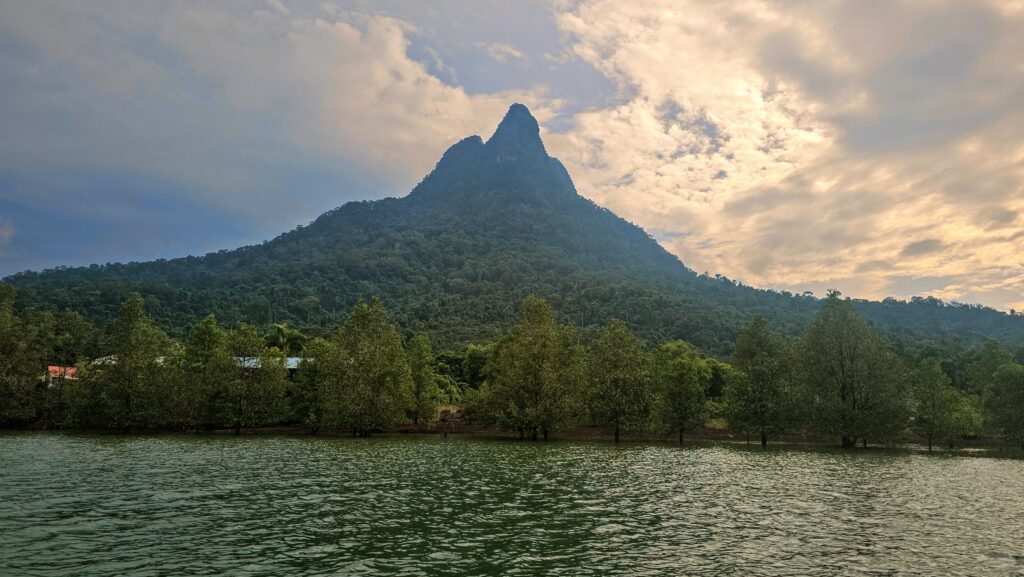
The Santubong Wetland River Cruise is one of the easiest wildlife experiences to do from Kuching, yet it still feels far removed from the city. Within a short drive, the roads give way to river, mangroves and open sky. Mount Santubong rises in the distance, the water shifts with the tide, and suddenly the day begins to slow down.
I had come hoping to see Irrawaddy dolphins. I left thinking this small local operator deserves far more attention.
Santubong Wetland River Cruise: A Different Side of Kuching
Most travellers come to Kuching for food, culture, Bako National Park or the orangutans at Semenggoh. All are worth doing, but the Santubong Wetland offer another side of Sarawak altogether.
This is not rainforest trekking. It is not a beach escape either. It is river life.
The cruise takes you through the mangrove waterways around the Santubong Peninsula, where the Santubong River and nearby estuaries form part of a rich coastal ecosystem. The area is known for Irrawaddy dolphins, crocodiles, proboscis monkeys, macaques, monitor lizards, kingfishers and white bellied sea eagles.
This however is still nature. Nothing turns up because you paid for a ticket. That is part of the charm.
Searching for Irrawaddy Dolphins in Sarawak
Irrawaddy dolphins are unlike the dolphins most people imagine. They do not usually leap dramatically for photographs. They surface briefly, sometimes only once or twice, then disappear before you have even decided whether to reach for your phone.
The guide, Johar and the boat Captain knew this. The moment we reached the right stretch of water, he cut the engine.
That small decision changed everything. Without the engine, the river became sharper. Every ripple mattered. Johar scanned the water with the kind of focus that only comes from knowing a place well.
Then we saw them. Not one or two. At least a dozen.
Some surfaced close to the boat, their rounded grey backs appearing for a second before slipping under again. I stopped trying to photograph every sighting because I was enjoying it too much. Sometimes the camera simply gets in the way.
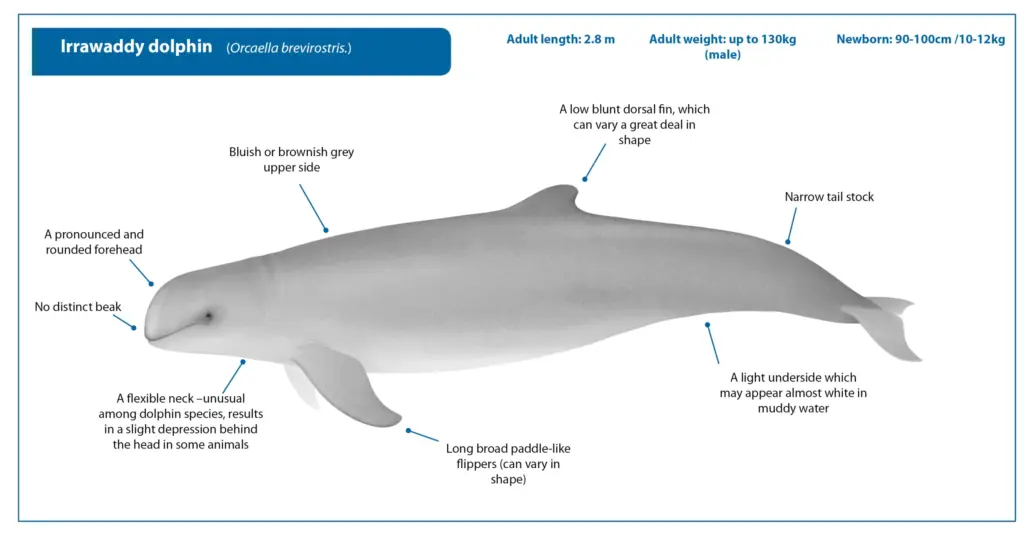
The Irrawaddy don’t look like the dolphins people picture. No sharp beak, no showy arc through the air. The Irrawaddy dolphin has a round, almost human-looking head and a blunt little dorsal fin set far back on its body, and it rolls up to breathe rather than leaps. Johar told me, without any of the practiced patter of someone who’d said it a thousand times before, that there are thought to be fewer than two hundred of them left in these waters around Kuching Bay, and that globally, several of their cousin populations elsewhere in Asia are now critically endangered, hanging on in double digits in some rivers.
We drifted rather than chased. The captain barely touched the throttle the whole time a dolphin was near, letting the boat sit still in the current instead of closing the distance, and I understood without being told that this was deliberate – Irrawaddy dolphins are shy, easily spooked, prone to simply leaving if a boat pushes too close or too loud.
Then came the moment I will remember most. A baby dolphin appeared beside its mother.
The calf moved with that clumsy, excited energy young animals have, leaping alongside her before vanishing back into the water. It did not last long. Nothing with Irrawaddy dolphins seems to last long, but that was exactly why it felt so special.
Just a mother and baby moving through their own river while we sat there, lucky enough to witness it.
Into the Mangroves of Santubong Wetlands
The dolphins may be the main reason many people book the Santubong Wetland River Cruise, but the mangroves are what hold the whole experience together.
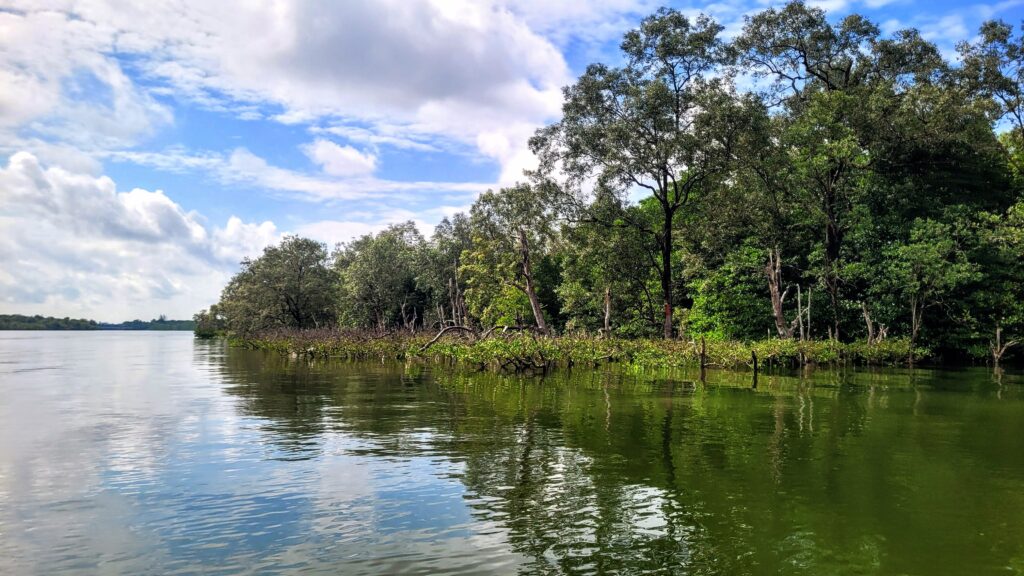
At high tide, the river felt full and alive. The boat moved through wide stretches of water before slipping closer to the mangrove edges. Roots twisted into the mud. Birds moved between branches. The landscape had that particular Borneo feeling, dense and green but never still. A hectare of this forest holds more carbon underground, in root and mud, than most forests hold in their trunks, and that the same tangle of roots is a nursery for the fish and prawns, and crabs.
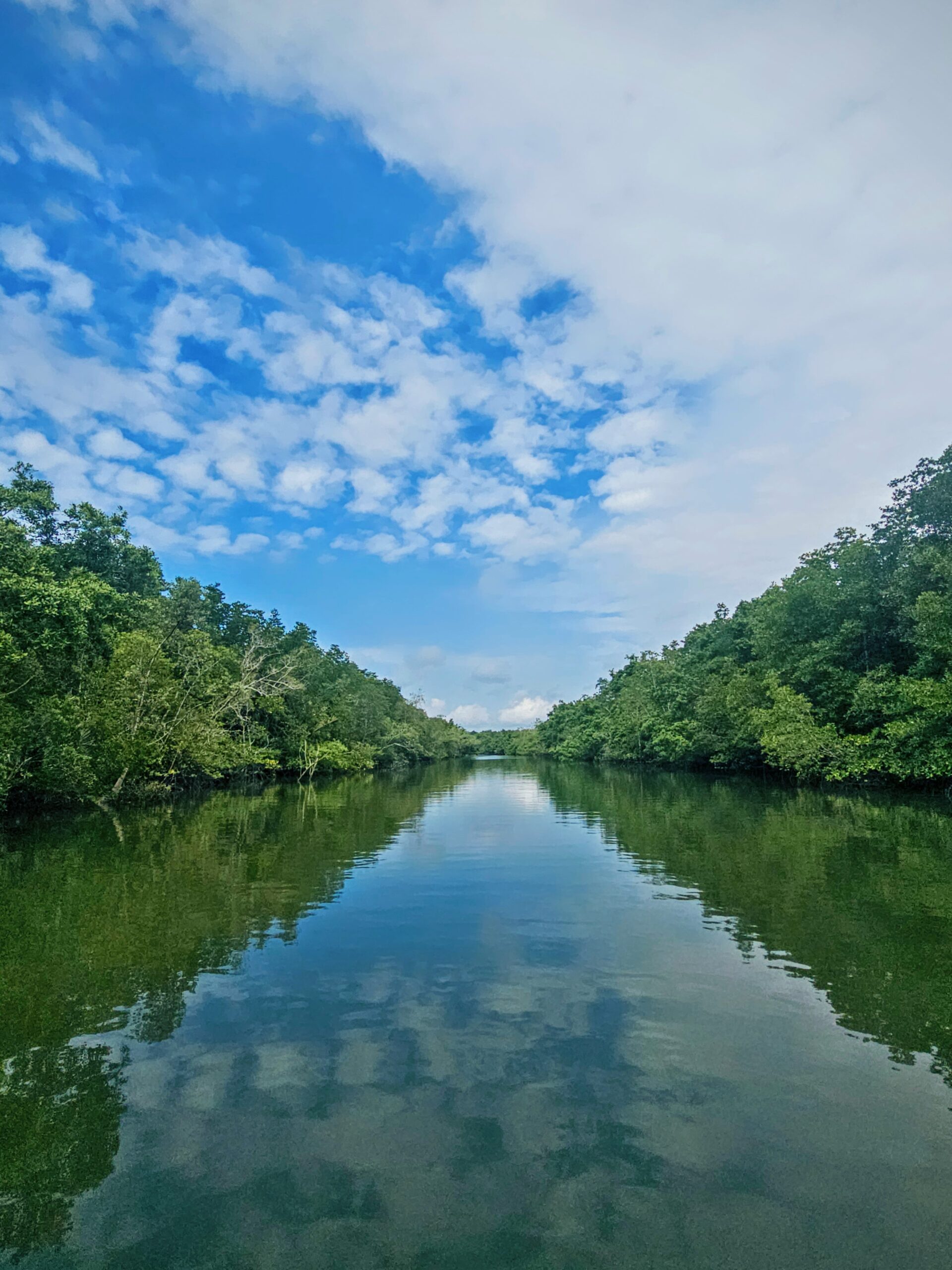
Mangroves are not always given the attention they deserve. They are not as glamorous as beaches or as dramatic as mountains, but they are among the most important ecosystems in the world. They protect coastlines, shelter young marine life, support fishing communities and provide food and habitat for wildlife.
On the boat, you understand that more clearly. The mangroves are not just pretty. They are the reason everything else is there.
Other Wildlife
The Santubong wetlands are also home to estuarine crocodiles. We did see crocodiles, although as always with crocodiles, you often see less of them than you expect. A shape near the bank. A stillness in the water. Something that looks like part of the landscape until someone points it out and your eyes adjust.
That is where the staff made a real difference. They were constantly looking.
They watched the riverbank, the treetops, the water and the sky. They pointed things out before most of us had even noticed movement.
Proboscis monkeys are also often seen in this area, especially near the mangroves. Unfortunately, I did not see them that morning.
Is Santubong Wetland Worth It?
Yes. Especially if you want a wildlife experience near Kuching that feels local, authentic and grounded in the landscape.
By the time we turned back towards Santubong, I realised the dolphins had become just part of the story.The mangroves had quietly stolen the rest. Cruising through the narrow channels was every bit as memorable as the wildlife itself. The boat drifted beneath walls of tangled mangrove roots and dense green canopy, revealing a side of Sarawak that feels untouched. Every turn opened another stretch of river, another pocket of forest, another reminder of how beautifully this ecosystem has endured.
The river was alive in ways I hadn’t expected. Fishermen were already out checking their nets, their boats moving through these waters as they have for generations. Kingfishers darted across the river while the mangroves stretched along both banks, supporting an extraordinary ecosystem that few visitors fully appreciate.
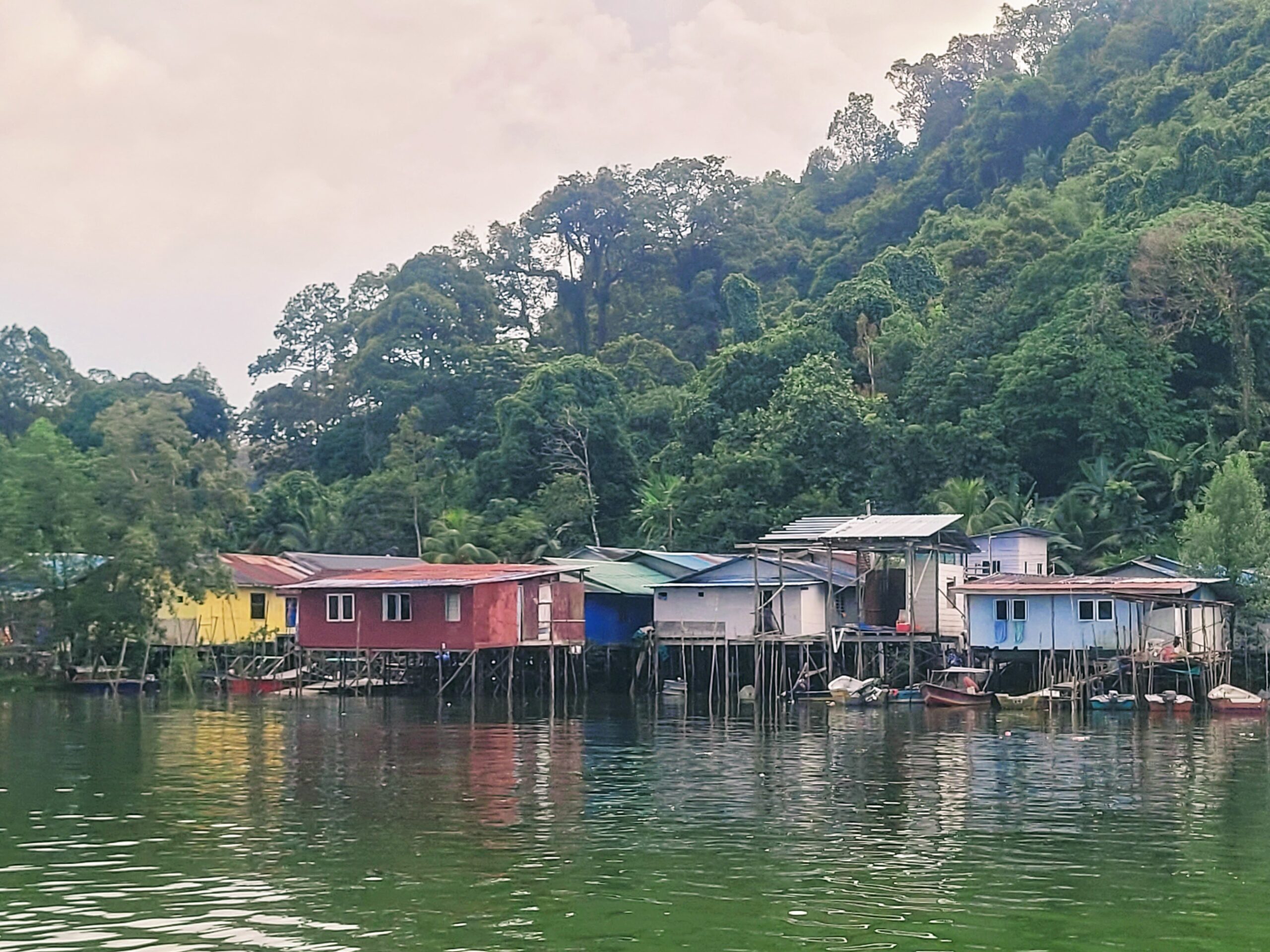
It was also lovely passing the colourful villages dotted along the riverbanks. Many are connected by the waterways, and watching life unfold from the boat offered a glimpse into a slower, simpler way of life shaped by the river. Looking up from the river, the majestic silhouette of Mount Santubong completed the view, making the journey every bit as rewarding as the wildlife sightings themselves.
Yes, watching a mother Irrawaddy dolphin surface beside her calf was unforgettable. So was spotting a crocodile resting along the riverbank, but even if the dolphins had decided not to appear that morning, I would still have come away feeling the cruise was worthwhile.
Johar and our captain never stopped looking. They slowed the boat, cut the engine whenever they thought wildlife might be nearby and shared their knowledge of a river they clearly know so well. There was never any rush. Every bend offered another chance to discover something new.
If you’re planning a trip to Kuching, make time for the Santubong Wetland Cruise. Come for the chance to see the endangered Irrawaddy dolphins, but don’t measure the experience by that alone. Watch the fishermen begin their day, appreciate the mangroves that make this ecosystem possible and enjoy a few hours exploring one of Sarawak’s richest wildlife habitats.
To book the Santubong Wetland River Cruise, contact Rakis at +60 14 889 8059
Frequently Asked Questions About the Santubong Wetland River Cruise
Is the Santubong Wetland River Cruise worth it?
Yes. The cruise offers the chance to see endangered Irrawaddy dolphins, crocodiles and other wildlife, but the mangroves, colourful riverside villages, fishermen and views of Mount Santubong make the experience worthwhile even without wildlife sightings.
Can you see Irrawaddy dolphins near Kuching?
Yes. The Santubong River, around 30 minutes from Kuching, is one of the best places in Sarawak to spot endangered Irrawaddy dolphins in the wild. Sightings aren’t guaranteed, but experienced local guides know where they are most often seen.
What wildlife can you see on the Santubong Wetland River Cruise?
Besides Irrawaddy dolphins, you may also spot estuarine crocodiles, proboscis monkeys, monitor lizards, macaques, kingfishers, white-bellied sea eagles and many other bird species.
When is the best time to visit the Santubong Wetlands?
Morning and late afternoon are generally the best times for wildlife watching. If you choose the evening cruise, you’ll also have the chance to see fireflies lighting up the mangroves after sunset, adding another magical dimension to the experience evening cruise.
Who I travelled with
I joined the local tour operator, Santubong Wetland River Cruise with Rakis and his team. Their knowledge of the river, patience in searching for wildlife and genuine passion for the wetlands made the experience all the more memorable.
📞 Book directly with Rakis
WhatsApp / Mobile: +60 14 886 8059
Planning a trip to Santubong? You may also enjoy:
➜ Cove 55: A Boutique Escape Near Kuching
➜ Gaya Island Resort: Sustainability, Mangroves and Marine Conservation