☕️ 10 minute read
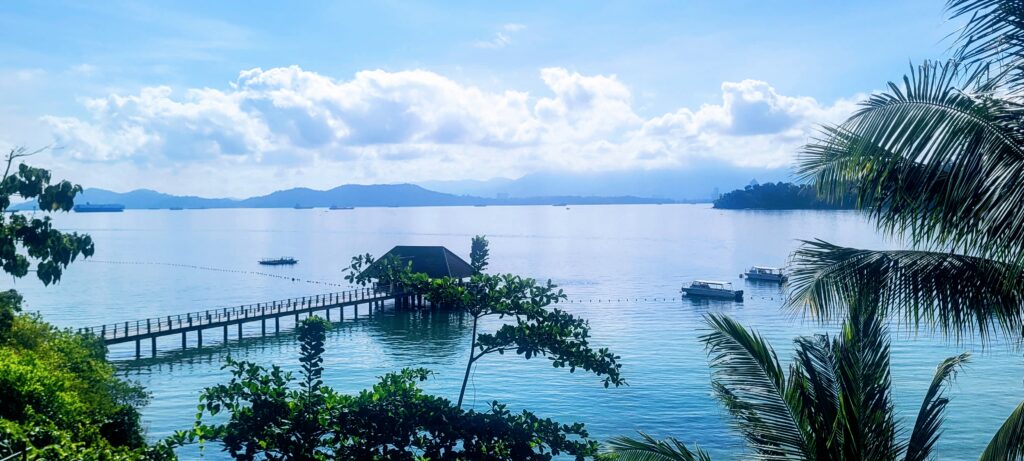
Inside Gaya Island Resort conservation work in Sabah, where luxury and responsibility are not opposites – they are, at their best, inseparable. Conservation here is not a feature. It is the foundation. And this is the story of the people who built it.
Covid the Turtle: Rescued, Recovered and Returned to the Sea
The Gaya Island Resort conservation story begins, as the best ones do, with a single act of rescue.
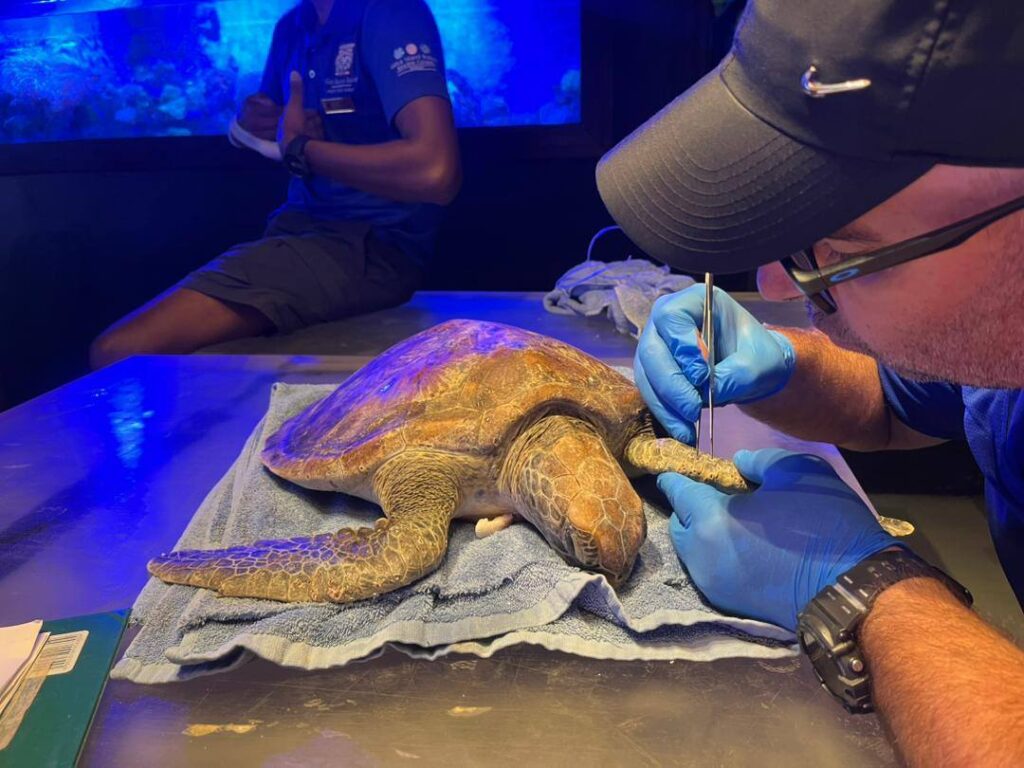
In March 2020, at the height of a global pandemic that had brought most of the world to a standstill, a staff member at Gaya Island Resort spotted a green sea turtle floating in the sea. It could not dive. It could barely move. Across the rear of its shell was a large open crack, and the wound was severely infected.
They named it Covid.
Covid was immediately brought to the Gaya Island Resort Marine Centre for treatment. The conservation team there works on three principles: Rescue, Rehabilitate and Release.
Covid’s rehabilitation was neither quick nor straightforward. A benign tumour in its neck area was removed. The team monitored the situation closely, adjusting the rehabilitation programme alongside weight therapy, designed to help Covid regulate buoyancy and eventually relearn how to dive.
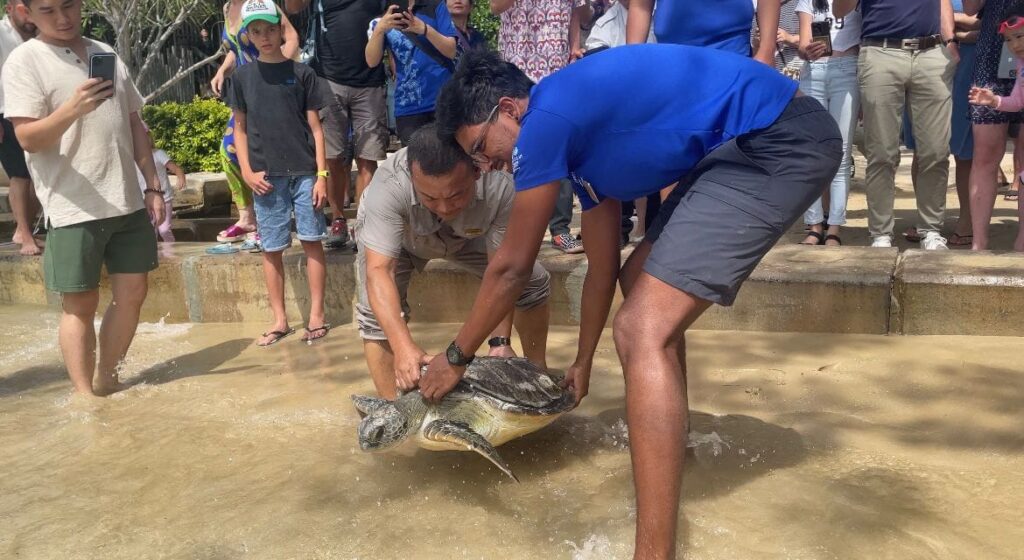
Every single day. For four and a half years. For one turtle.
Can you imagine what that felt like, for the Gaya Island Resort conservation team who had given four and a half years to that single moment? I found myself blinking back tears just hearing it.
Years of daily care, expert treatment, patience and absolute commitment to a single animal’s recovery. And then the day came, Covid was released back into the ocean, GPS-tracked, and returned to the sea it had almost lost.
This story is not for a brochure, or an award, or a press release. It is not a programme, nor is it a policy or a line in a sustainability report. It is what happens when people genuinely care, and never give up.
Scott and the Coral He Crossed the World For
The Marine Centre at Tavajun Bay, where Scott Mayback is based, was inaugurated in 2013. Since then it has provided critical care to endangered Green Sea Turtles and Hawksbill Turtles, and has become one of the most hands-on marine rehabilitation operations run by any hospitality property in the region.
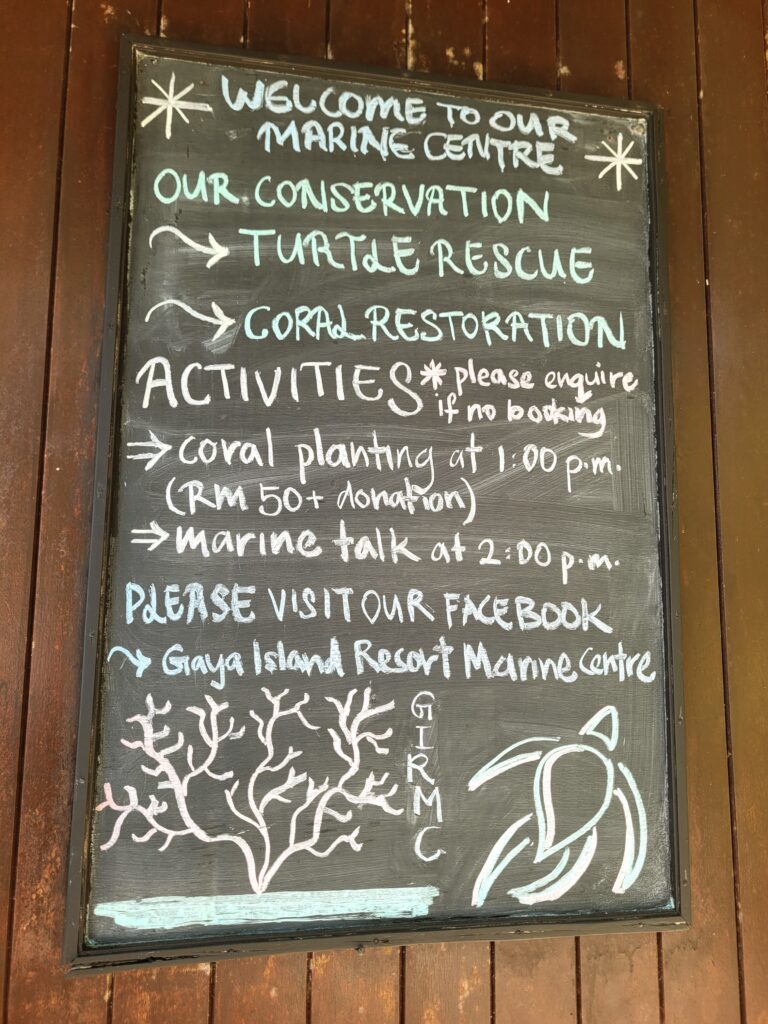
Coral is Scott’s obsession – the thread that runs from his American childhood all the way to this bay in Borneo, roughly 10,000 miles from where that love began. The boy from the US who fell in love with coral is, quite literally, rebuilding the reef. On the other side of the world. And it is working.
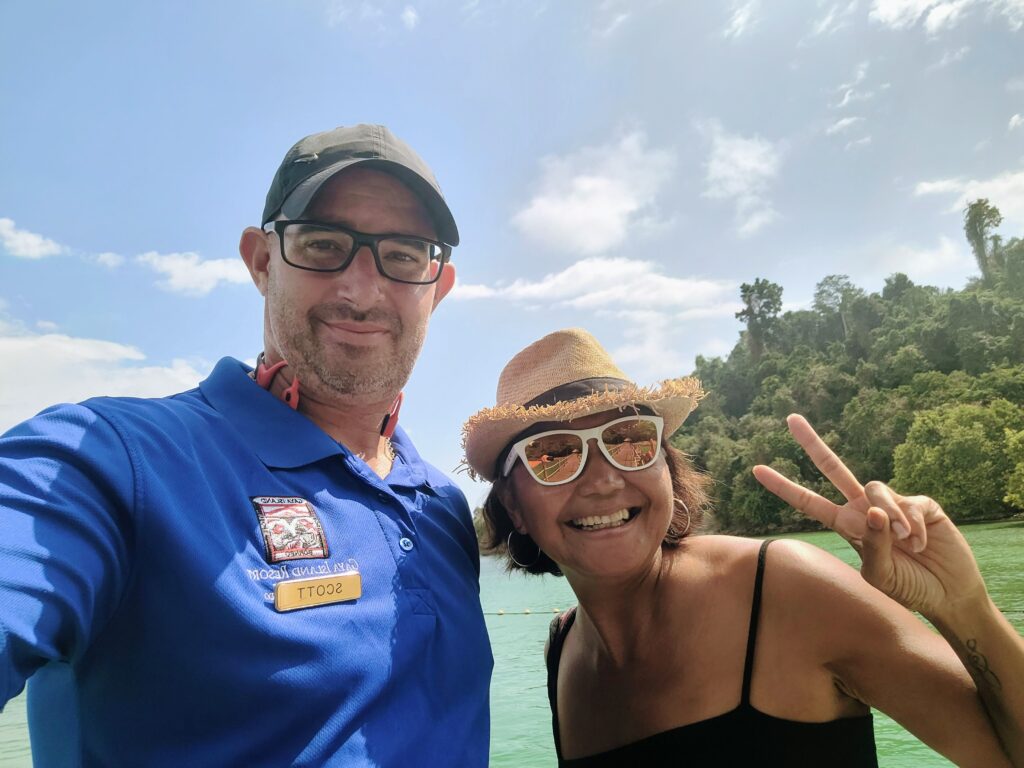
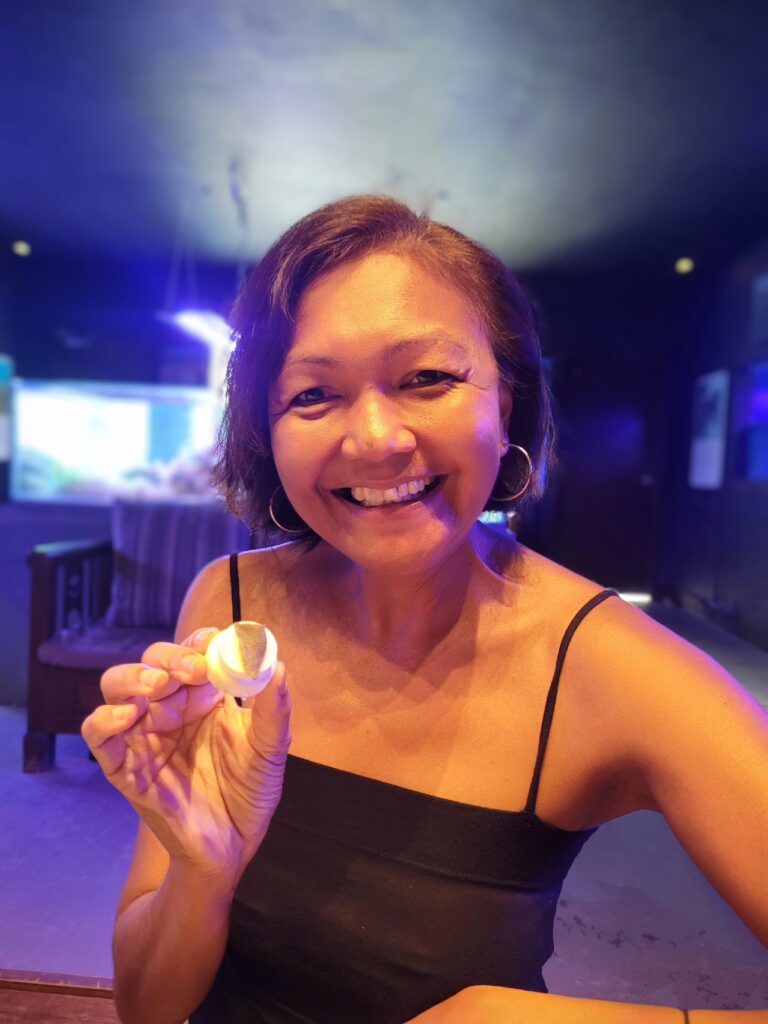
What he has built here is remarkable not just for its ecological importance but for its ingenuity. Each coral fragment is set into ceramic coral plugs, purpose-made and carefully placed. The chopping boards from the resort kitchen are repurposed as holding racks in the aquariums. Small details, but they reveal everything about the people behind this work. Everyday materials given a second life in the service of something that will outlast all of us.
The boy from the US who fell in love with coral is, quite literally, rebuilding the reef. On the other side of the world. And it is working.
The Island That Was Always Worth Protecting
Gaya Island Resort sits within the 4,929-hectare Tunku Abdul Rahman Marine Park, a protected marine ecosystem off the coast of Kota Kinabalu, Sabah. The island itself, Pulau Gaya, is the largest in the park, blanketed in ancient rainforest estimated to be over ten million years old, fringed by mangrove forests that are at least a century old, and surrounded by waters that sit on the edge of the Coral Triangle — one of the most biodiverse marine regions on the planet.
To be located here is a privilege. Gaya Island Resort has always understood that privilege as a responsibility.
The resort’s conservation philosophy is rooted in a commitment not merely to protect the inherent beauty of its surroundings but to nurture it back to fullness, safeguarding native wildlife, rehabilitating fragile ecosystems, and championing conscious choices at every level. That philosophy is not a statement on a wall. It is enacted, daily, by real people doing real and often unglamorous work.
Behind the turtle’s recovery, behind Scott’s coral garden, behind everything you have just read, there is Justin Juhun.
Justin Juhun: The Architecture Behind Everything
At the heart of the Gaya Island Resort conservation effort is Justin Juhun.
There is a moment, somewhere in the middle of a conversation with Justin Juhun, when the word resort starts to feel inadequate.
Justin is the YTL Hotels Conservation Director, a title that, at lesser properties, might mean overseeing a recycling programme and printing sustainability pledges on little cards by the bathroom sink. Here, it means something else entirely. It means managing a marine rehabilitation centre, a wildlife conservation programme, a mangrove nursery, a firefly sanctuary, a bird rescue and release programme, and a team of dedicated naturalists who between them know this island – its waters, its forests, its creatures, with a depth that years of love and study produces. There are no suits here. No polished presentations. Just a man who shows up, gets his hands dirty, and gets it done.
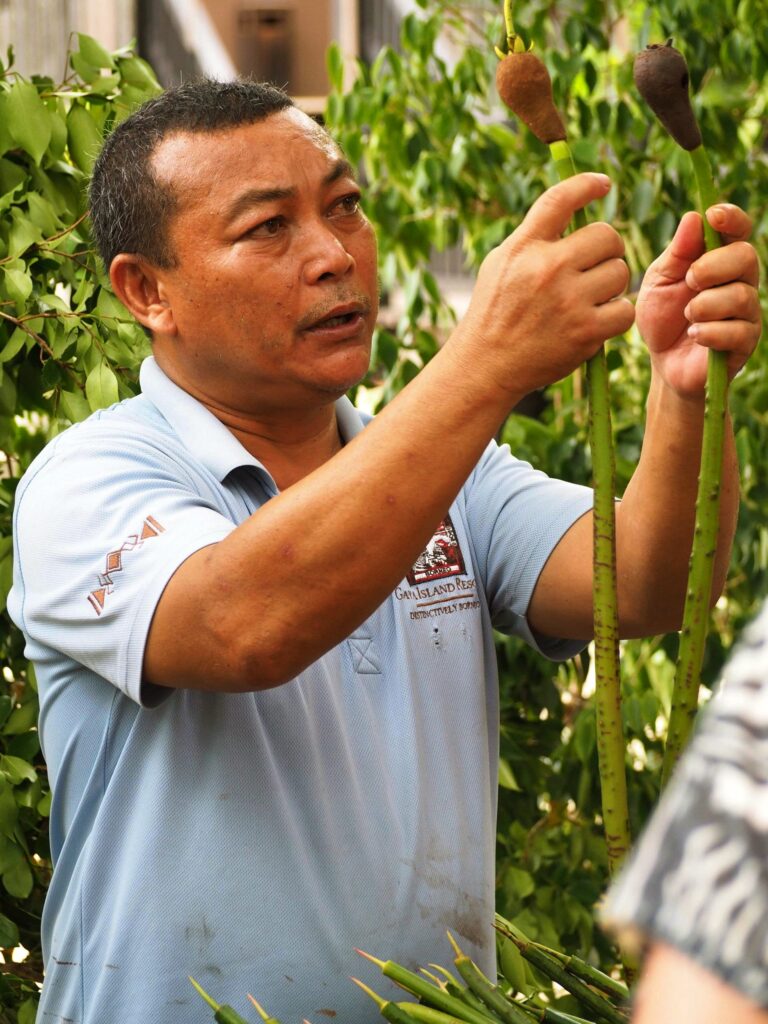
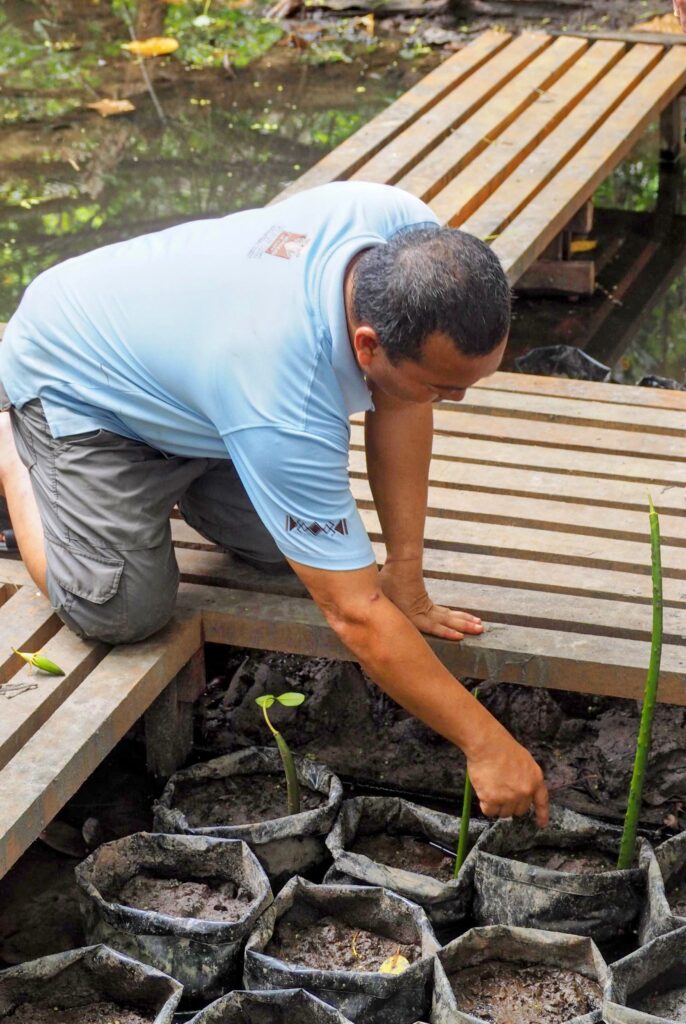
Over lunch, Justin spoke about the work simply and without fanfare. That simplicity, that absence of performance, was the most telling thing about it.
Crucially, Justin’s work does not stop at the island’s shore. He and his team extend their expertise across YTL Hotels properties throughout Malaysia, proof that this is a group-wide commitment, not a single resort’s project.
At Pangkor Laut Resort, coral fragments planted in partnership with Reef Check Malaysia have been growing since 2011, and with over 88 per cent of those corals now thriving, the waters off that private island have become a living ecosystem in their own right. In 2022, Pangkor Laut opened its very own Nature Conservation Centre, expanding into sea turtle rescue, wildlife rescue, and serving as the pilot project for an innovative bat house programme.
At Tanjong Jara Resort on the east coast of Peninsular Malaysia, a beach that has been a turtle hatching ground since time immemorial, the Turtle Watch programme, run in collaboration with Pulihara (previously known as Lang Tengah Turtle Watch), has been standing guard over nests and releasing hatchlings into the sea since 2016. In 2025, Tanjong Jara opened its own Nature Conservation Centre, adding wildlife rescue to its work, birds, owls, hornbills, and small mammals now finding refuge there too. The numbers are staggering, but it is the consistency of the commitment, year after year, that tells you everything.
These are years of sustained, serious, scientifically grounded conservation work carried out by a hospitality group that has decided, at the deepest level of its identity, that the places it occupies are worth protecting.
And Justin Juhun is the reason.
Bata and the Mangroves: Where Expertise Meets Devotion
The shoreline of Gaya Island Resort is fringed by mangrove forest, and not just any mangrove decorative forest. It is a rare, living, hundred-year-old ecosystem that the resort has been actively expanding since 2014.
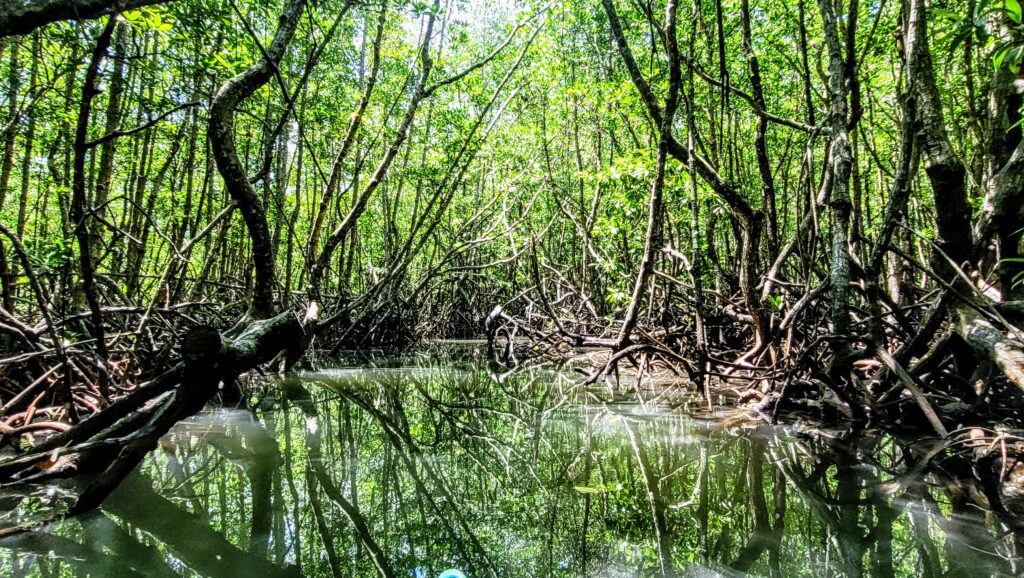
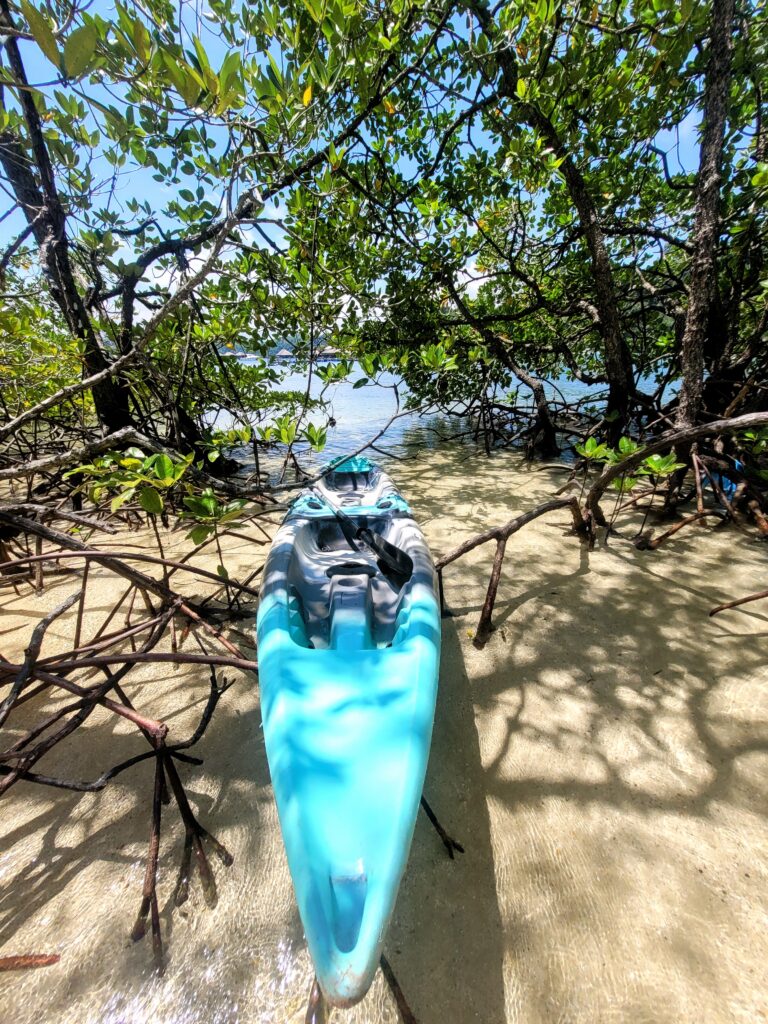
Kayaking through these channels with Bata, the resort’s Marine Ecologist whose knowledge of the ecosystem is so encyclopaedic I took to calling him Batapedia. He speaks about this forest the way some people speak about family – with pride, with protectiveness, and with the joy of someone who never tires of showing you something he loves.
And through his eyes, even what you thought you already knew about mangroves, looks completely different. They are essential. They store up to five times more carbon per hectare than tropical rainforests. Their root systems are nurseries for fish, prawns and crabs in their earliest stages of life. They filter pollutants from coastal water before it reaches the open sea. They absorb storm surge and protect coastlines from erosion in ways no engineered structure can replicate. They shelter hornbills, monitor lizards, otters and mangrove crabs inside what looks, from the outside, like an impenetrable wall of green.
What Gaya Island Resort conservation team has done is not simply appreciate all of this. They have committed to growing it. Since 2014, the resort has planted over 3,000 mangrove saplings using a specially developed box planting method, initially with recycled plywood, later upgraded to concrete hexagonal blocks for greater durability. Over the years, those saplings have grown into shrubs at a 75 per cent success rate.
Seventy-five per cent. Three thousand saplings. A success rate that any reforestation project in the world would be proud of.
At the end of our kayak, Bata pressed a seedling into my hands and pointed to a spot in the silt. I planted it. Whether mine survived, I genuinely don’t know, but walking the boardwalk that threads through the resort grounds later, flanked on both sides by mangroves the team has grown season by season, year by year, quietly expanding.The proof is already growing.
Beyond the Reef: A Firefly Sanctuary and the Wildlife That Calls This Island Home
The Gaya Island Resort conservation works extends far beyond the waterline. The Gaya Island Resort Wildlife Centre, launched in October 2016 and led by Justin and his team of naturalists, champions three core pillars: Proboscis Monkey Preservation, Nature and Wildlife Conservation, and educational Nature Trails.
The Red Giant Flying Squirrel, which dwells in hollow trees more than 25 metres above ground, is supported by artificial nesting boxes installed within the resort grounds. A resident owl named Ninox, found abandoned and unable to fly by a maintenance staff member was patiently rehabilitated by the naturalist team and released back into the jungle. It was the first success of what has become an ongoing avian rehabilitation programme, with numerous rescues and releases in the years since.
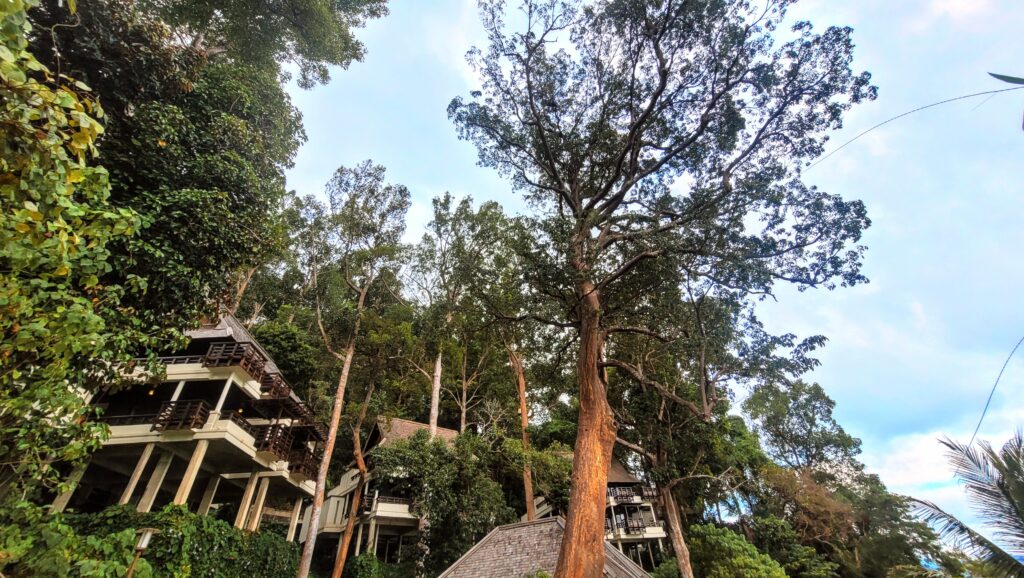
And then there is the firefly sanctuary. Extensive research identified Excoecaria indica as the primary host plant for Pteroptyx fireflies, and seeds were collected, cultivated and planted with care. The plants are now thriving, their foliage providing ideal nesting sites, their blossoms attracting fireflies with rich sources of nectar. In time, the gentle evening glow of these insects will become a signature of the resort experience.
A resort that plants trees specifically to attract fireflies for its guests is a resort thinking generationally. That is not a marketing decision. That is a love letter to the natural world.
What Justin Said Over Lunch
There was a moment in our conversation when Justin mentioned the sea grass project.
Years of effort. A carefully built, patiently tended restoration of sea grass beds, one of the most critical marine ecosystems for dugongs, sea turtles and juvenile fish. The project grew slowly, with enormous dedication. And then the sea washed it away. Just like that. Gone.
There was no drama in the way he said it. No self-pity. Just a subtle acknowledgement that this is the nature of conservation work, that the ocean does not negotiate, that setbacks are part of the story, that the only response to losing years of work is to understand what happened and begin again.
They started again.
That moment, that understated, absolute refusal to be defeated, is the most important thing to understand about what is happening at Gaya Island Resort. This is not conservation as a feature. This is conservation as a conviction. As a practice. As the thing a group of people have decided to do with their professional lives, in one of the most biodiverse and most threatened corners of the planet.
Why This Matters and Why You Should Go
Borneo is one of the most biodiverse places on the planet. The Coral Triangle that surrounds it is irreplaceable. The mangroves, the rainforest, the species found nowhere else on earth. They are worth protecting with everything we have. And at Gaya Island Resort, that is precisely what is happening.
Gaya Island Resort conservation team is solving all of this, within the 4,929 hectares of marine park that surrounds it, within the ancient rainforest that backs it, within the waters where Scott’s coral garden grows quietly towards the light, something is being preserved and restored and stubbornly defended.
A stay here is not just a holiday. It is participation. The Sabah Parks conservation fee that every guest pays goes directly to preserving the Tunku Abdul Rahman Marine Park ecosystem. The experiences offered, snorkelling the coral garden, kayaking the mangroves, walking the jungle trails, are designed not to extract from this environment but to build a relationship with it.
Go and plant a coral. Let Bata teach you what a mangrove actually does. Ask Justin about the sea grass. Say hello to Scott. These conversations, these encounters, these small acts of planting and learning and witnessing, they are the point.
With Justin, Scott, Bata and their team looking after it, perhaps it will be here for ten million more years.
If you are wondering what it feels like to wake up in this place, the rainforest behind you, the South China Sea in front, I wrote about that too. Read my full experience of Gaya Island Resort here
Gaya Island Resort is a YTL property and a member of Small Luxury Hotels of the World, located within Tunku Abdul Rahman Marine Park, Pulau Gaya, Kota Kinabalu, Sabah, Malaysia. To learn more about the resort’s conservation efforts, visit gayaislandresort.com/nature-conservation
This visit was hosted by Gaya Island Resort. All opinions are entirely my own.