☕ 8 minute read
A Stay at Hyatt Centric Kota Kinabalu Changed How I See This City
I first came to Kota Kinabalu in 1992. I was here for work, staying at the Hyatt Regency, back when Wisma Merdeka was the heart of the city. The place everyone referenced, everyone gathered around. I ate nasi lalap there, withdrew cash from the Maybank on Gaya Street, and the only bar I knew was Shenanigan’s.
I’ve been back to KK over the years. Never quite long enough. Always meaning to go deeper.
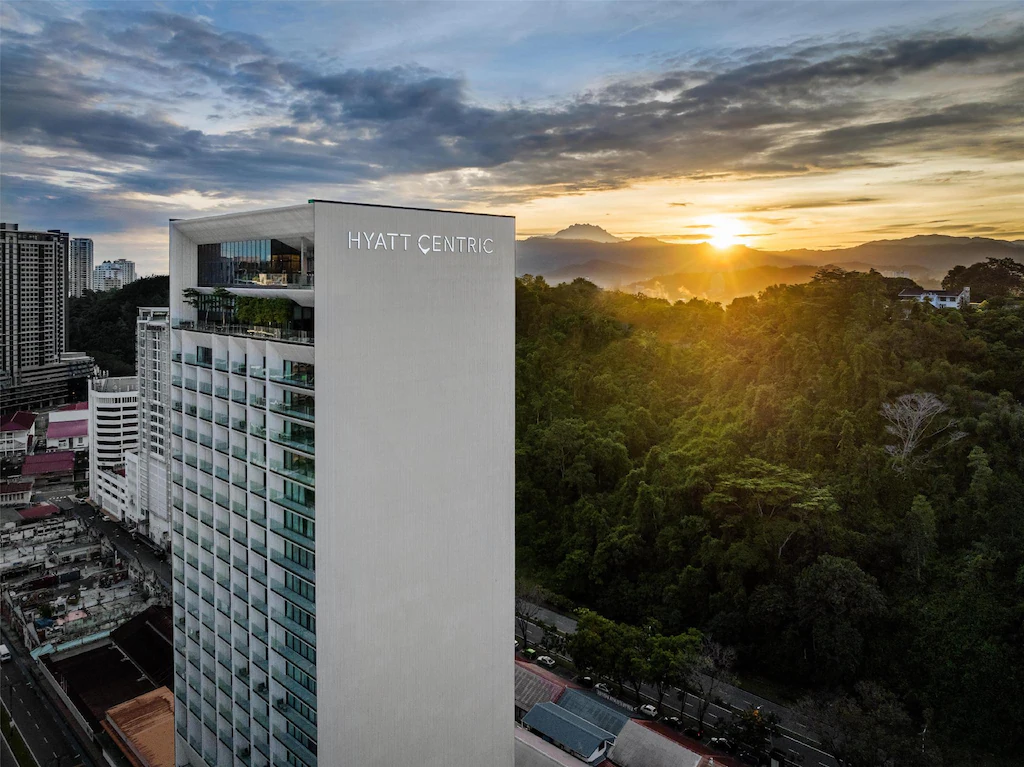
This time, I’m at Hyatt Centric Kota Kinabalu, and it strikes me as quietly fitting, coming back to this city under the same roof, different address. Same warmth, different energy. Smaller, sharper, planted right in the middle of the city in a way that practically pushes you out the door. Which, as it turns out, is exactly what KK deserves.
And Hyatt Centric is exactly what changed everything.
Where Design Meets Soul
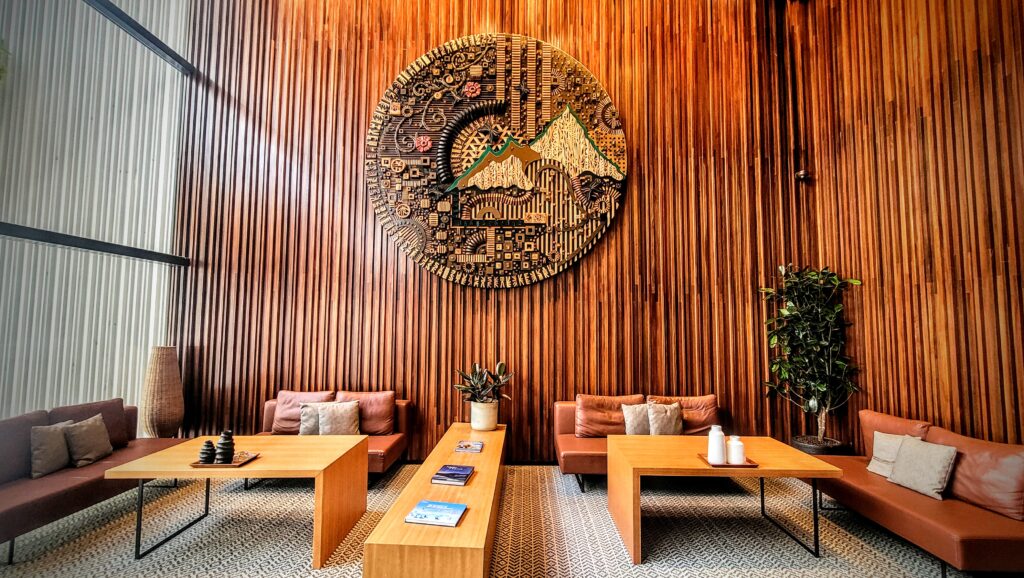
Hyatt Centric Kota Kinabalu is the city right at your feet. There isn’t a grand driveway, and neither is there a theatrical lobby reveal. Just step outside and the city is already happening. No Grab taxi required. KK begins at the front door.
The building was conceived by a Japanese architect, Kengo Kuma. His design is heavily influenced by the natural beauty of Sabah.
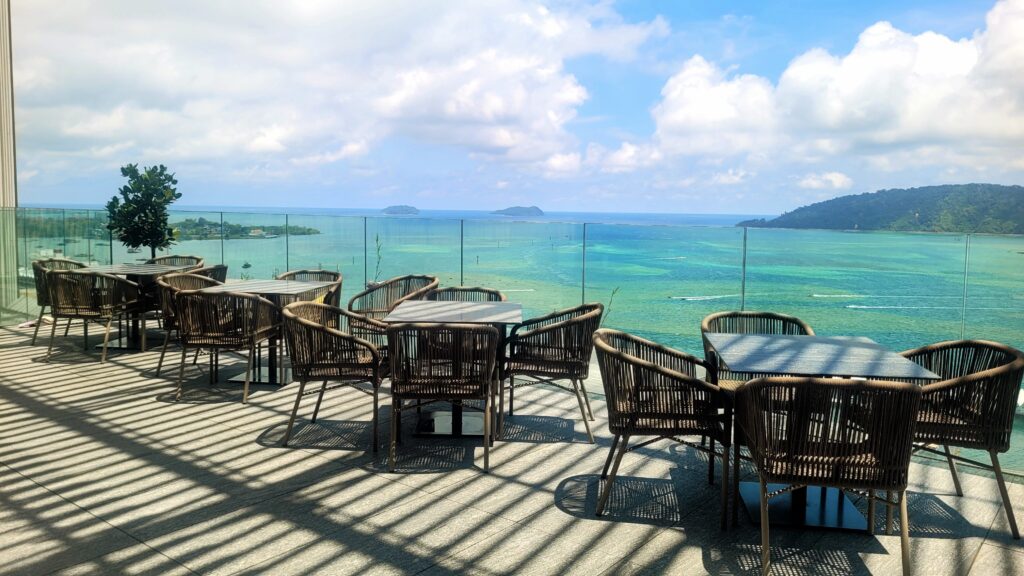
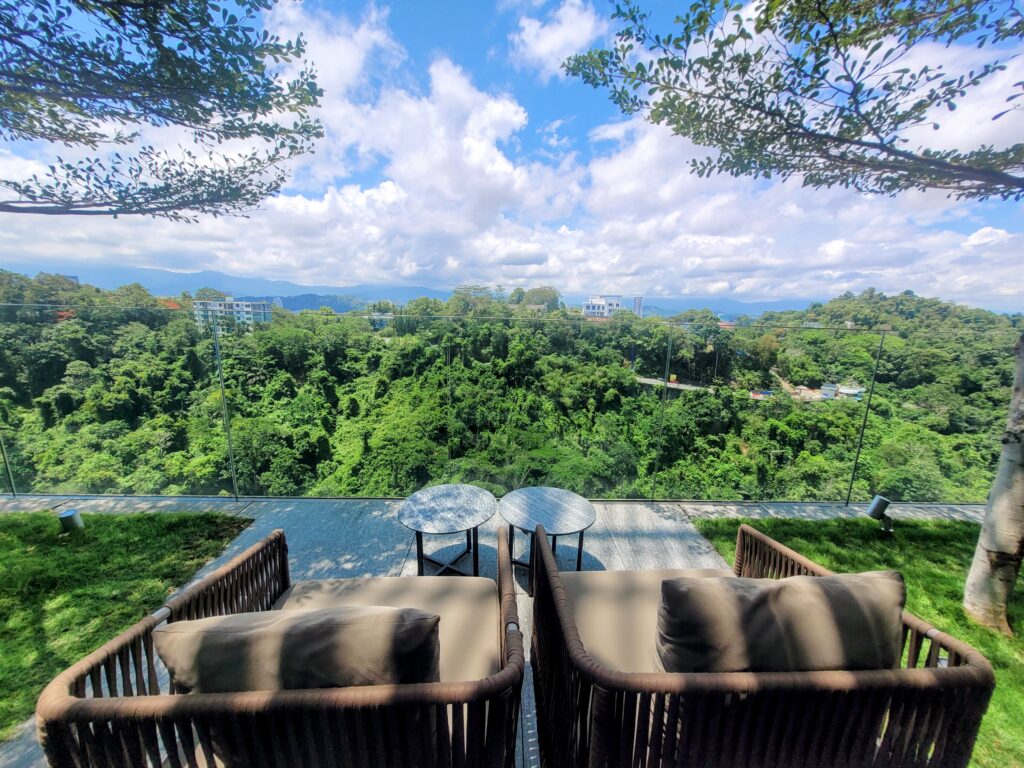
The lobby represents the roots – open, grounded, dense with lower greenery. The rooftop is the crown, open to everything: Signal Hill, the islands of Tunku Abdul Rahman Marine Park, the South China Sea.
The wood is local. The rock and bamboo are local. Mount Kinabalu appears in the artwork, in the furniture details, in the quiet insistence that this is not a hotel that could exist anywhere else. Even the books placed in each room – When the Stars Come Out, botanical art, Clean Green – read less like amenities and more like a point of view.
The carpet and wallpaper carry patterns drawn from Kadazan-Dusun clothing and accessories, the indigenous heritage of Sabah woven into the fabric of your stay. Local art appears throughout the building, including a hand-carved wood sculpture in the lounge where, if you look closely enough, a rare Rafflesia flower blooms inside the grain.
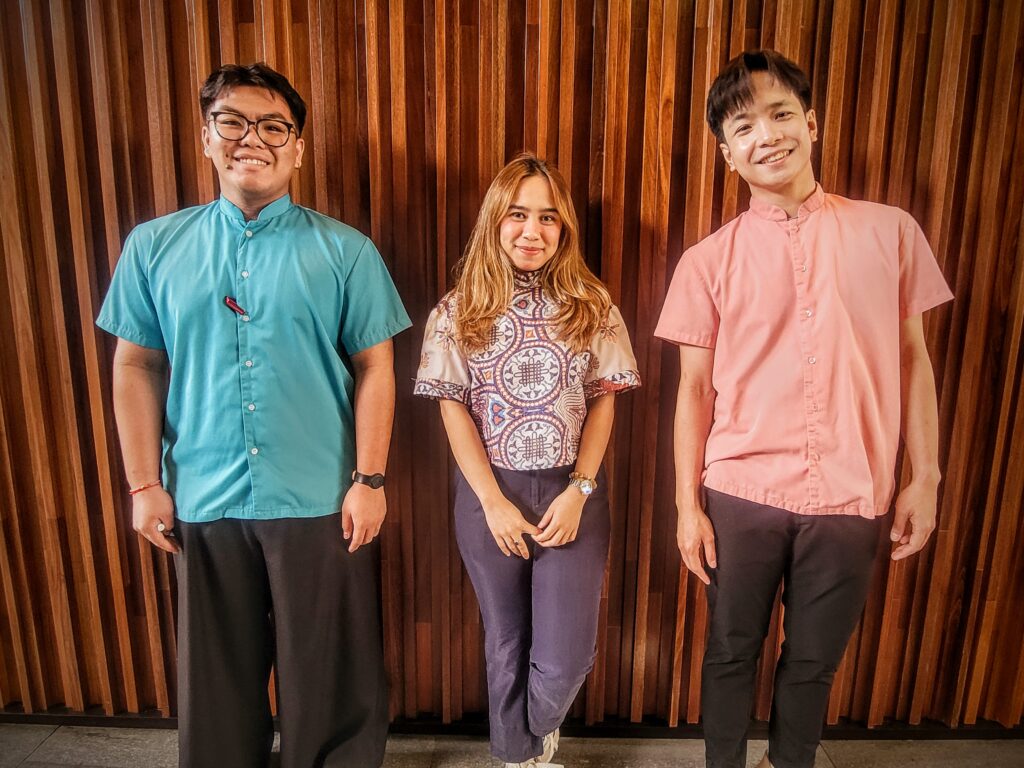
The uniforms, designed by Malaysian fashion designer Melinda Looi, complete the picture – cool, confident, entirely their own. This is a hotel that knows exactly where it is and is proud of it.
The Room
The King Bed Hill View Deluxe is 60 square metres of the kind of comfort that ambushes you. You tell yourself you’ll just sit on the bed for a moment. An hour later you surface, not entirely sure what happened.
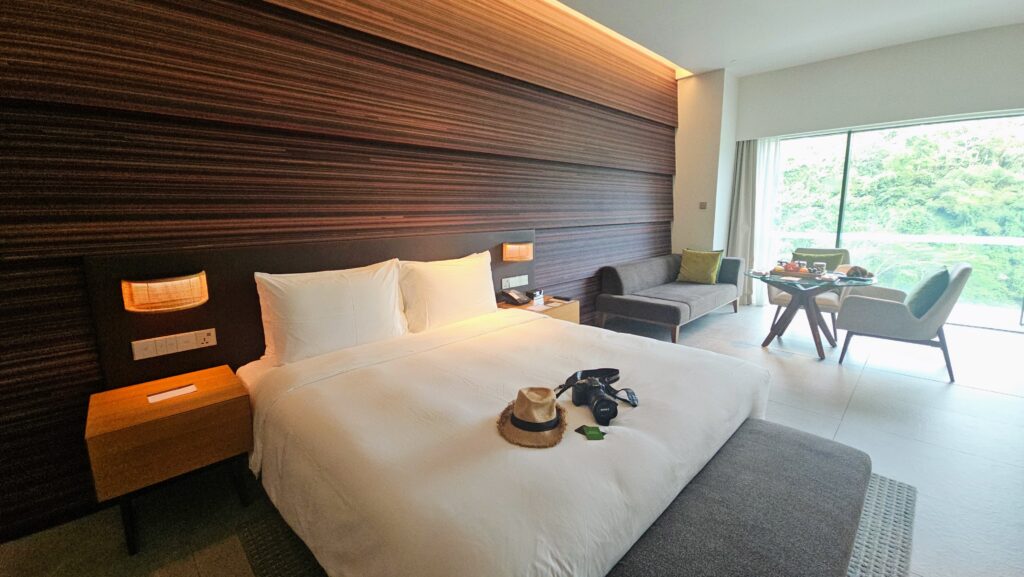
Set the alarm. 5.30 a.m, before the city wakes, pull back the curtains and there it is. Mount Kinabalu in the distance, the sky doing something extraordinary behind it. Soft light, cool air, the world not yet switched on. It is the view that makes the early alarm entirely worth it, every single time.
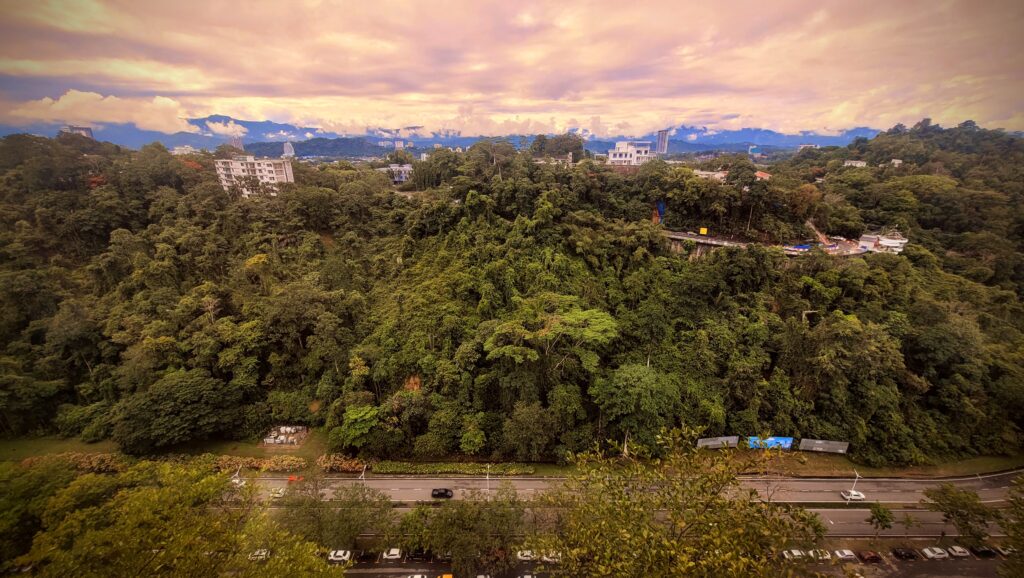
And then later – after a day of walking KK’s streets, after the kopitiam and the old shophouses and the lorong-lorong (alleyways) that led somewhere unexpected – after whatever cocktails Alvin at ON23 Sky Bar has convinced you to try, you sink back into that bed and the room holds you. The city hums somewhere below. The mountain is still out there in the dark.
Sleep comes easily here. That tells you something.
A Pool With Two Worlds
Before the day begins and after it ends, there is the pool.
Hyatt Centric’s rooftop pool is one of those rare amenities that earns the word extraordinary without straining for it. Swim to one end and the South China Sea opens up ahead of you – the horizon, the islands, the particular quality of light on water in the late afternoon. Turn around and swim back, and the rainforest rises to meet you, green and enormous and immediate.
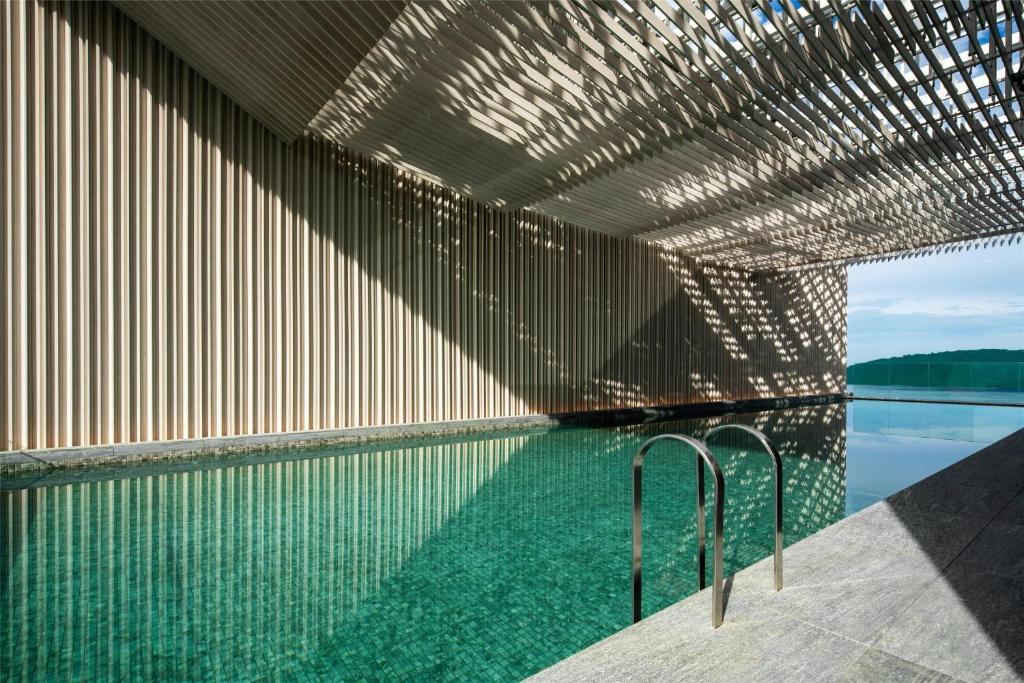
Two worlds, one pool, the length of a few strokes between them.
It sounds like a brochure line. It isn’t. Standing at either end of that pool, you understand something about Kota Kinabalu that the city doesn’t bother explaining – that it occupies a genuinely extraordinary geography, where ocean and jungle share the same postcode.
The Heart of This Hotel Is Its People
Before the rooms, before the restaurant, before the rooftop – the people.
There is something about Sabahans that no hospitality training manual could ever produce. A warmth that doesn’t translate to other latitudes, it simply exists. In the way they greet you, the way they remember your name, the way they make you feel like your presence genuinely matters. You feel it immediately. You miss it the moment you leave.
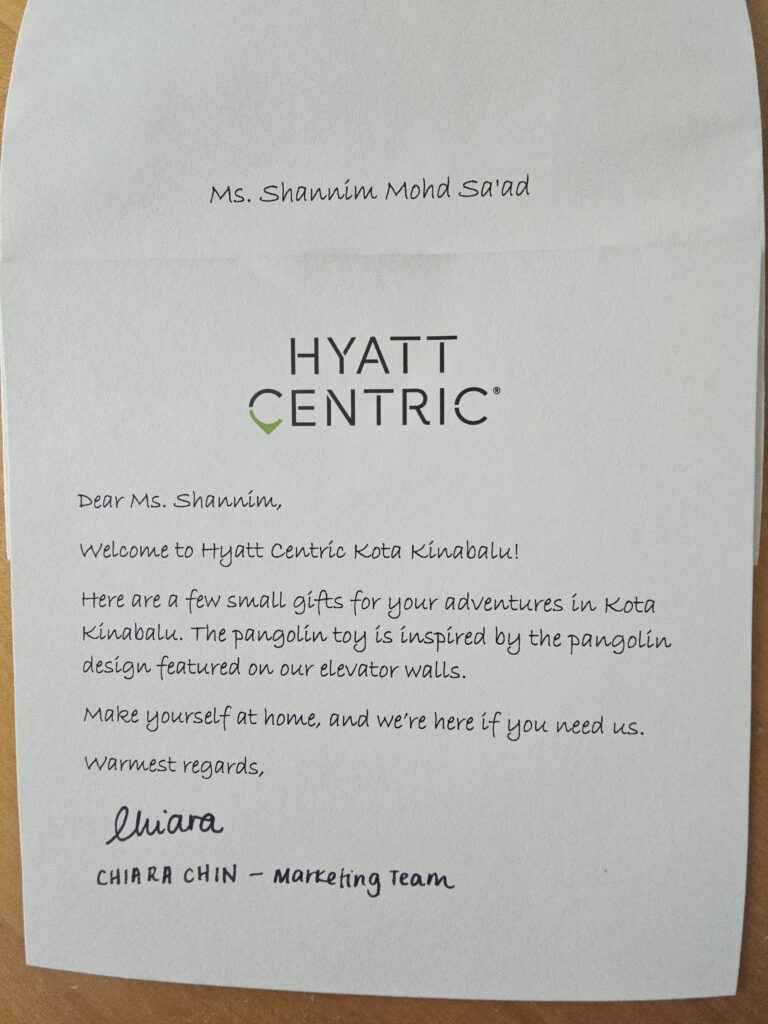
Before I even met anyone, there was already a handwritten note waiting in my room. From Chiara, the marketing team. Small gifts for my adventures in KK, and a pangolin soft toy, because even the little details here have a story. Make yourself at home, and we’re here if you need us.
They meant it.
Two nights at Hyatt Centric felt like two weeks, and that is entirely because of the people inside it. Jasper at the restaurant, local guy, Irish lilt so convincing you’d swear he’d just stepped off the set of Peaky Blinders – professional, funny, warm in equal measure. Then there’s Chef Elroy, whose food does the talking, and Alvin at the rooftop bar – but I’ll come to that properly in a moment.
Checking out was harder than it should have been. The eyes watered. Not because anything dramatic happened, but because the kindness was real. That doesn’t happen often. Not in a five star luxury city hotel.
ON22 Restaurant: Order the Sabah Laksa
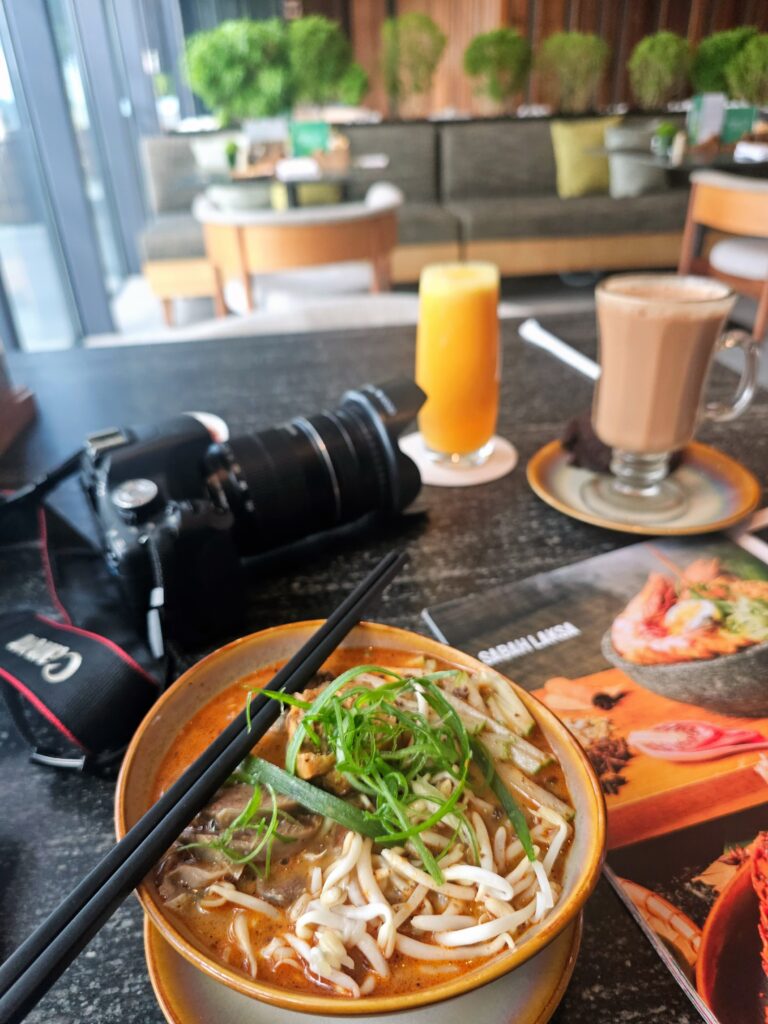
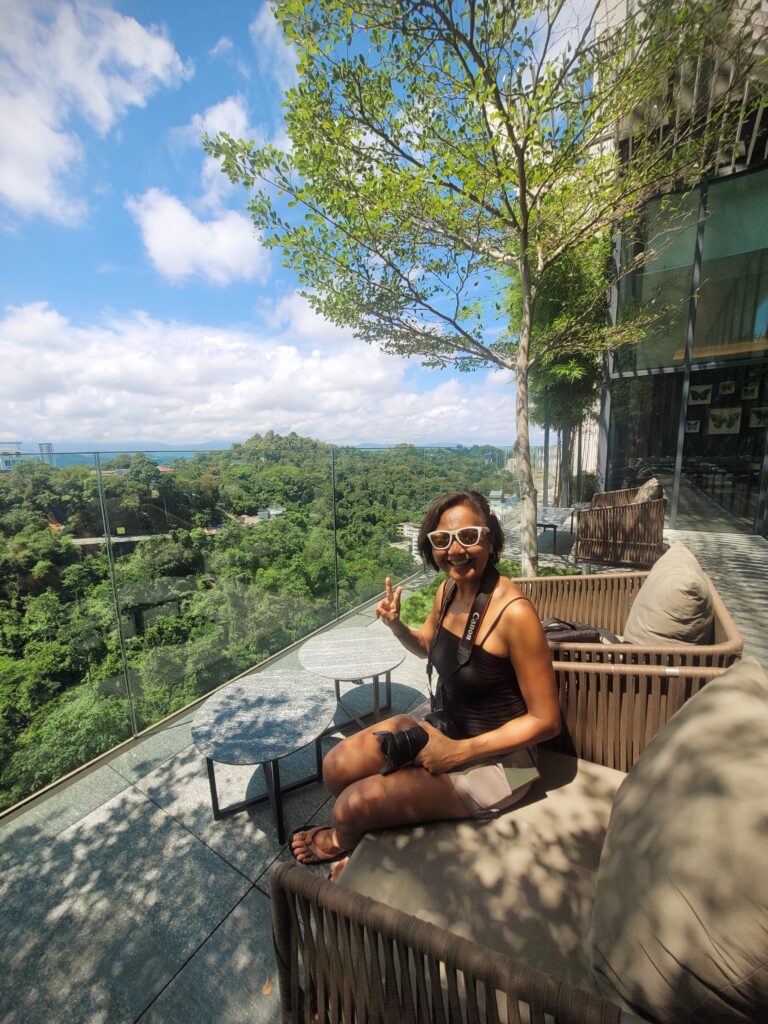
The restaurant at Hyatt Centric sits on the 22nd floor, which means the dilemma begins before the food arrives. Ocean side or rainforest side? The question has no correct answer and will consume more mental energy than it deserves.
Chef Elroy runs a kitchen that takes the buffet format seriously – cold items kept refrigerated rather than left to the elements, the operational detail that signals a kitchen with standards. The spread covers local and Western without the usual compromise in either direction: fresh fruit, cheese, cold cuts, the full range.
Order the Sabah Laksa. This is not a suggestion. The broth is rich and layered and clearly the product of someone who has thought carefully about what this dish should taste like at its best. It is, genuinely, one of the best curry laksas on record. If you visit ON22 Restaurant and skip it, I will be personally offended on your behalf!
Jasper will look after you. Aini will ask if you want any photos taken. The view will distract you. The food will bring you back.
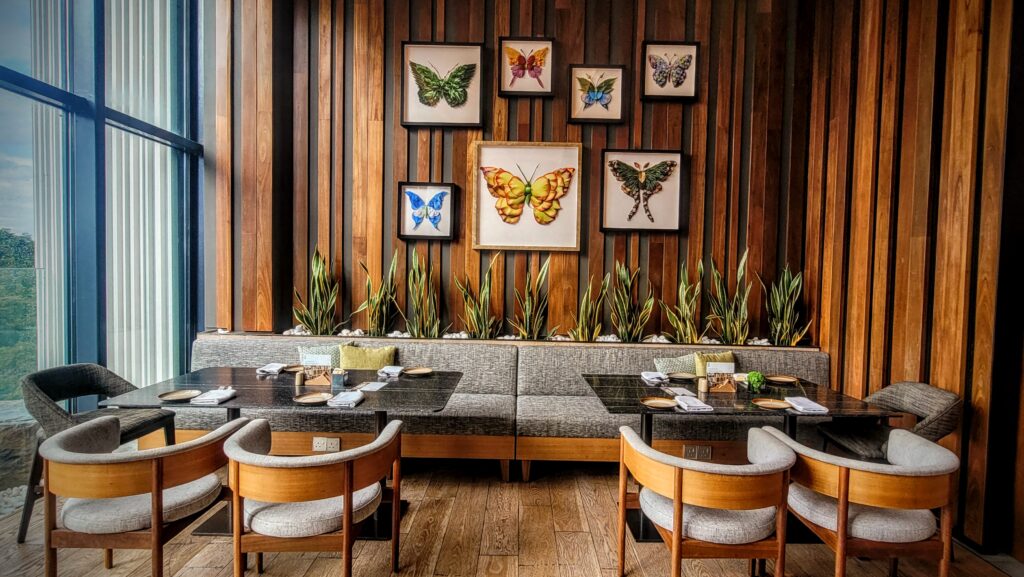
The food isn’t the only thing worth paying attention to. On the gallery wall, delicate butterfly paper cuts and prints by Japanese artist Raku Inoue – natural materials, natural life, the valley rendered in extraordinary detail. Easy to miss if you’re too focused on the Sabah Laksa. Try not to be.
Before you head upstairs to ON23, stop at the curved spiral staircase connecting the two floors. A showstopper in its own right – the architectural detail will make you reach for your phone. Take the photo. You’ll thank yourself later.
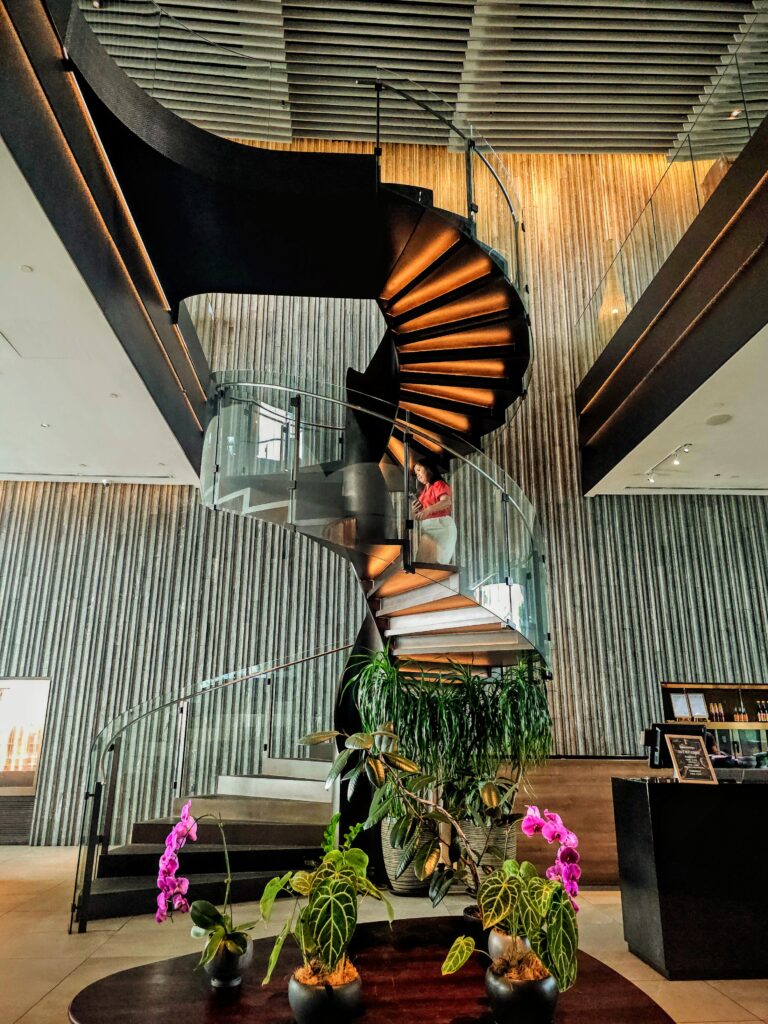
You don’t need to be a guest to eat here, but after a meal at ON22, you’ll wish you were staying.
ON23 Sky Bar: The Rooftop Bar KK Always Needed
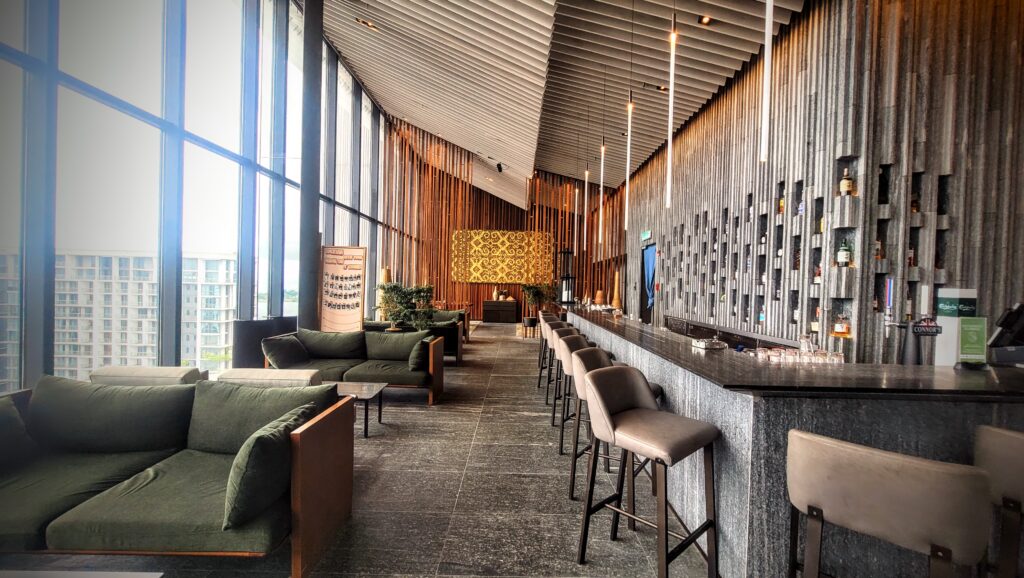
If there is one place in Kota Kinabalu that deserves to be on everyone’s list – not just hotel guests, not just tourists, everyone – it is ON23 Sky Bar.
The rooftop bar sits above the city. The views alone are worth the trip up, but they’re only part of it – rainforest on one side, the South China Sea on the other, KK’s low skyline between you and the horizon, is the view that settles a day into perspective.
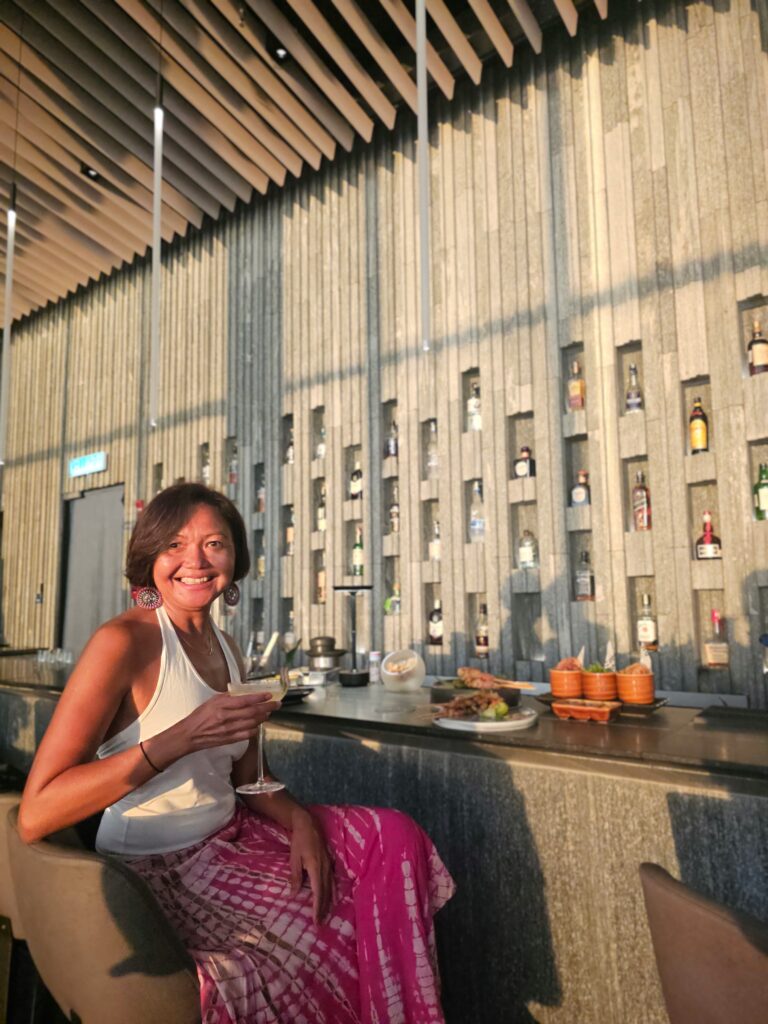
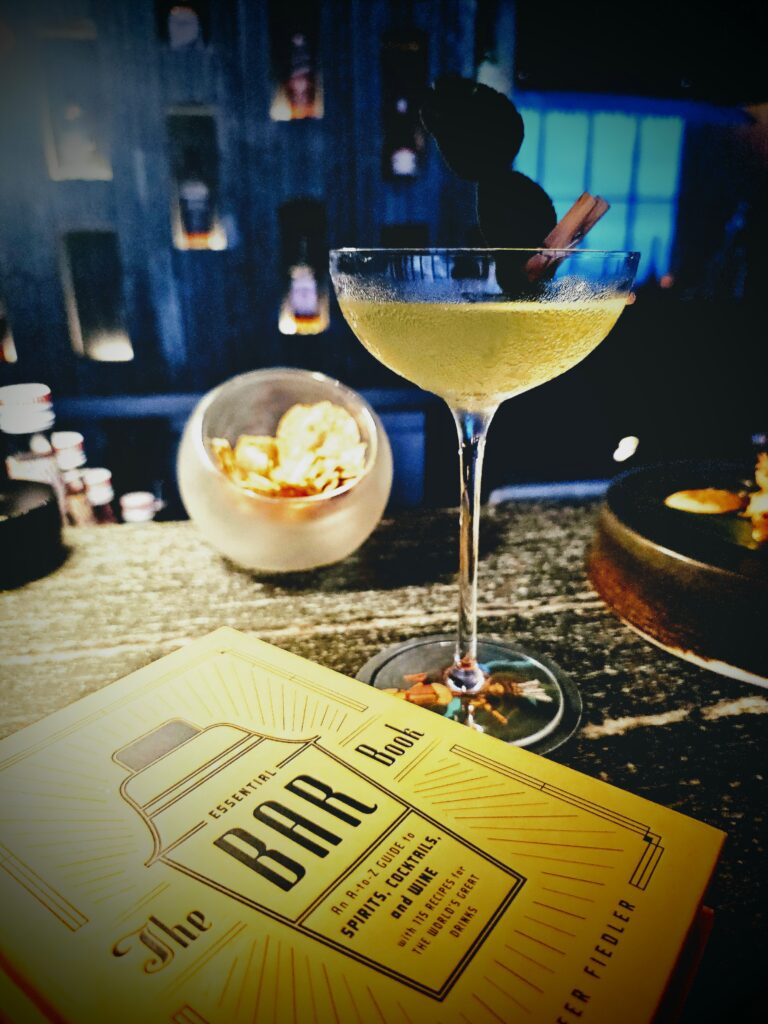
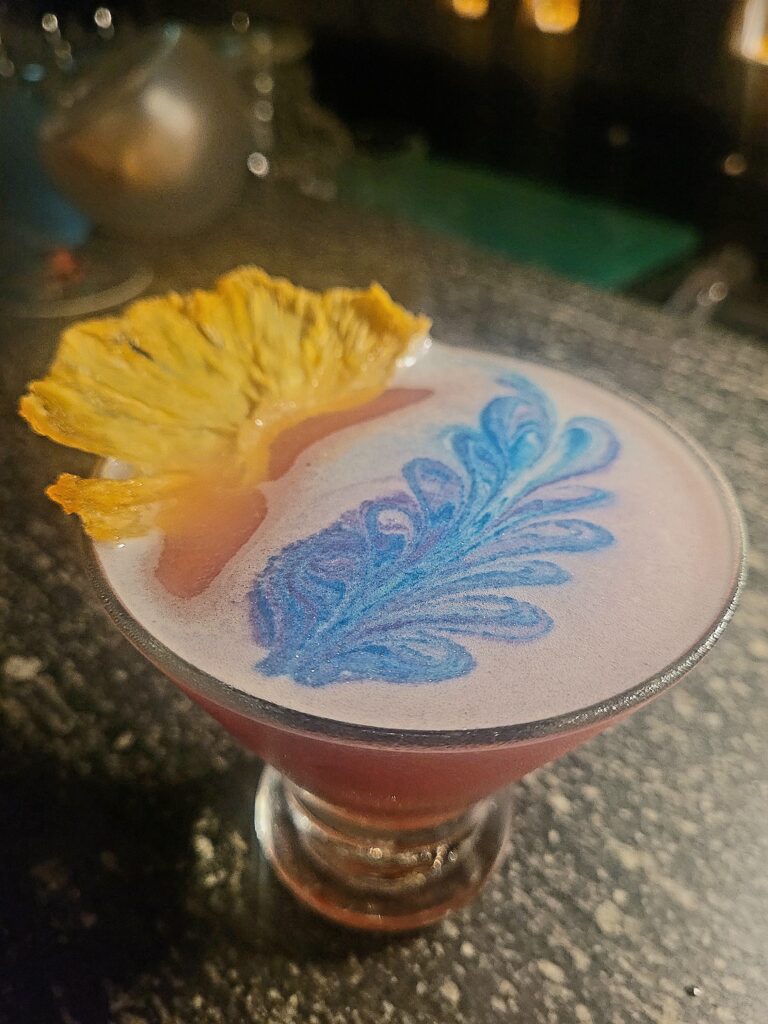
Behind the bar, there’s Alvin.
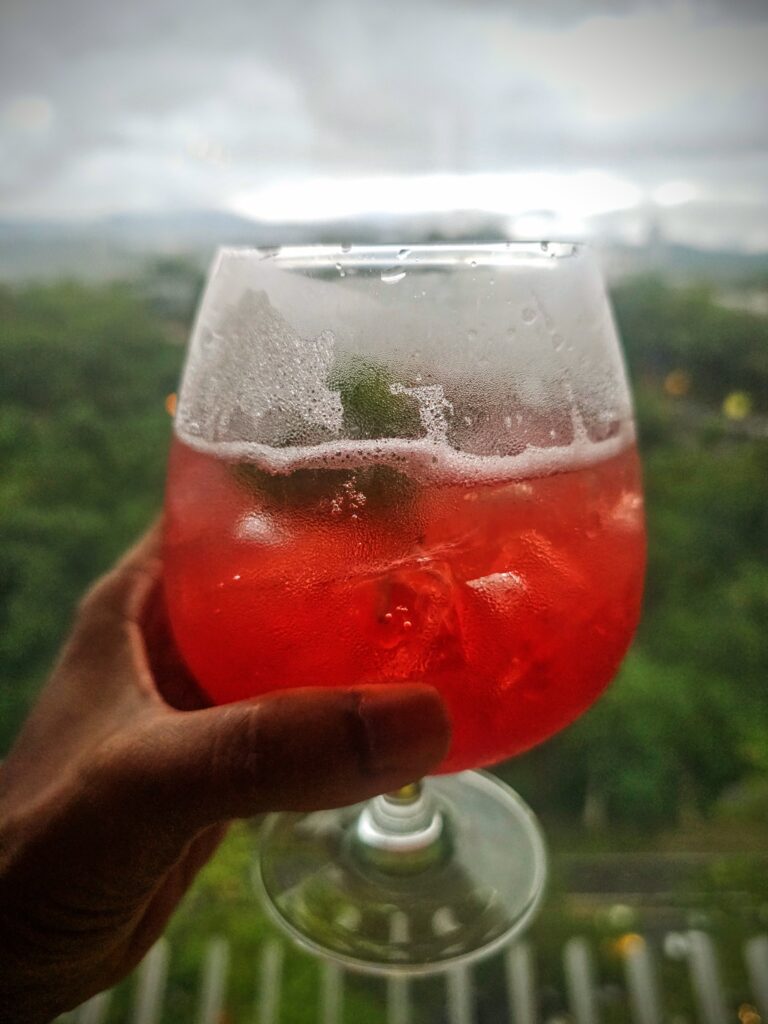
Warm, passionate, completely in his element. Alvin makes you feel like you’re the only guest at the bar – it’s just who he is. A mixologist who works with local ingredients, produces his own mixers from local produce, and talks about what he creates the way artists talk about work they love. You can feel the passion in every glass.
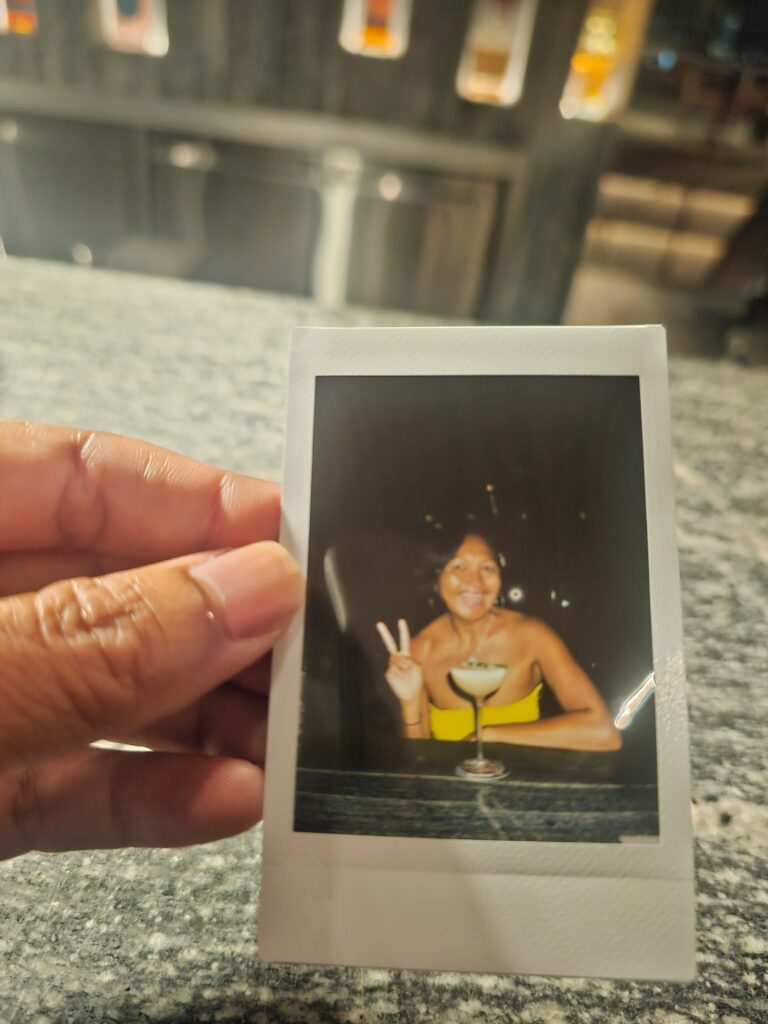
The bar’s signature is the Cocktail With Your Name – tell him your spirit of choice, your preferred flavour territory, and he builds something just for you. A Polaroid is taken. The drink is named. The name goes on the board by the bar.
Mine is called The Writer’s Cocktail. There was never any other option.
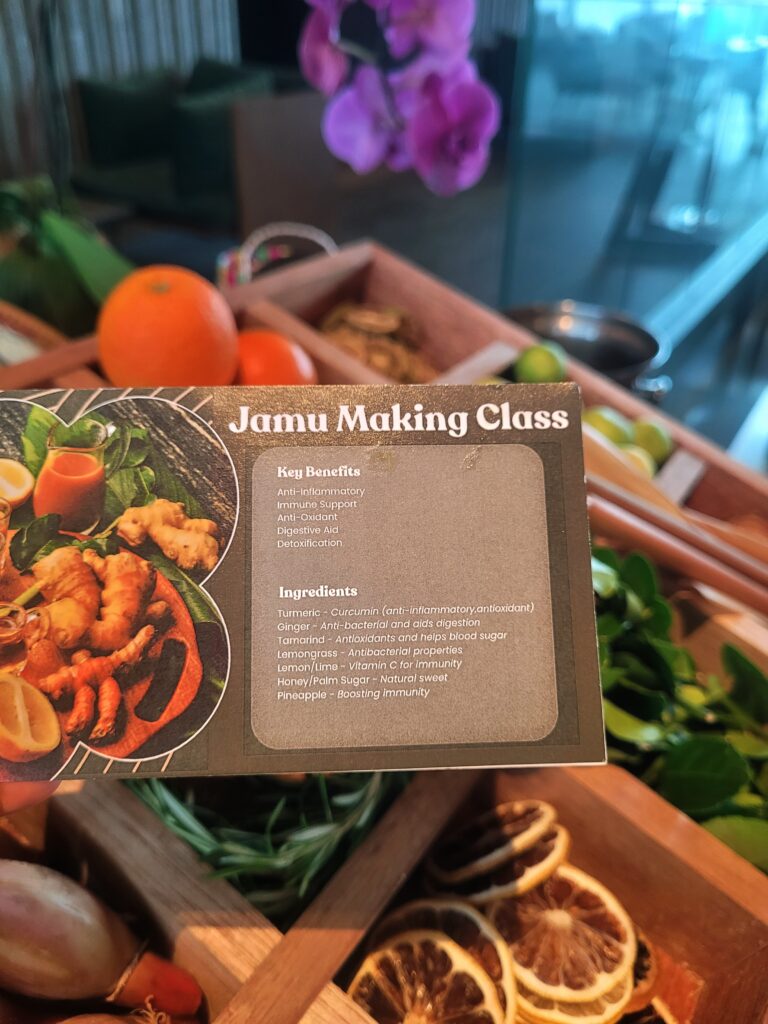
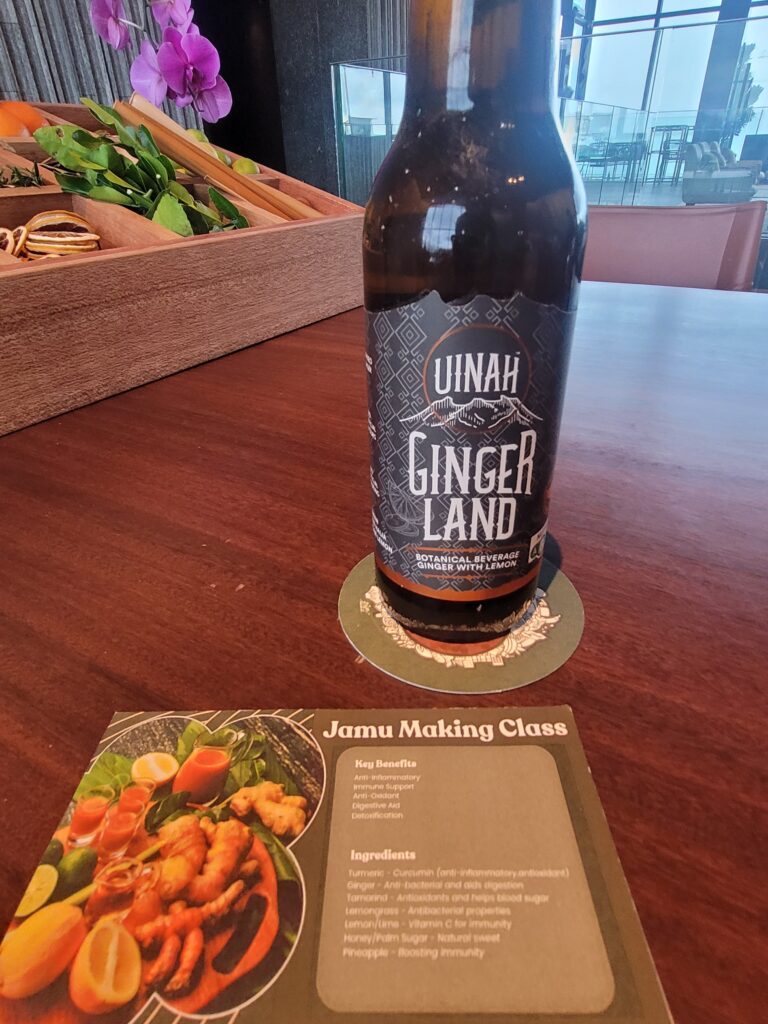
Alvin also runs a jamu making class at ON23 – turmeric, lemongrass, local herbs, ground and mixed by hand. A small group of us made our own, drank it together and felt virtuous before the cocktails arrived.
In over three decades of visiting bars across more than a hundred cities, I haven’t come across many Alvins.
Fair warning – Alvin’s creations have a way of making time disappear entirely.
Check-in, Step Out
Kota Kinabalu at ground level rewards those who wander. And the best way to start is with someone who actually knows it.
Hyatt Centric Kota Kinabalu offers a guided walk through the city with a member of staff – not a tour, more like being shown around by someone who actually lives here, which is the only kind of guidance worth following.
Pack a hat, sunglasses and a good pair of walking shoes. Your feet will thank you. Your camera won’t know where to look first.
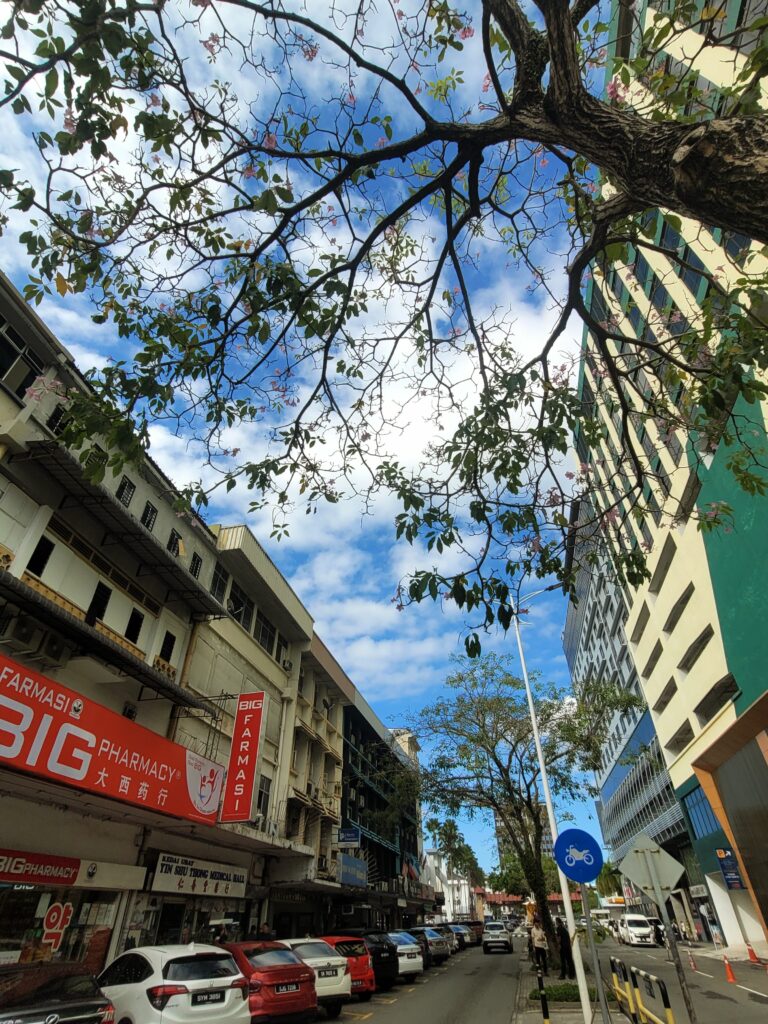
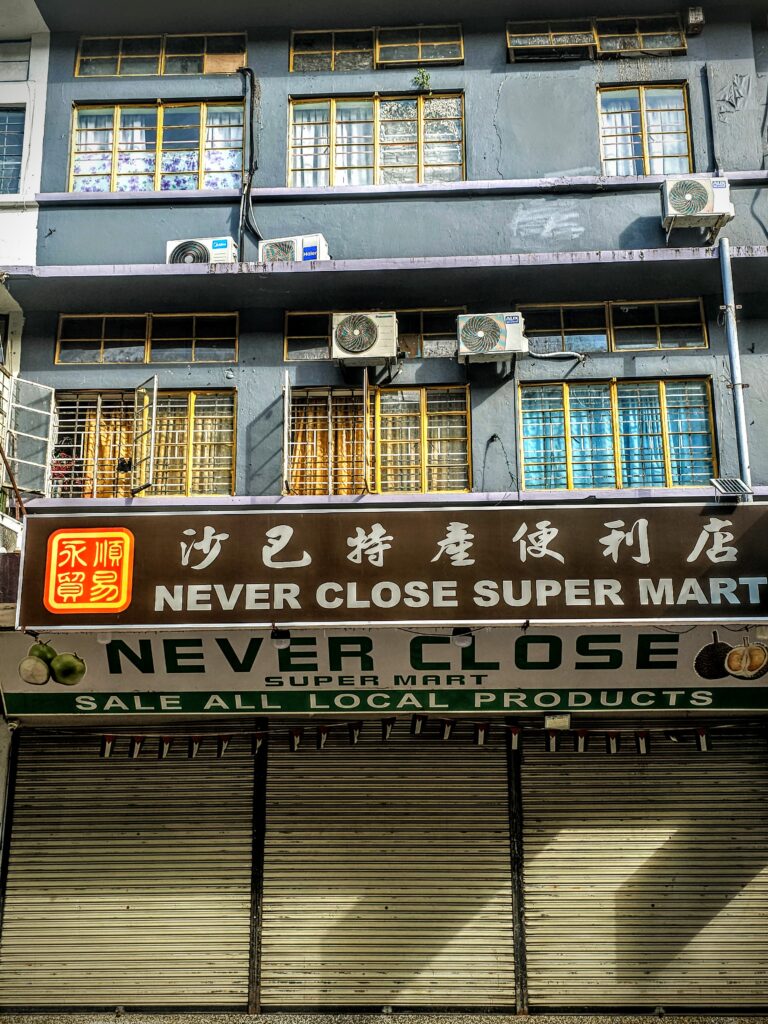
The shophouses reveal themselves further along – low-slung, five-foot-way covered, paint worn in exactly the places you’d expect from decades of weather and daily use. Inside some of them: shops that have simply refused to move on.
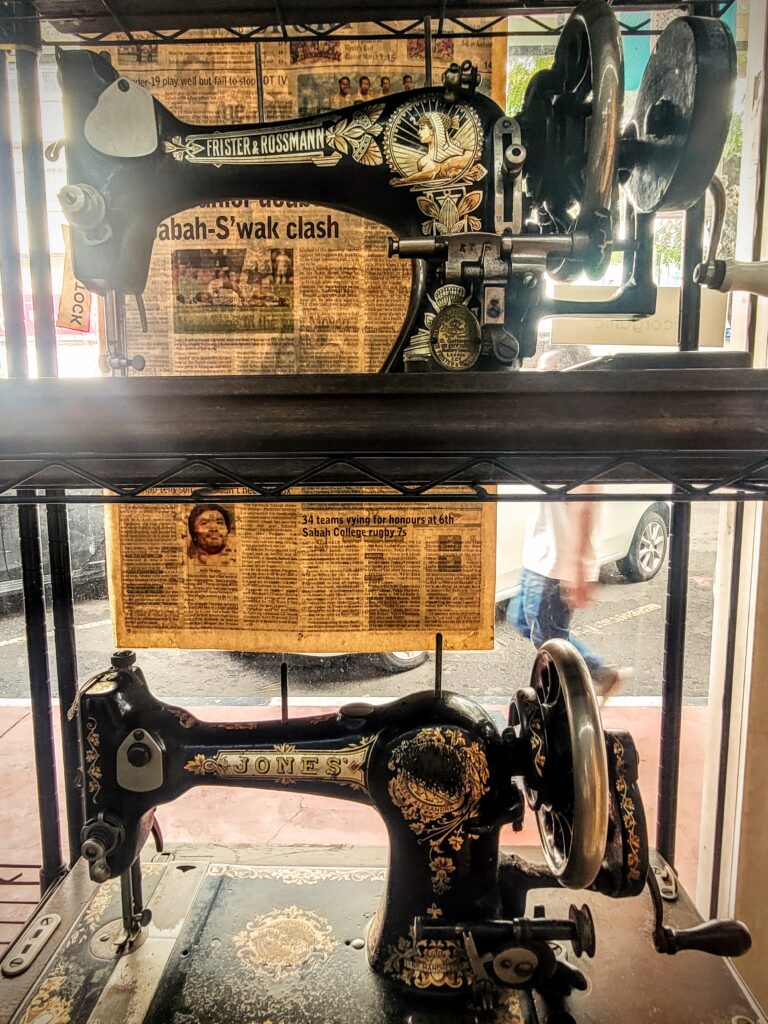
A Singer outlet – sewing machines, the iconic brand that has been around since 1851. Inside, machines that are almost a century old sit alongside the latest models. Walking in feels like stepping into a sewing machine museum. The signboard worn at the edges, the window display unchanged. Walk past it and it reaches back to something involuntary. A memory. A texture of childhood. Or a texture of something long forgotten.
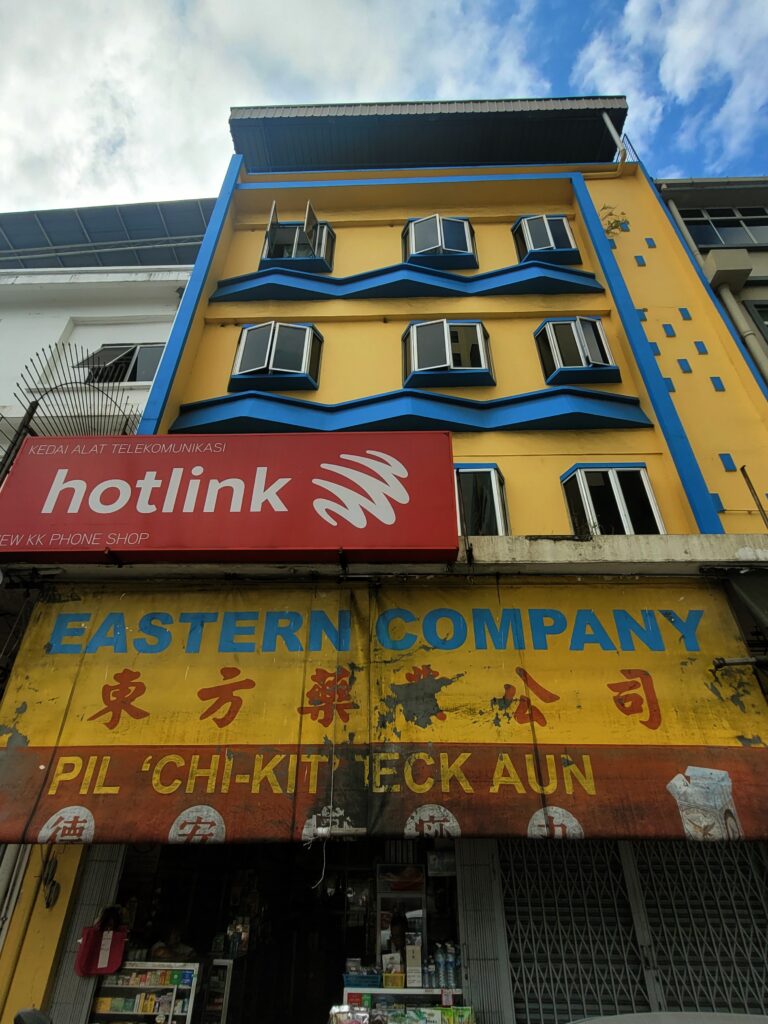
And then there’s Chit Kit Teck Aun, the traditional medicine shop. If you grew up in Malaysia in the 70s and 80s, you know this name the way you know the smell of medicated oil and the texture of pill packaging that hasn’t changed since your grandmother bought it. Walking in is less shopping, more time travel. The shelves are arranged by function, not aesthetics. Nobody is trying to impress you. That’s the whole point.
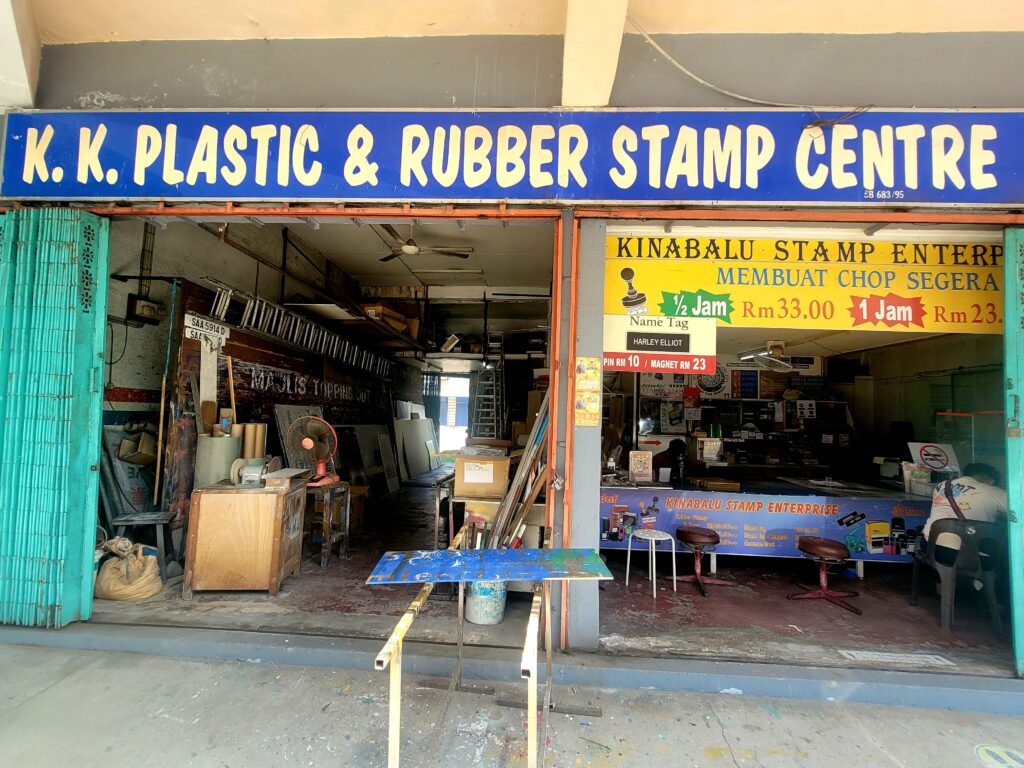
A rubber stamp shop, still making stamps by hand. And then – the one that stops you – a tattoo artist still practising the traditional bamboo method. Ancient, slow, deliberate. In a world where everything has migrated online, where everything arrives instantly and frictionlessly, here is someone doing something that takes time and skill and cannot be automated. That deserves more than a passing glance.
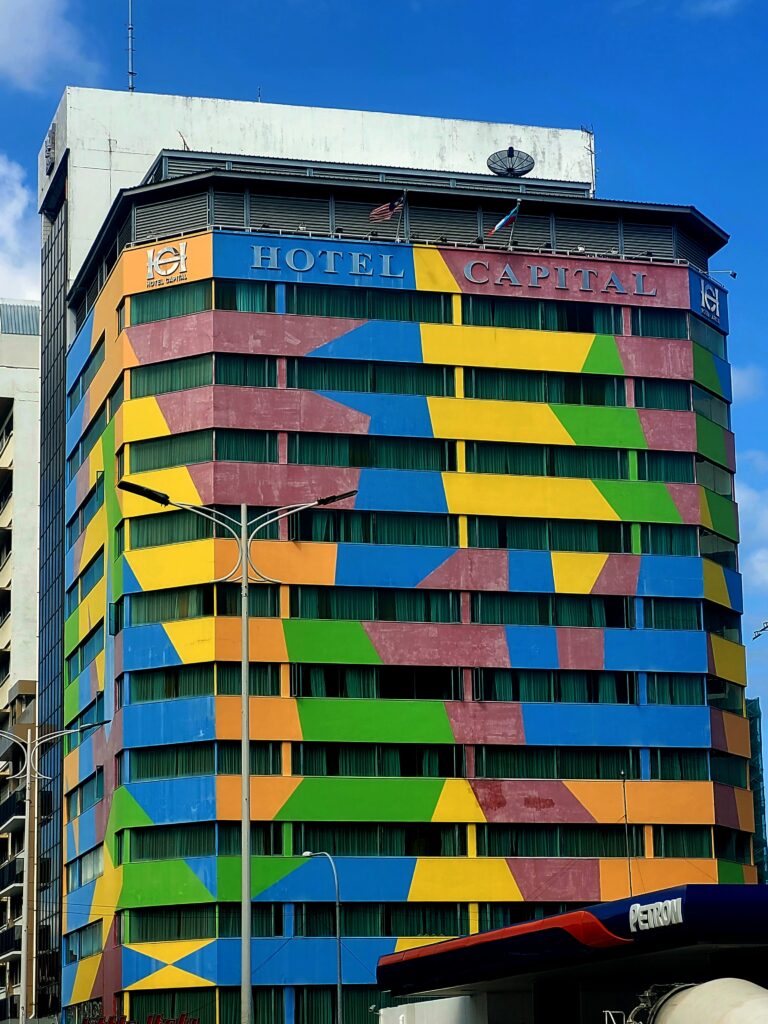
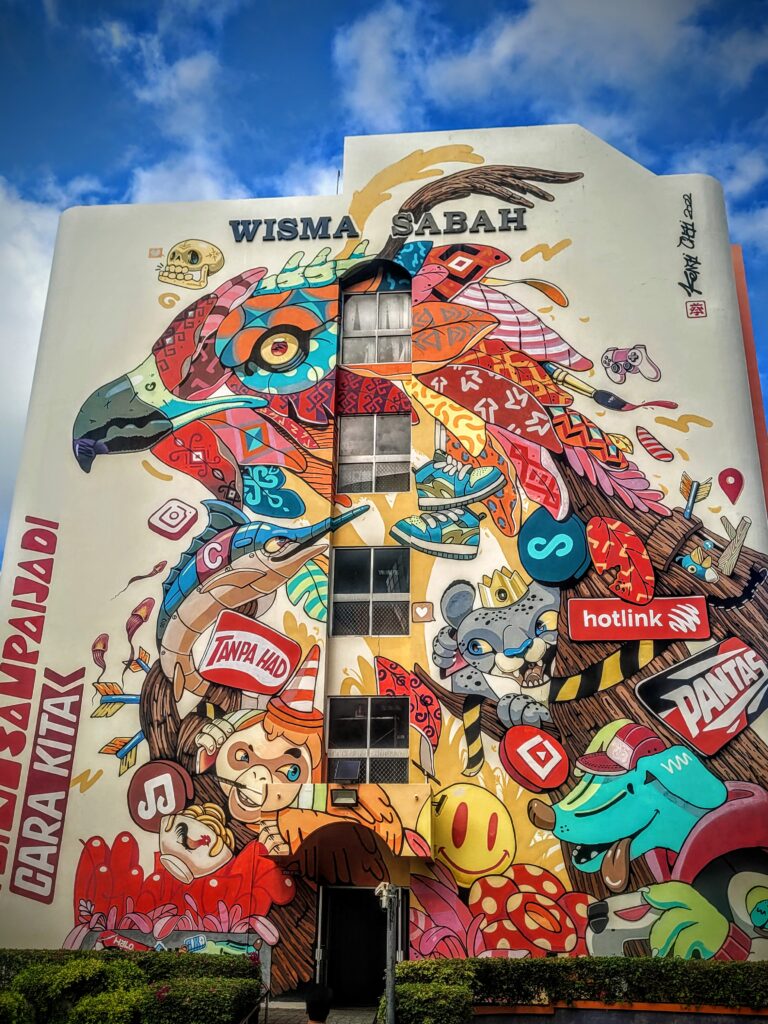
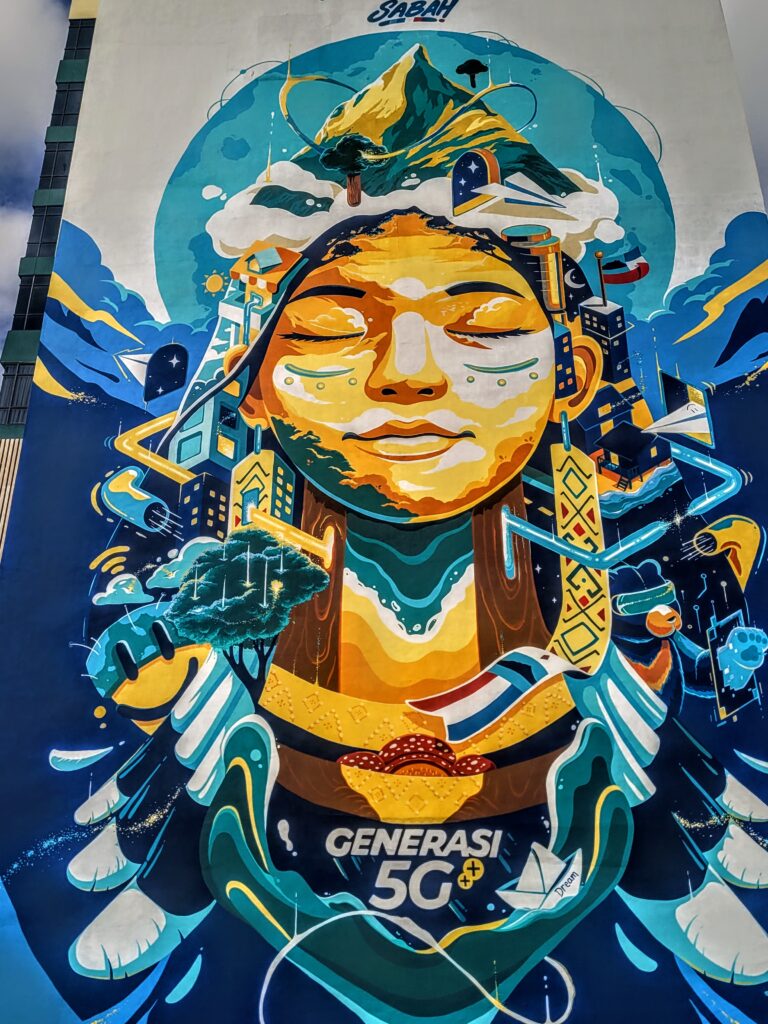
The murals appear between things – on shophouse walls, at the end of narrow lanes, behind rows of parked motorcycles. Found by accident, which is the only good way to find street art. The contrast of something vivid and new against a wall that has been ageing for fifty years. That’s KK for you – old and new, sharing the same surface, entirely comfortable with each other.
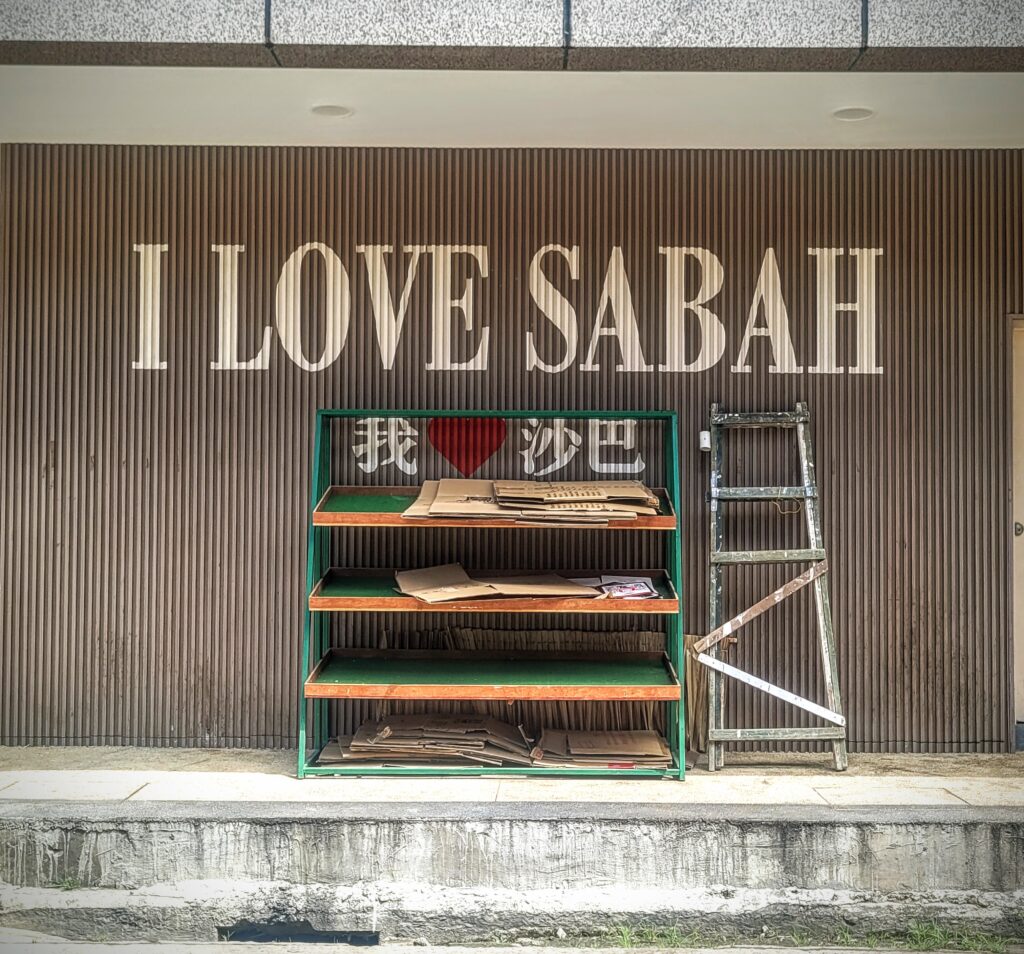
The Atkinson Clock Tower sits on a small hill above the city, built in 1905, the oldest surviving colonial structure in Kota Kinabalu. It has watched while everything around it changed, stayed standing while the city rebuilt itself from the ground up. A short, easy climb and a good excuse to stop for a moment.
Then the back alleys – the lorong-lorong that connect the main streets. Unglamorous, slightly chaotic, entirely real. That’s where you see the city as it actually operates.
Walking these streets is nostalgic for some, eye-opening for others. In a world where everything is available at the touch of a button, where convenience has replaced craft and speed has replaced patience, Gaya Street is a reminder that some things are worth slowing down for.
Bring your children. Let them see a rubber stamp made by hand, a sewing machine that has outlived three generations, a tattoo needle carved from bamboo. Some lessons are better learned on foot than on a screen.
Kopi-O and Slow Mornings
Kota Kinabalu deserves to be on every travel list, and the kopitiam alone is reason enough.
These old coffee shops, some occupying the same narrow shophouse space for decades, run on charcoal, on habit, on the quiet confidence of people who have been doing the same thing the same way for a very long time. Nobody here is performing for tourists. Nobody is trying to be anything other than what they are. That, in itself, is worth travelling for.
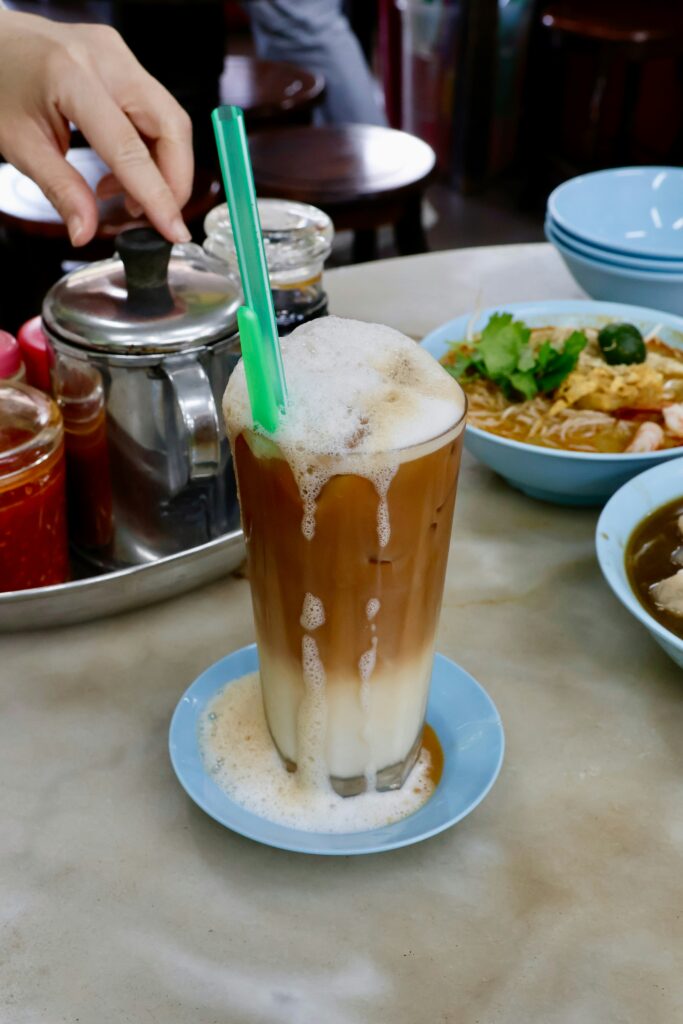
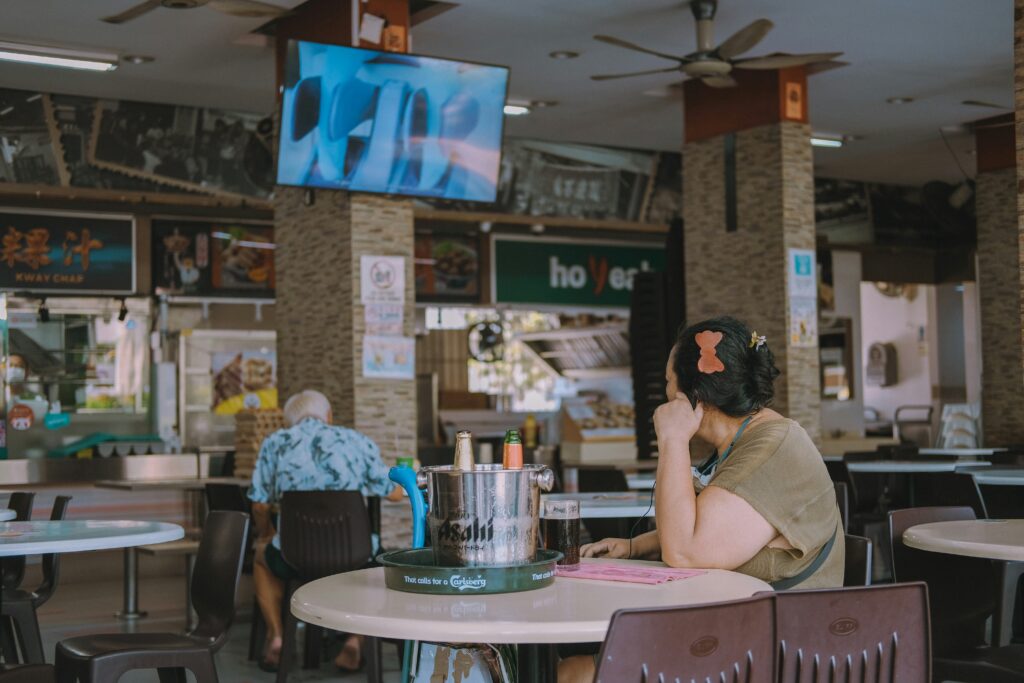
Fook Yuen and Guan Kopitiam are worth knowing by name, but honestly, walk any old street in KK and you’ll find your own. One I stumbled upon still uses a charcoal stove for its broth. The smoke rises slowly and deliberately. The soup has the depth that only patience produces. Order a kopi-O, find a seat, let the uncle do what he does. In a world where everything arrives with a click, this is something else entirely.
Just explore. The best kopitiam is always the one you find yourself.
Drop the Bags. Refresh. Go Again
This is where staying at Hyatt Centric makes a specific kind of sense that I didn’t fully appreciate until I was actually doing it.
The hotel’s location means that at any point, overheated, feet sore, arms full of whatever you picked up at the market, you are minutes from your room. I did this more than once. Walked back, dropped everything, splashed water on my face, and walked out again. The city was still there.
This is the rhythm that a well-located city hotel enables, and it changes how you travel. You don’t have to ration your energy. You don’t have to carry everything with you. You go further, stay longer, wander more, because going back is never an ordeal.
Gaya Street Night Market
On weekend evenings, Gaya Street transforms. The day’s shophouses give way to something altogether livelier – stalls appearing, smoke rising, the smell of grilled things drifting down the street. This is where KK gathers. Locals pulling up chairs next to strangers, orders shared across tables, conversations started with people you’ve never met and may never see again. By the end of the meal it feels, somehow, like the most natural thing in the world.
Come hungry. Come with time to spare. Come without a plan.
Beyond the City
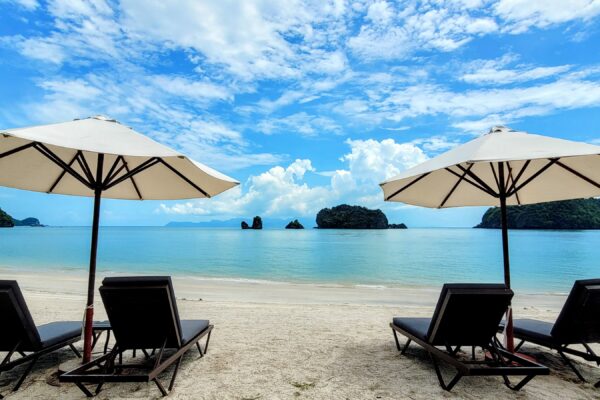
KK is also a beginning. The islands of Tunku Abdul Rahman Marine Park sit just minutes offshore – Sapi, Manukan, Mamutik – clear water, easy boat rides, these don’t require advanced planning. Day trips deeper into Sabah open up from here too: the orangutans at Sepilok, the rivers of Kinabatangan, the impossible silhouette of Mount Kinabalu at dawn.
A well-located hotel makes ranging wide easy and coming back simple. Hyatt Centric understands this instinctively.
Sabah is a destination that deserves its own story – read mine that was published on Batik Air inflight magazine here.
End of Day: Upstairs
When the light starts to go golden over the South China Sea, take the lift ON23.
Drink in hand, look out over the city you’ve been walking through all day. The kopitiam, the Singer shop, the mural at the end of that particular lorong, the clock tower on the hill. All of it spread below you.
I think about the charcoal broth. The kopitiam uncle who didn’t look up. Chef Elroy and his delicious Sabah laksa.
Some cities keep you at arm’s length. Kota Kinabalu pulls you in. It feels different. Somewhere around day two, without quite knowing how, it just feels like home.
That’s the thing about places that don’t try to impress you.
They do, anyway.
Hyatt Centric Kota Kinabalu Has Raised the Bar
Hyatt Centric Kota Kinabalu gives you a reason to stay longer, wander further and come back wanting more.
The people are genuine. The food is extraordinary. The design respects where it stands. The rooftop bar is the best in the city. And the location puts all of KK at your feet from the moment you arrive.
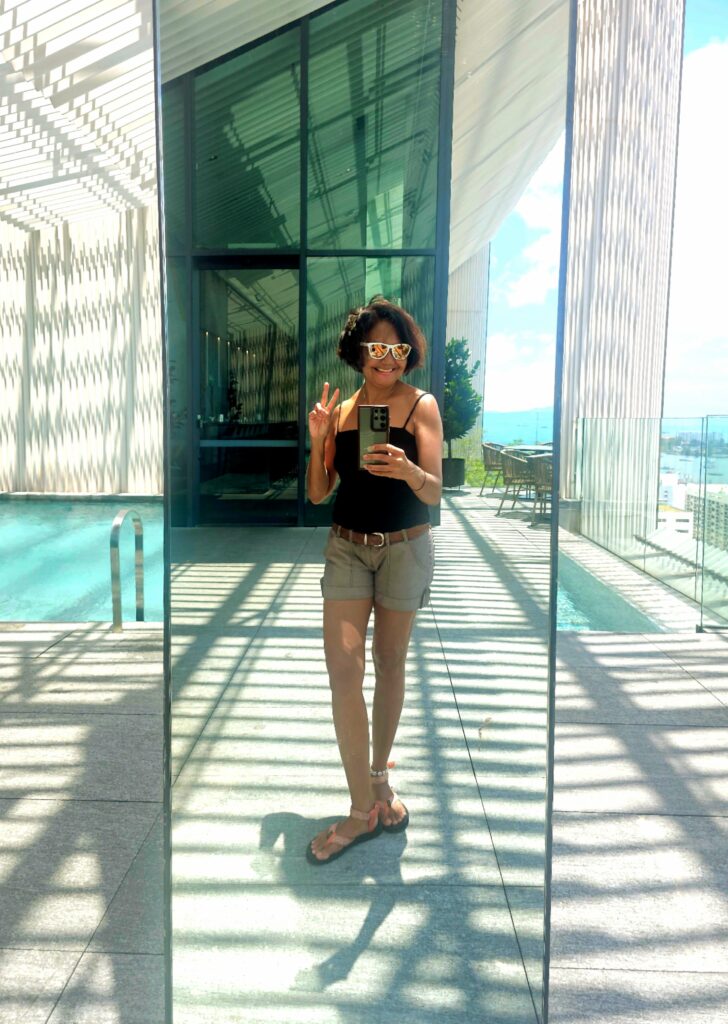
I had tears in my eyes when I left. That should tell you everything..
KK is not a stopover city. It never was. It just needed somewhere that understood it well enough to say so.
Now it has one.
As someone who has been travelling the world since 1992, who has spent over a decade actually living in city luxury hotel rooms across more than a hundred cities – truly exceptional hospitality is rare.
Hyatt Centric Kota Kinabalu earns it.
Planning a trip to Kota Kinabalu? Start at Hyatt Centric. Let Jack and his team show you the city. Order the Sabah Laksa. Tell Alvin your favourite poison. Name your cocktail.
And if you time it right, set that alarm for 5.30am. Mount Kinabalu at dawn is worth every second.
Hyatt Centric Kota Kinabalu is located at 18, Jln Haji Saman, Pusat Bandar Kota Kinabalu, 88000 Kota Kinabalu, Sabah, Malaysia. For reservations, visit https://www.hyatt.com/hyatt-centric/en-US/bkict-hyatt-centric-kota-kinabalu