Experiencing the Mentawai Tribe
Some places change you quietly, without warning. Mentawai did that to me.
This was a journey into a world where life is stripped down to its bones – no electricity, no running water, no phone connection, and no noise except the river and the jungle. A place where simplicity isn’t a trend. It’s survival, rhythm, community… and strangely, a kind of luxury.
I had heard about the Mentawai tribe nine years ago from a surfer named Xave, who taught my kids in Bali. He spoke about his home with such pride that the name stayed with me. So when Batik Air expanded its route to Padang, something clicked – maybe this was my chance to finally see Mentawai for myself.
And I’m glad I did…. because nothing prepares you for life here.
Where Are the Mentawai Islands?
The Mentawai Islands sit off the coast of West Sumatra, Indonesia – remote, lush, and famously untouched. Siberut is the largest island and home to many traditional Mentawai communities who still practice animistic beliefs, tattoo traditions, and forest-based living.
It feels like a world hidden inside another world.
How to Get to the Mentawai Tribe
- A quick flight, but you’ll likely need a night there because the ferry runs on its own schedule.
- Ferry to Siberut (3.5 hours)
Brace yourself – depending on the weather, this ride can be gentle…or not! For ferry schedules from Padang to Siberut, refer to the Mentawai Fast operator’s page. - Canoe upriver (2 hours)
This is where the world shifts.
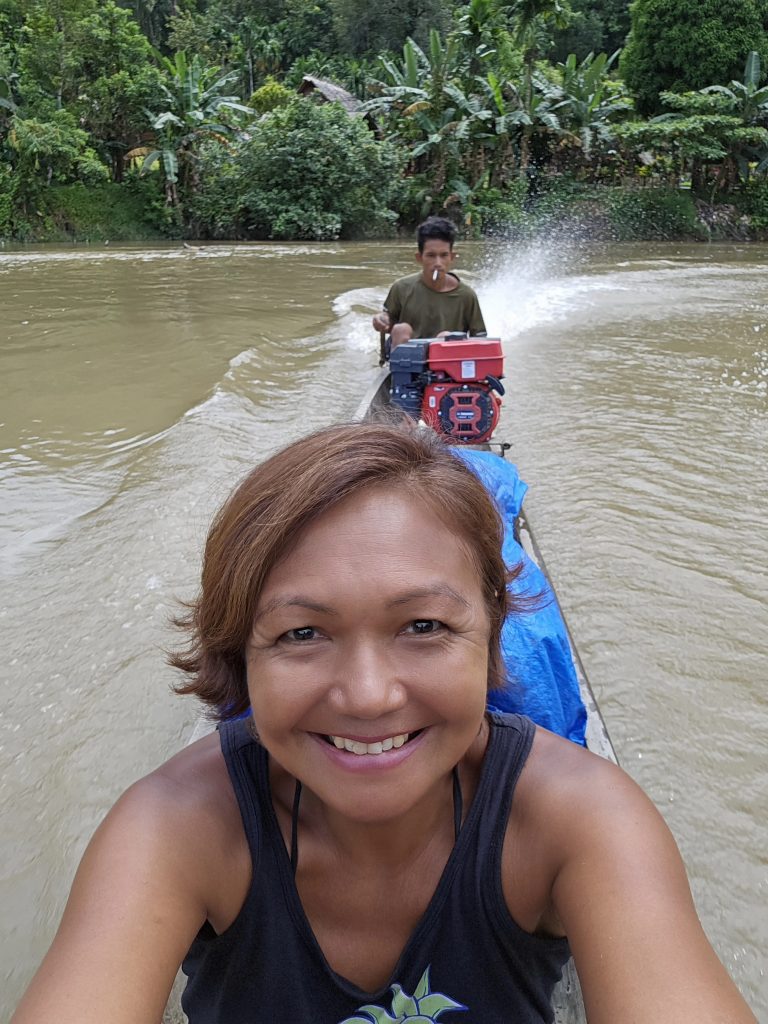
You sit on the floor of a long-tail wooden canoe, legs stretched out, backside basically on the river. Within fifteen minutes, the last village disappears and the brown river carries you deeper into the jungle. - Trek through the jungle (30 minutes)
Humidity. Mud. Forest breathing around you.
And then, through the leaves, you finally see it – an uma, the heart of Mentawai life. By the time you arrive, you don’t just visit the Mentawai tribe. You earn the experience.
What Is an Uma?
To understand Mentawai life, you must understand the uma.
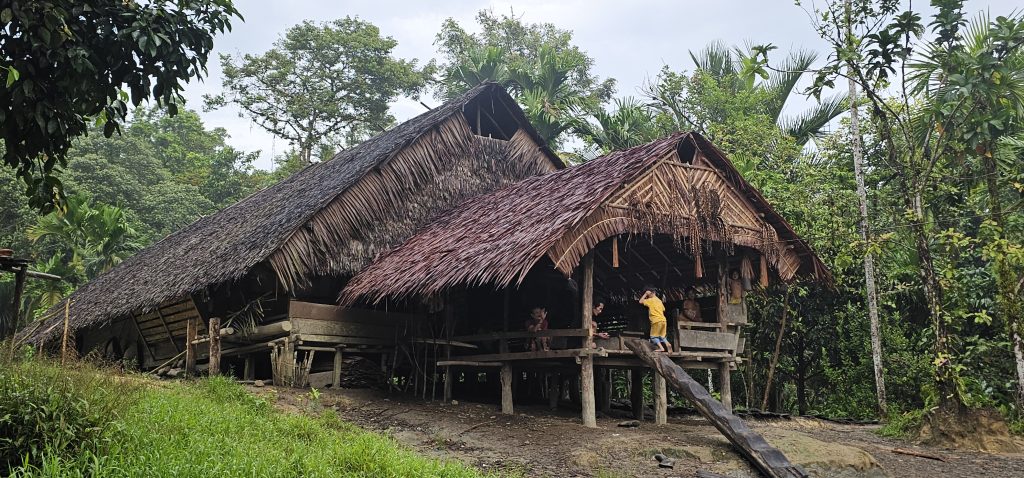
The uma is the traditional Mentawai longhouse – not just a home, but a community centre, a spiritual space, and the anchor of family life. Built entirely from forest materials, the uma holds several families under one roof.
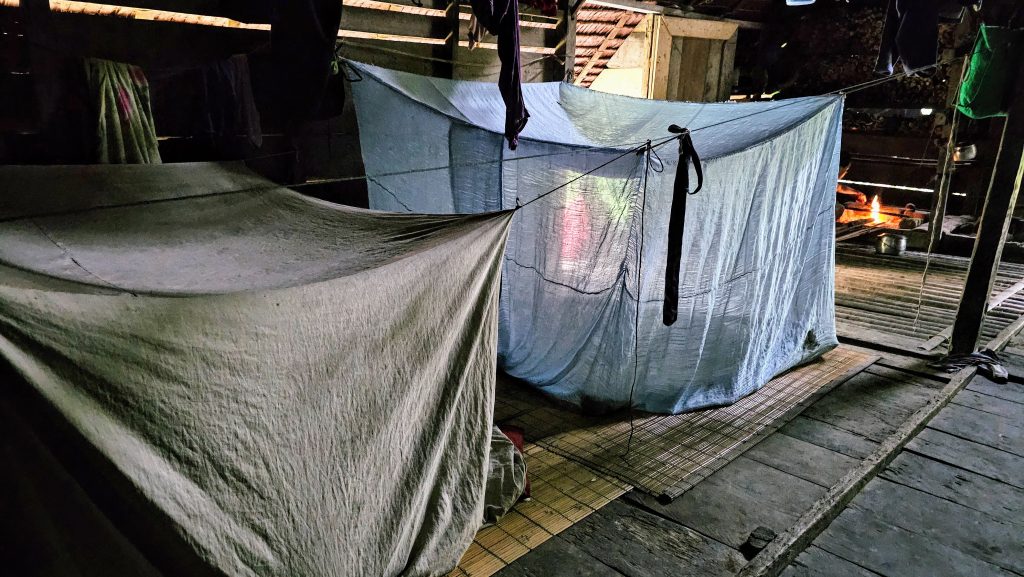
Privacy is a mosquito net. Silence is rare. Belonging is instant.
When I arrived, they laid out a few layers of fabric for me in a corner. A jumper became my pillow. A sarong became my blanket. The mosquito net separating me from twenty people was more symbolic than functional… but somehow, it felt enough.
Their world may be simple, but their warmth is overwhelming.
A Welcome Into the Mentawai Tribe
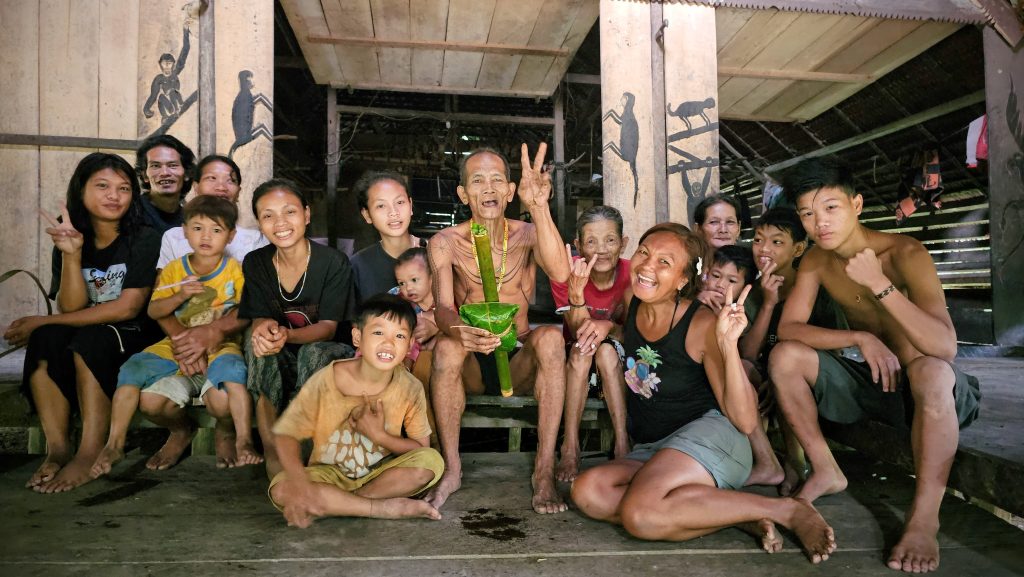
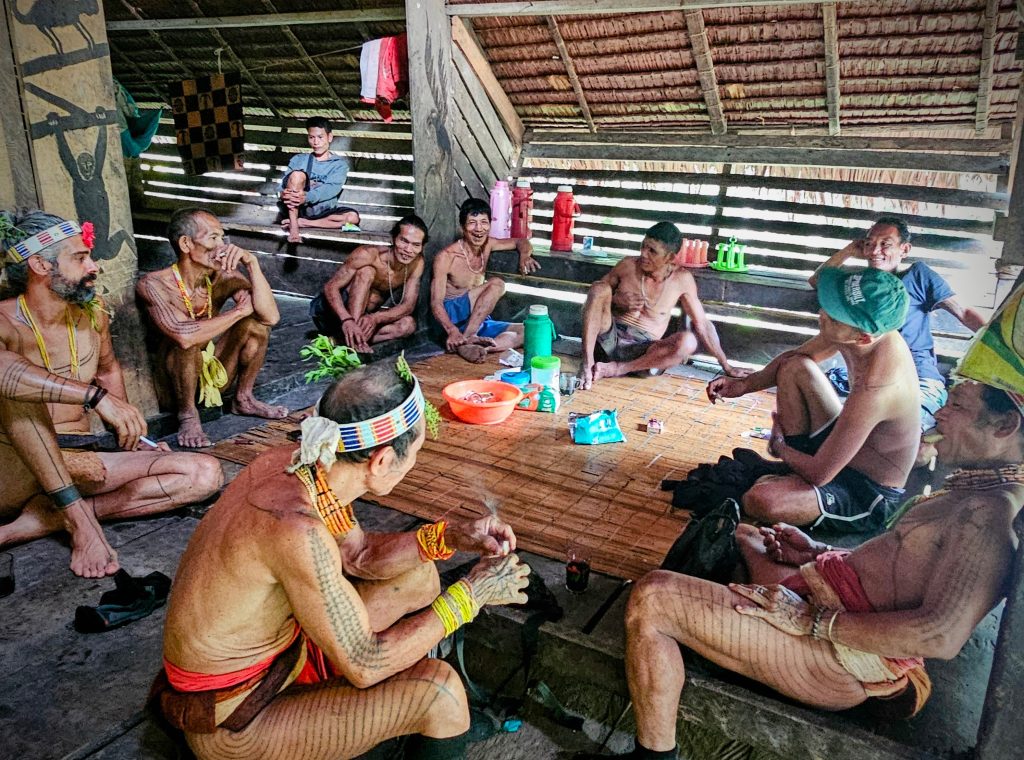
Stepping into the uma felt like walking straight into the heart of a family I didn’t know I belonged to. There was no awkwardness, no hesitation, no polite distance. They simply made space for me – on the floor, at the fire, in their day, in their rhythm.
We ate together, all of us cross-legged on the wooden floor with nothing separating us except laughter. Someone always had a story, someone always had a bowl to pass, someone always had a baby to bounce on their hip. Time didn’t matter. Meals weren’t rushed. We just… existed together
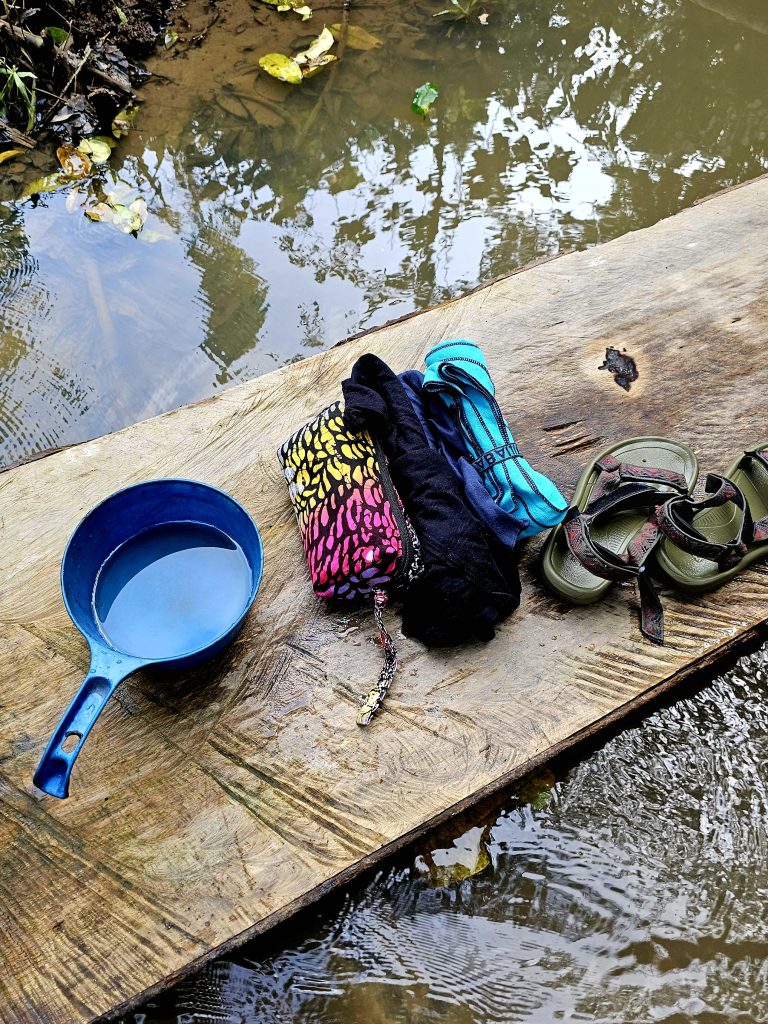
Living with the Mentawai tribe means living without the things we take for granted.
There is no running water. There is no electricity. No toilets. No phone connection. Forget Wifi. Just the river, the fire, the people, and the dark – a darkness so complete it feels alive.
Every time I needed to pee or wash, I had to walk about 80 metres through the jungle to reach the river. No walls. No doors. No cover. You just go – surrounded by trees, mud, and whatever creatures decided to move in the bushes beside you.
Doing this in the daytime felt adventurous. Doing it at 8pm, in pitch blackness, with only the sound of cicadas and something hissing in the distance… that felt like a test of courage. A test I did not always pass gracefully! No one warns you how humbling it is to squat in the jungle in the dark, praying nothing crawls under you, while the rest of the world sits comfortably on porcelain thrones.
This hardship did something unexpected – it made me grateful. Grateful for water that flows from a tap.Grateful for a toilet that flushes. Grateful for light switches and soap and privacy. Grateful for safety I never had to think twice about.
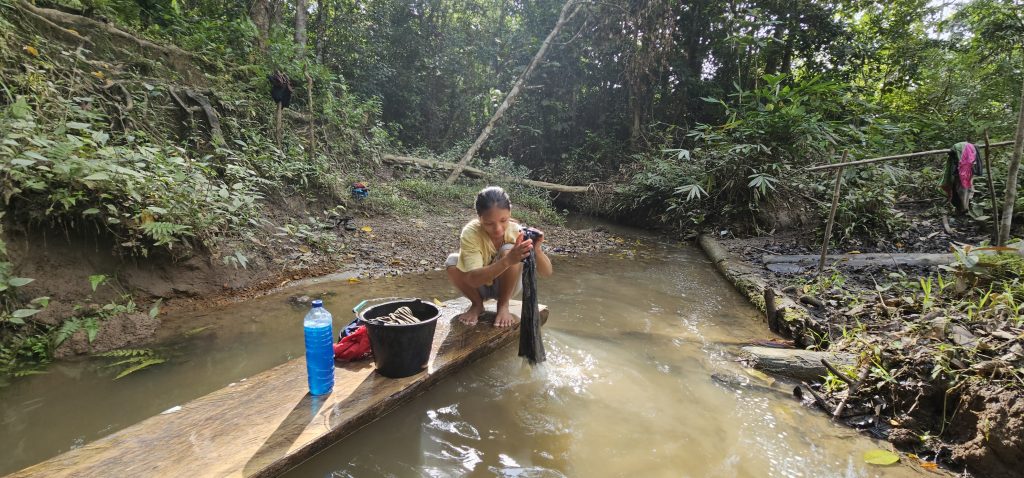
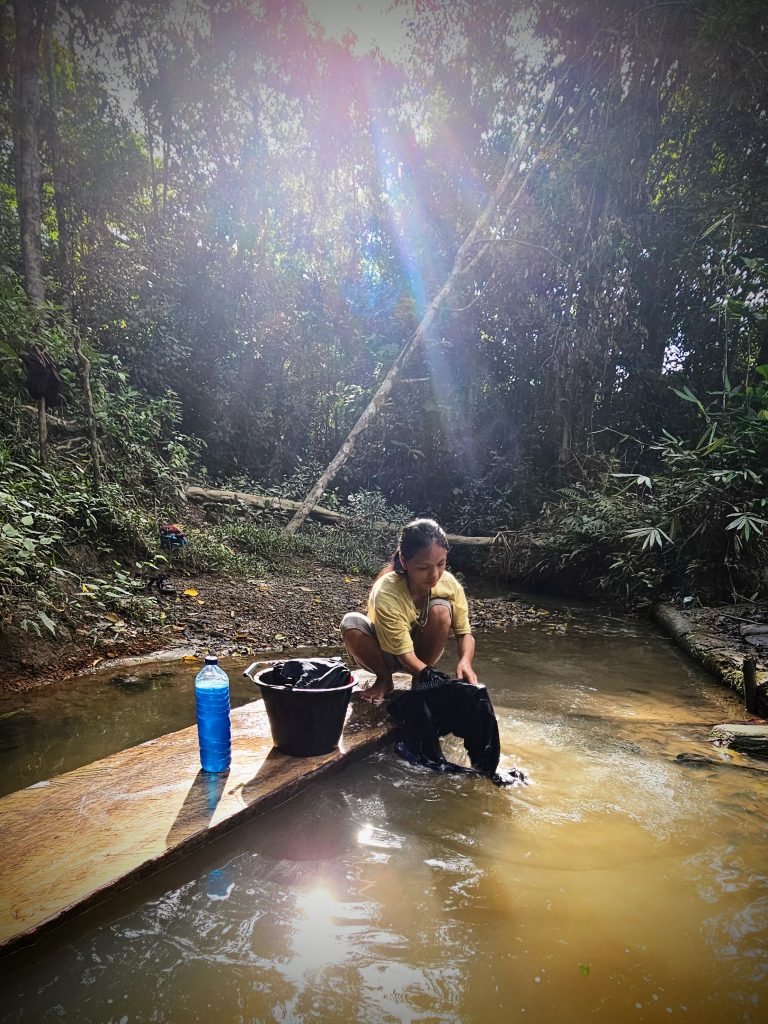
Life in the Mentawai jungle strips you down to the basics and then shows you that the basics can still hold joy.
Moments With the Mentawai Shaman
One of the most unforgettable parts of my Mentawai journey was spending time with Aman Sergi, a highly respected Mentawai shaman. He moves through the jungle like he’s part of it. He wears only a loincloth, nothing else, as if anything more would break the connection between his skin and the forest that raised him.
Standing next to him, I felt overdressed in my shorts and mosquito repellent.
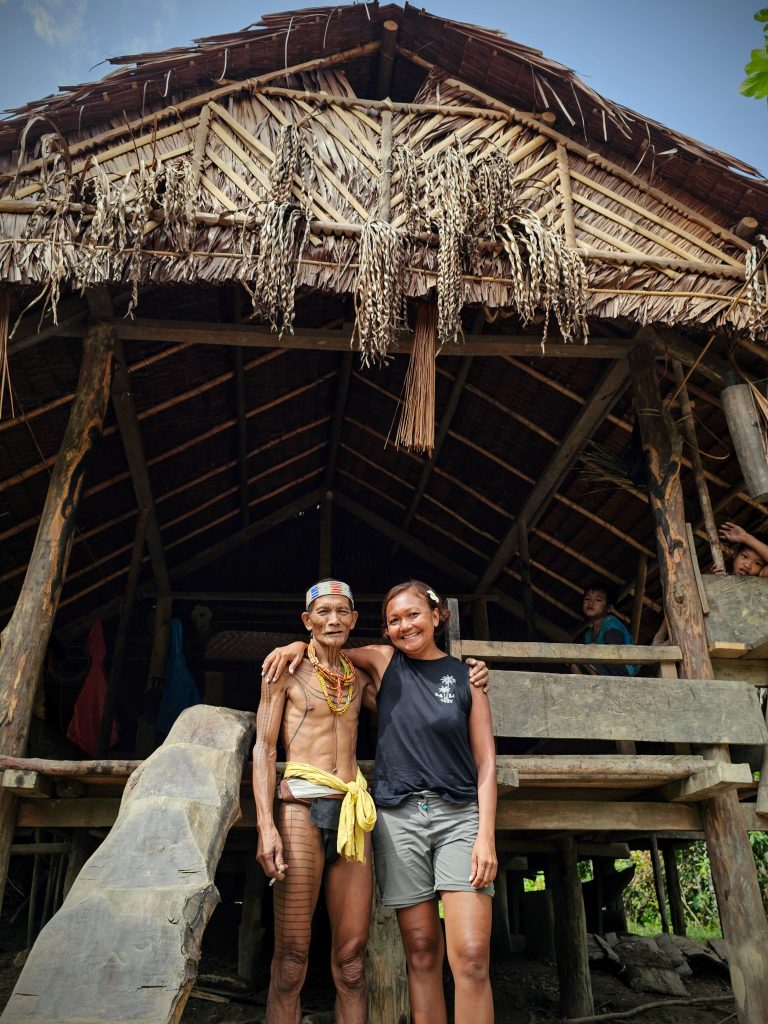
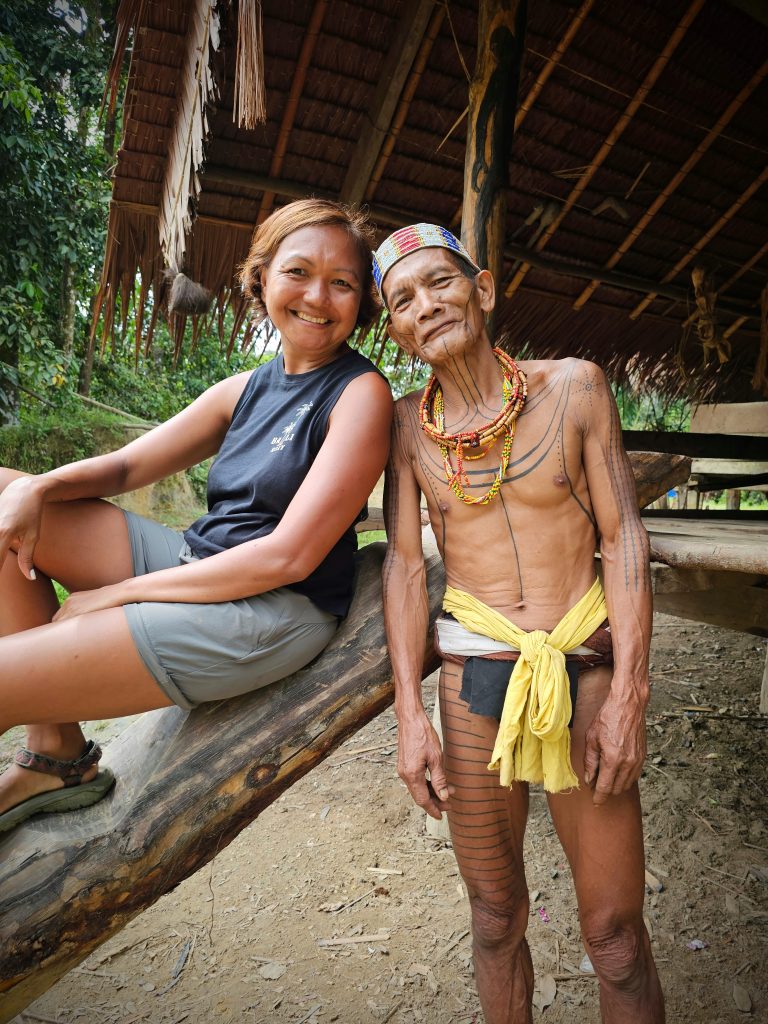
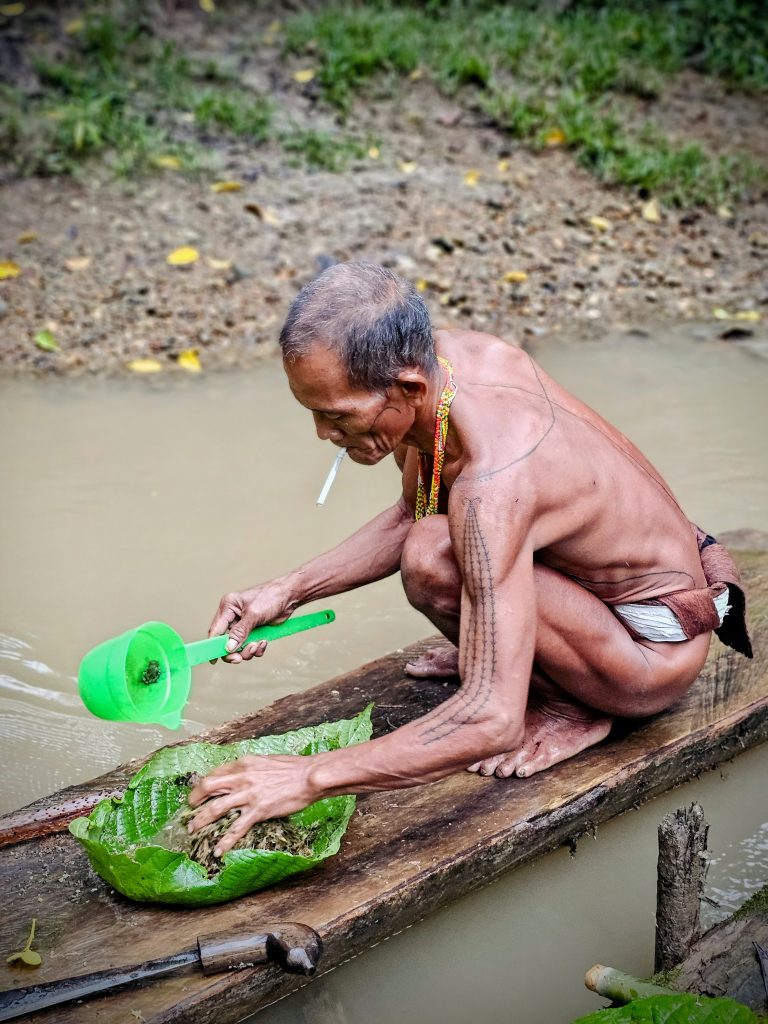
As we talked, I noticed the tattoos covering his body, each line bold and dark, stretching across his chest, back and arms. They’re not decorative. They’re identity.
They’re history.
He explained that Mentawai tattoos, called titi, are made using a needle carved from bamboo, tapped gently into the skin with a small wooden hammer. The pigment comes from natural soot mixed with sugarcane juice or other plant extracts. Some designs use citrus thorns as fine needles for smaller details.
The tattoos mark important milestones – adulthood, marriage, spiritual roles. They also symbolise harmony with nature. Every symbol has a meaning.
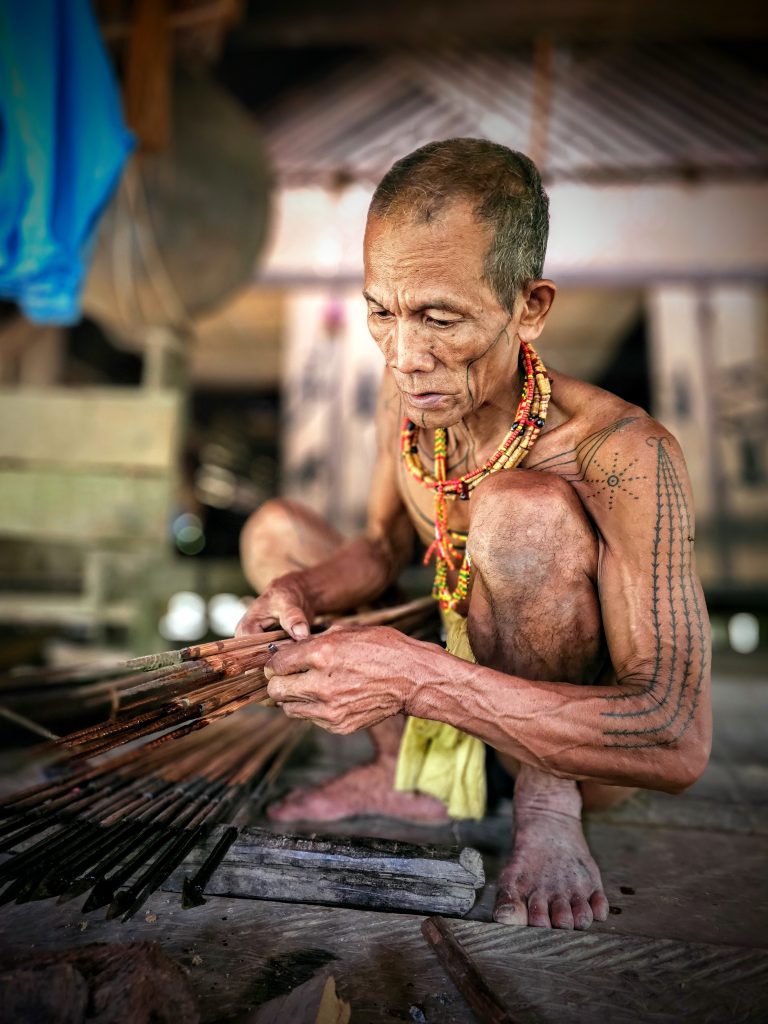
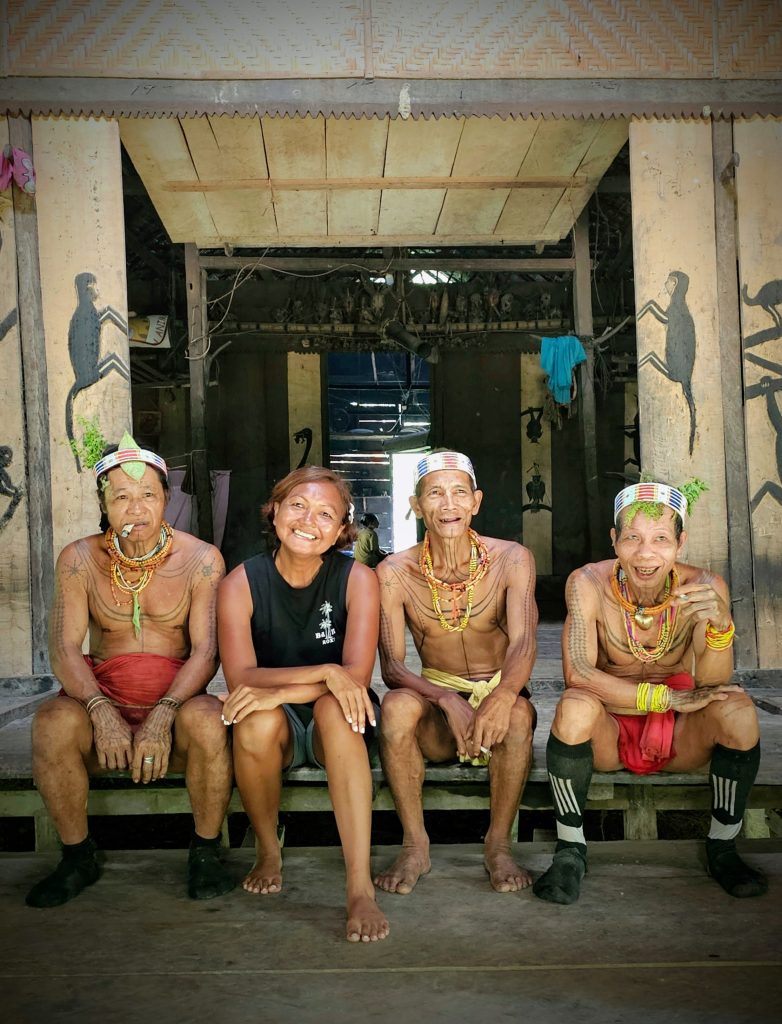
I tried to imagine sitting through hours of bamboo tapping, no anaesthetic, no machine, no modern anything – just patience, endurance, and the belief that beauty should hurt a little.
Listening to him, watching the way he honoured every plant, every tool, every story, I realised how far our modern lives have drifted from the basics. His world is stripped down, but not lacking. If anything, it felt… full.
The Children of Mentawai
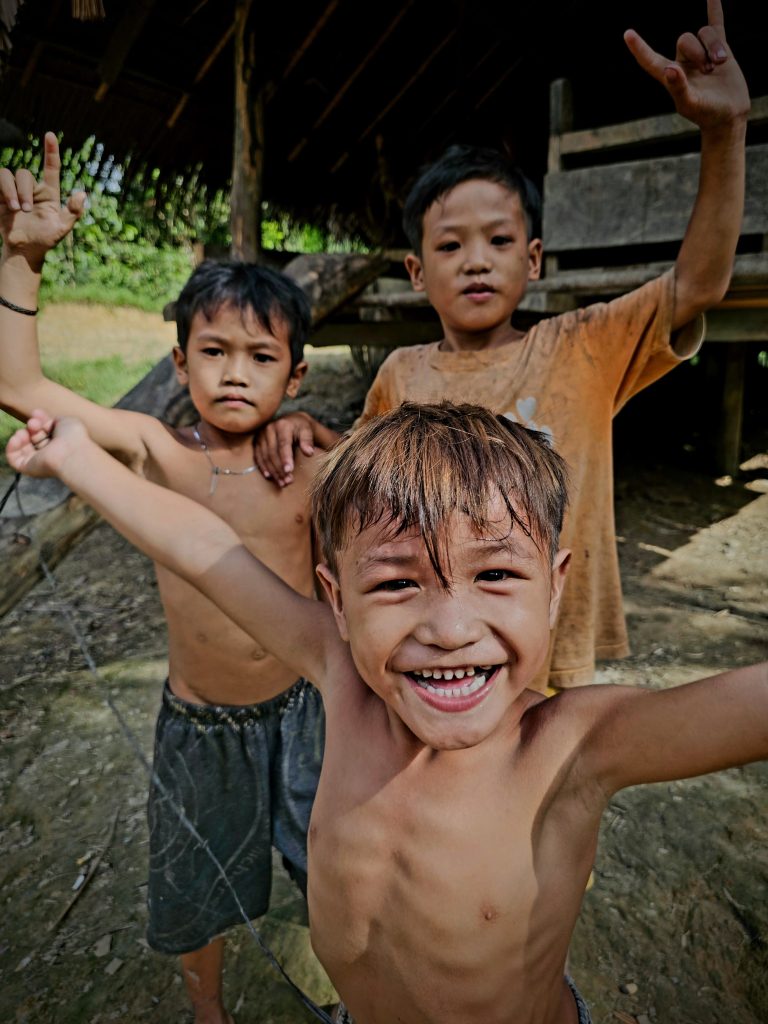
The children live the kind of childhood most of us lost without noticing.
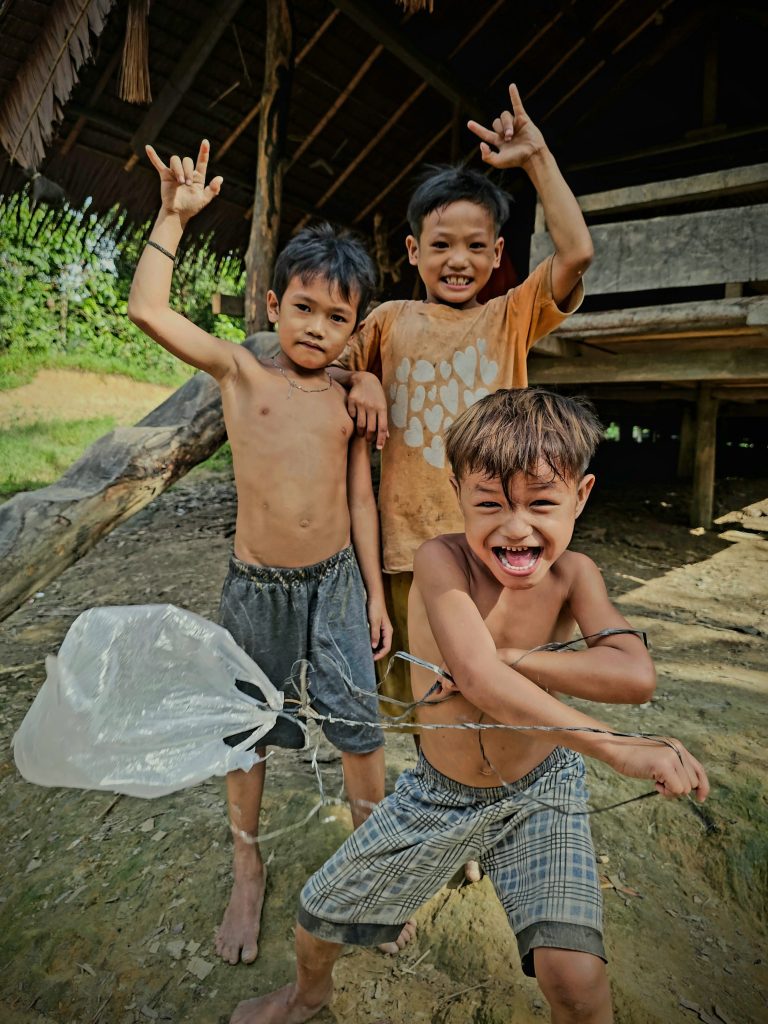
They run barefoot through the jungle like it’s an extension of their body. They climb trees effortlessly, create toys out of roots and strings, and laugh with a joy untouched by screens or noise.
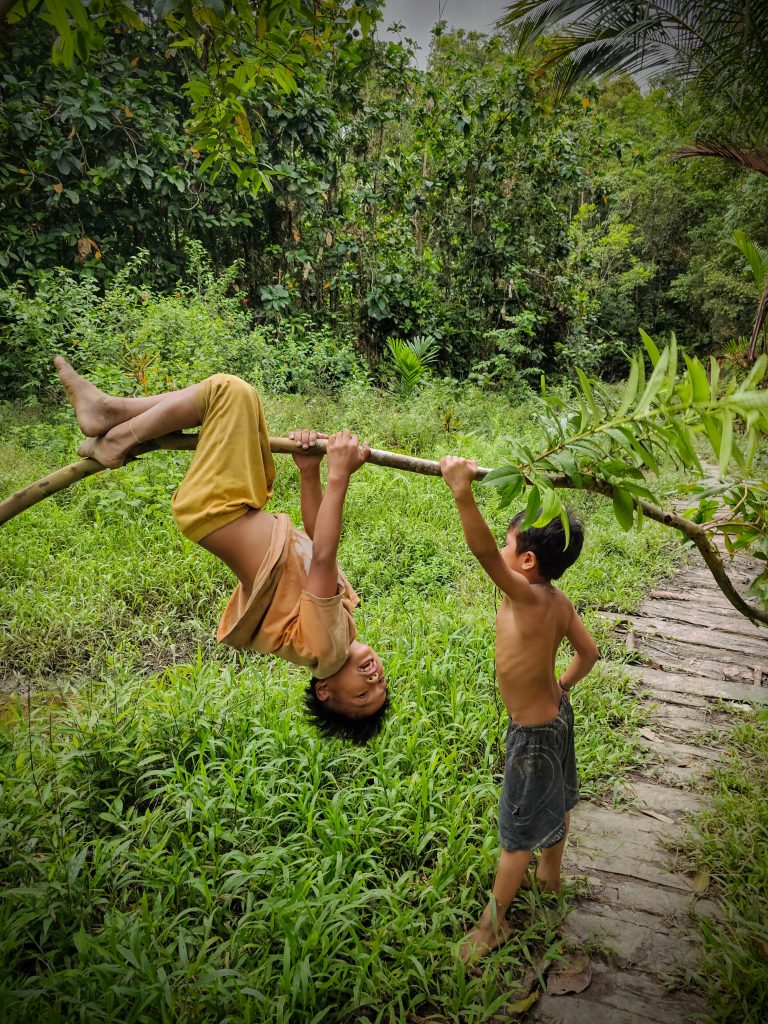
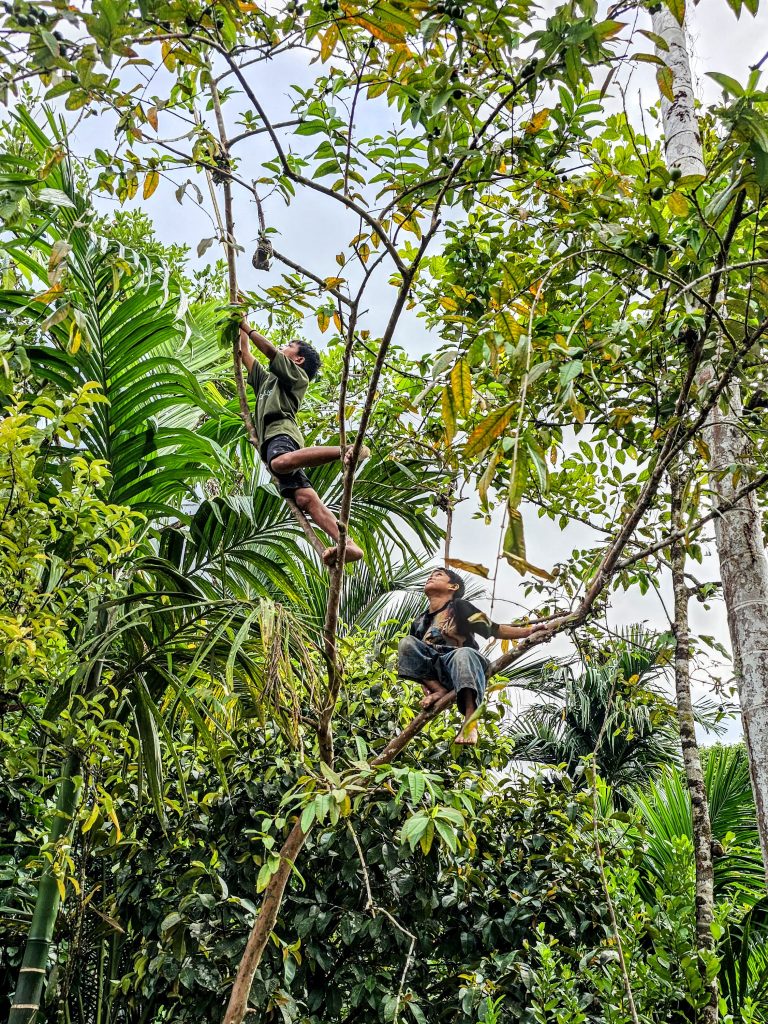
I brought notebooks and pencils – small things I thought they might enjoy. Anthony, a little boy with big curious eyes, held his pencil like a treasure. He ran around showing everyone, then fell asleep with it still in his hand. When he woke up, it was still there, clenched tightly.
That moment made my eyes well up. Something so small to us could mean everything to a child here.
Children here have almost nothing – yet they have enough. I have learned through my decades of travelling that children especially, who have nothing are the happiest.
The Women Who Carry the Tribe
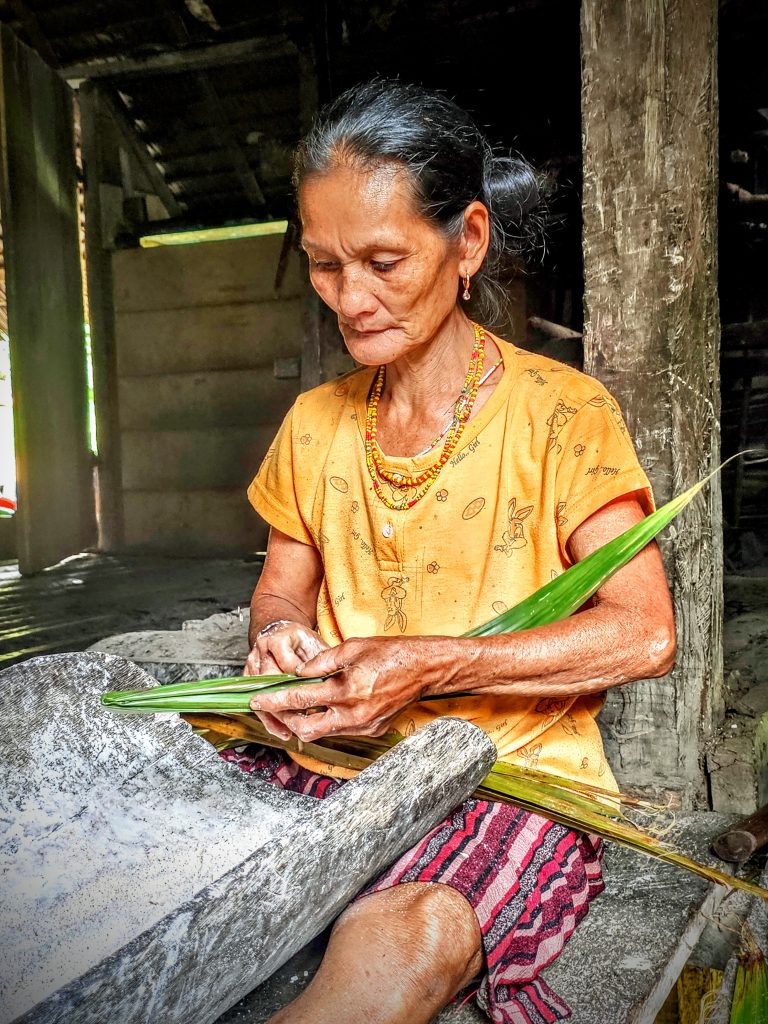
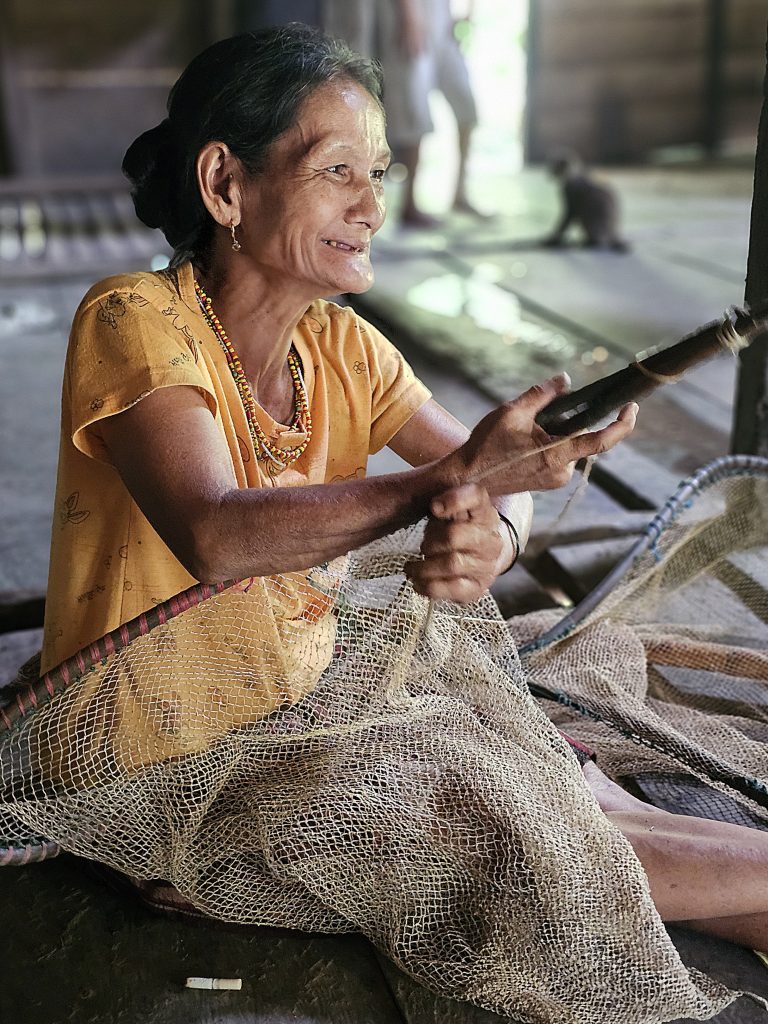
Angela, the shaman’s wife, amazed me. She fishes, forages, cooks for fifteen people, manages grandchildren who thunder across the floorboards – and chain-smokes without ever coughing. Not once.
I joked that fishing must be her therapy. She gets to be away from the crowd every time she’s out fishing. She just smiled, cigarette in hand.
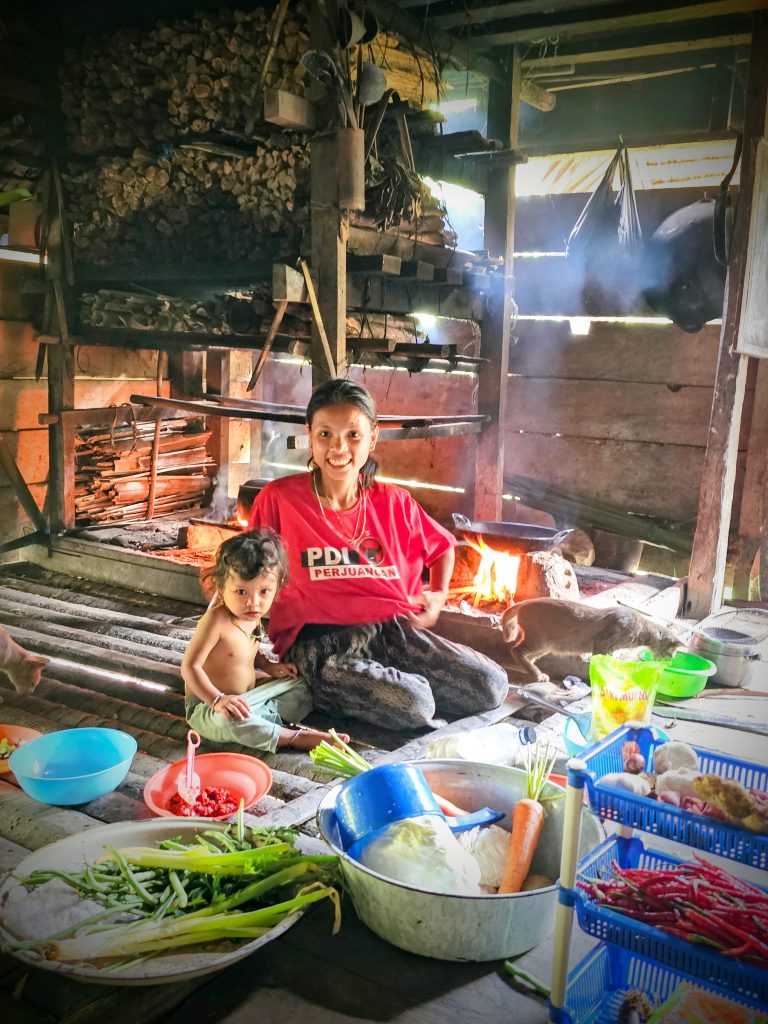
Then there’s Martina. Sixteen. A young mum. A baby always on her hip. She cooks, cleans, gathers water, and tends the fire all without a single complaint. She just smiles.
Early marriage is common here. Children usually attend school only until around fourteen. After that, life continues – marriage, babies, tending land, planting trees. Weddings aren’t about gold or money; the dowry is land, pigs, sago palms, coconut trees, durian trees – things that sustain a family for life.
It made me reflect deeply. In our world, education is everything. Here, knowledge looks different – more ancestral, more practical, more connected to survival. And somehow it works.
Fishing With the Mentawai Women
Women in Mentawai fish; men hunt. Simple. Clear.
Before fishing, the women dressed me up – a banana leaf skirt that we made in the morning, a headband, colourful handmade jewelry, and a bamboo tube slung across my back (which I later learned was the fish container, not decoration!).
We walked through the jungle barefoot. I enjoyed how walking barefoot keep me focused and grounded. I watched where I placed my feet each time.
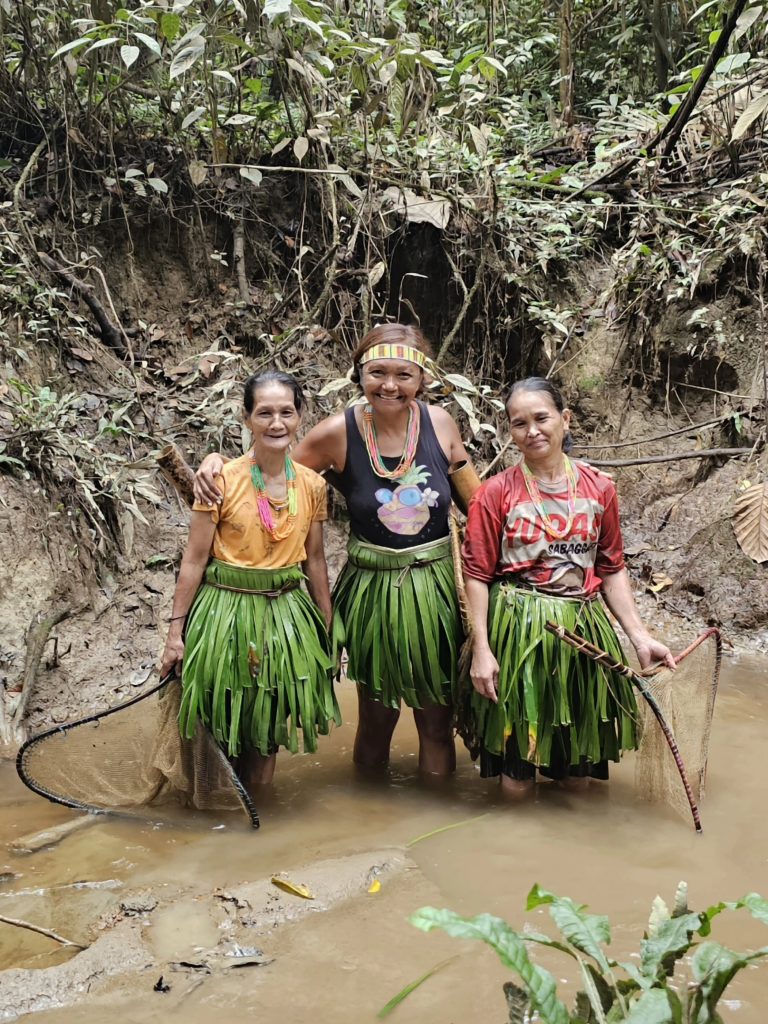
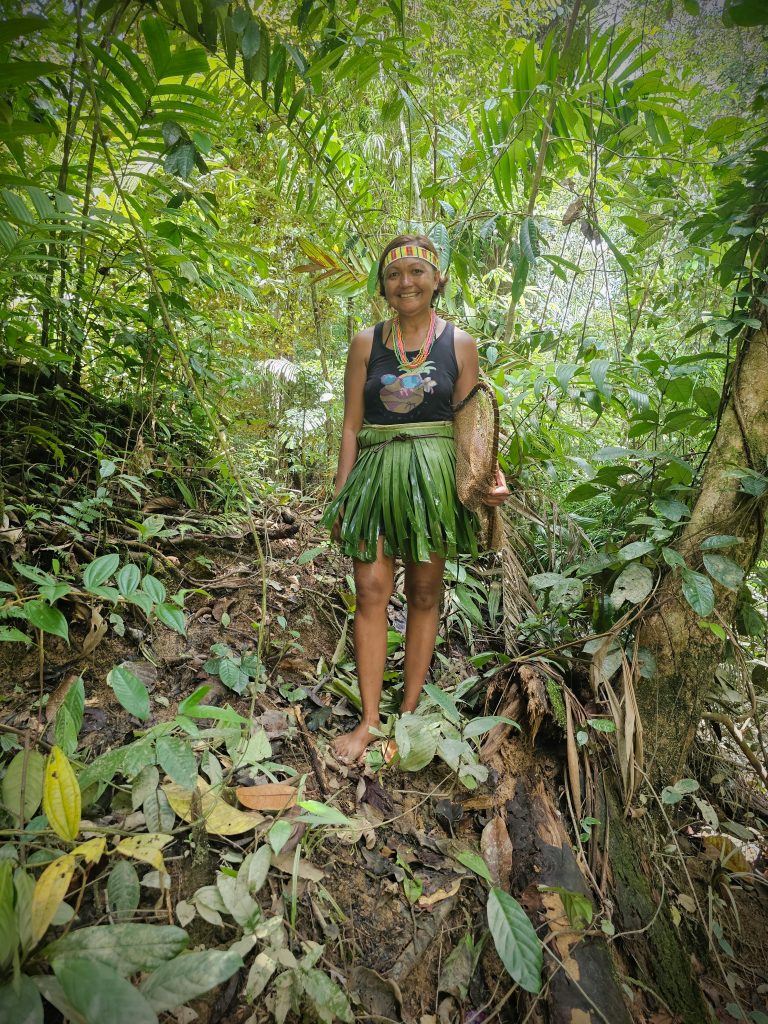
At the river, I attempted to use the net. I caught a couple of fish… then immediately lost them while trying to put them into the bamboo. The women laughed kindly – the way you laugh at a toddler determined to help. Eventually, I caught one prawn and three tiny fish. Not too bad for a first-timer!
The Mentawai Farewell
On my last morning in the Mentawai jungle, I was desperate for a shower, but noticed the water was brown and murky after the rain the night before. So I decided to wait until I get to the island of Siberut. Maybe I’ll find a clean river for a shower.
I spotted Aman Sergi, crouched by the riverbank, pounding roots and leaves. He told me a woman in the next village had just given birth and needed traditional medicine.
He added river water into the mixture, scooped the concoction into a bamboo tube, and without hesitation, handed it to me.
“Give this to the boatman,” he said in Bahasa Indonesia. “He will stop at her village. Someone will be waiting.”
I asked him how he even knew someone had given birth. He looked up, almost surprised by the question.
“A villager came to tell me,” he said simply.
Later, I found out that this villager had walked three hours through the jungle just to deliver the message – to announce a birth – to ask for help because the shaman is still the centre of life, healing, and hope here.
That humbled me in a way I still struggle to describe.
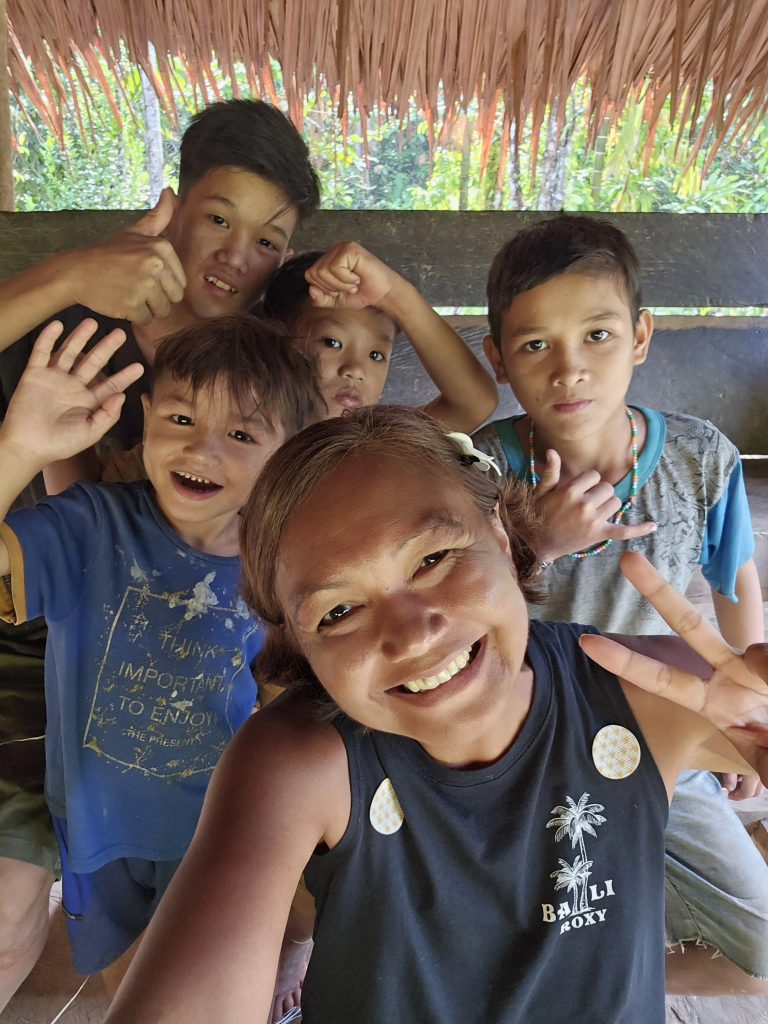
Soon it was time to leave. The children gathered around me, their little hands grabbing my legs, their faces full of the kind of sincerity only kids can hold. They hugged me one by one – some shyly, some clinging a little longer.
Anthony waved his pencil at me like a tiny trophy. The others giggled and ran circles around us. It was chaotic, beautiful, and unbearably emotional.
I kept swallowing the lump in my throat, trying not to let the tears spill too soon.
Leaving the Mentawai tribe wasn’t like checking out of a homestay. It felt like peeling myself away from a life I had been briefly adopted into – a life where community isn’t just a word, where people show up for each other without delay, without question, without expecting anything in return.
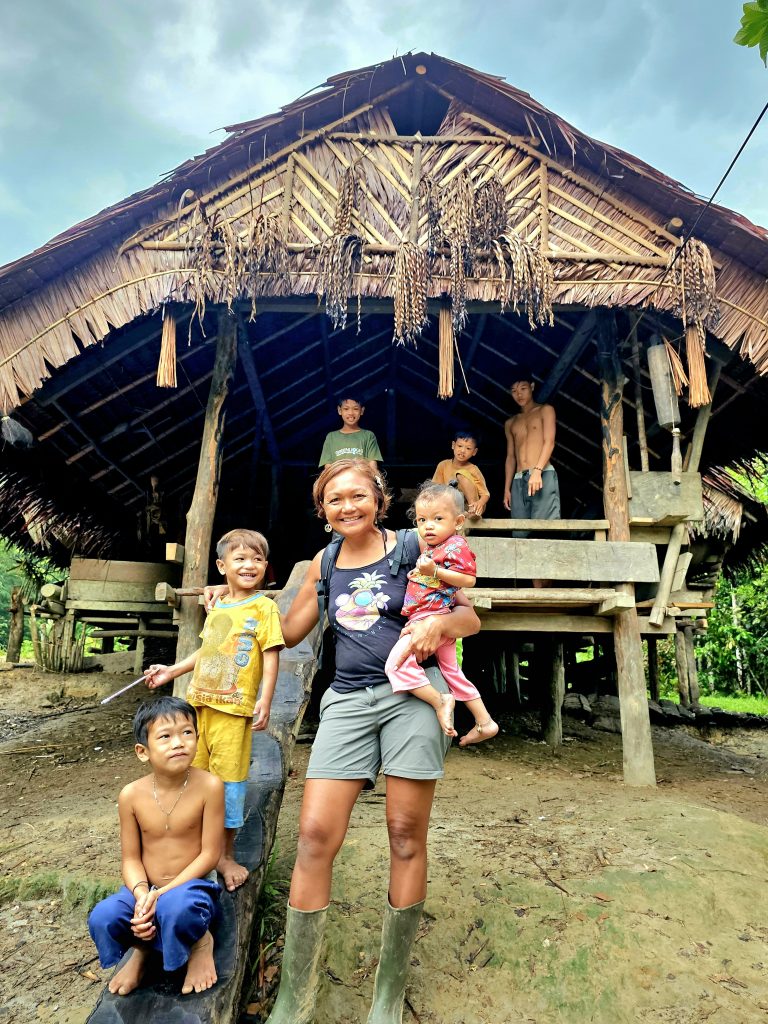
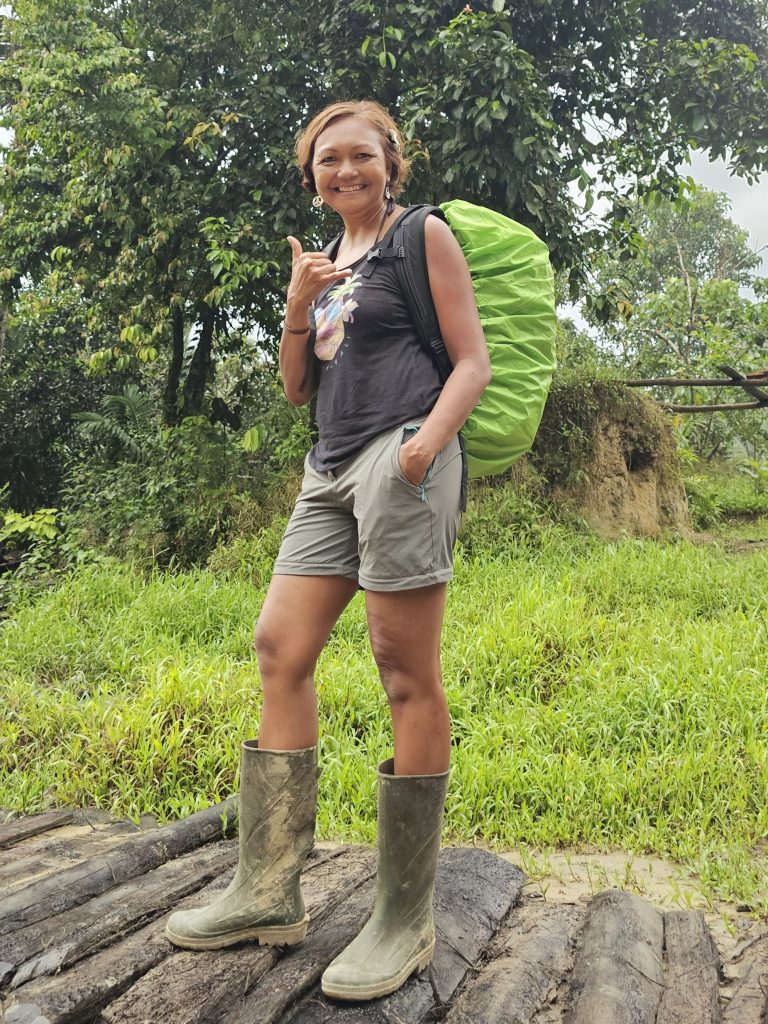
As I stepped onto the canoe and the engine roared to life, the kids stood by the river waving, shouting my name, their voices fading into the forest.
And somewhere between the river and the open sea, the reflection hit me. In a world overflowing with technology, convenience, and noise, it is these moments – these raw, unpolished, human moments remind you what actually matters: Gratitude. Connection. Simplicity. People.
Mentawai gave me all of that. And leaving felt like leaving a small part of myself behind.
Travel Tips for Visiting the Mentawai Tribe
- The best way to reach the Mentawai Islands is via ferry from Padang to Siberut.
- Expect simple living in the uma – no electricity, no running water, no phone connection
- Bring essentials: torchlight, mosquito repellent, dry bag, snacks,
- Small gifts like pencils or notebooks and frisbee iare great for the children
- A local guide is essential for navigating the river and jungle trek safely.
Final Reflections
Leaving the Mentawai tribe in Siberut reminded me that simplicity isn’t something to fear – it is something to learn from. The Mentawai culture, their uma, their way of life… it all showed me what community really means. My time with the Mentawai Tribe Indonesia wasn’t just an adventure. It was a reminder of the beauty that still exists in places untouched by the modern world. And it’s a journey I will carry with me for a very long time.
If you enjoy cultural stories like this, you can explore more in my Indonesia travel section.

Gave Venuscasinoae888 a spin last week. Good variety of live casino games, which is what I’m usually after. The dealers were professional. I was quite happy with my experience, check them out at venuscasinoae888.
Okgran, been playing there for a bit now, and honestly, it’s solid. Pretty standard stuff, but reliable and easy to navigate. If you’re looking for a dependable casino, it might be worth a look. Check it out: okgran
Toro777’s got a cool theme going on, I dig it. The gameplay is smooth and they seem to be fairly generous with free spins. If you’re looking for a fun, themed casino, give Toro777 a spin. Info here: toro777
56b9up
wt6jlc
OfXiygnTbIVtRfxejV
nhsq2d
SuperJiliLogin? Super easy! No problems so far. Get logged in nice and quick at superjililogin. See you online!
Top777Casino, is it really on top? Worth checking out to see. Top slots, top games? See for yourself at top777casino. Try mo!
Guys, I’ve been playing on ph8888 lately and I’m loving it! Ang daming games and the payouts are legit. G na kayo! Try it here: ph8888