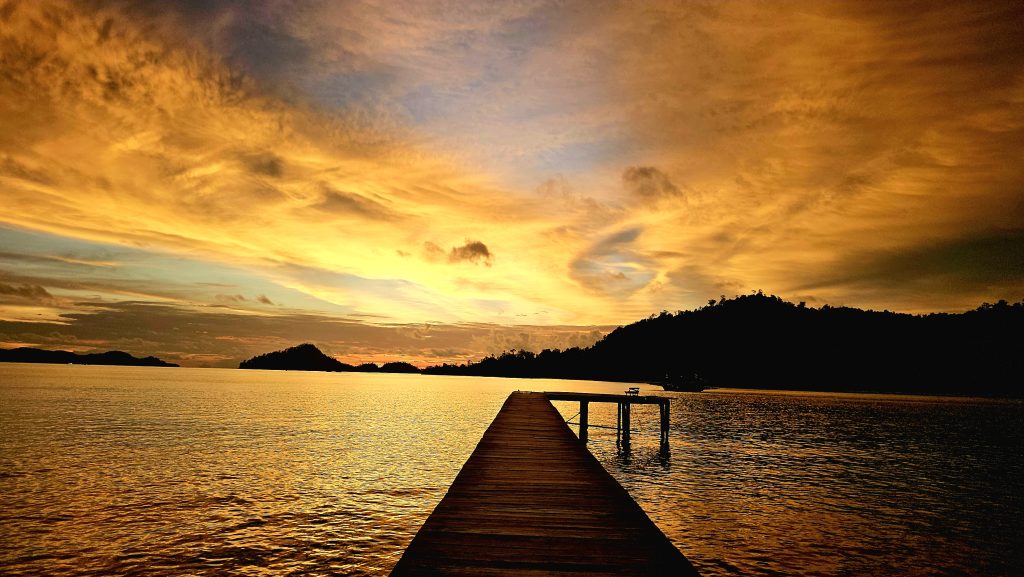
What happens when you stop letting algorithm decide where you should go
The travel algorithm problem is simple: your feed shows you the same ten beaches everyone else is seeing. The same infinity pools. The same sunset spots. The same “hidden gems” that stopped being hidden three million posts ago. The same hashtags : #Paradise
Your algorithm knows exactly where you should travel next. It analyses your likes, your saves, your three-second pause on that Maldives reel. It knows what will make you book, what will make you share, what will keep you scrolling.
However, here’s what the travel algorithm problem obscures: a coconut that takes twenty minutes because someone has to climb an actual tree. A dog who adopts you as his personal responsibility. Children who teach you more about joy than you teach them about English. Or a man who built a school when no one asked him to.
I found all of this at a place called Ricky’s Beach House in West Sumatra – not because it was trending, but because I deliberately looked away from everything that was.
This is what happens when you solve the travel algorithm problem by simply choosing to look elsewhere.
How the Travel Algorithm Problem Ended for Me
I was scrolling through Google Maps late one night, zooming into the coastline of West Sumatra, Indonesia, following a thread of road that looked more like a suggestion than an actual route. Not following recommendations. Not clicking on “popular destinations.” Just following a feeling.
And there it was – a pin, a name that kept pulling at me: Ricky’s Beach House, Sungai Pinang.
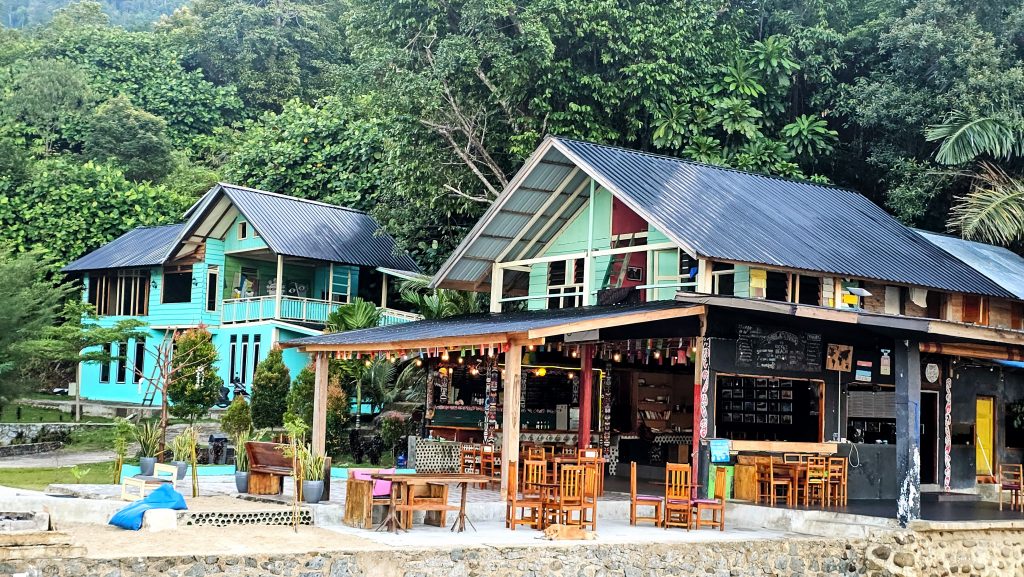
This is what happens when you let curiosity guide you instead of letting the algorithm decide. This is how you begin to solve the travel algorithm problem – one tiny pin on a map at a time. And this is exactly what I always do with my travels.
Three days later, I was there, ordering a coconut at Ricky’s Beach House.
When Coconut Takes Twenty Minutes: What Traveling Away from the Algorithm Actually Looks Like
When I arrived, I ordered a coconut at the restaurant. The staff asked me: “Twenty minutes okay?”
“Twenty minutes?”
“Yes. Someone has to climb the tree.”
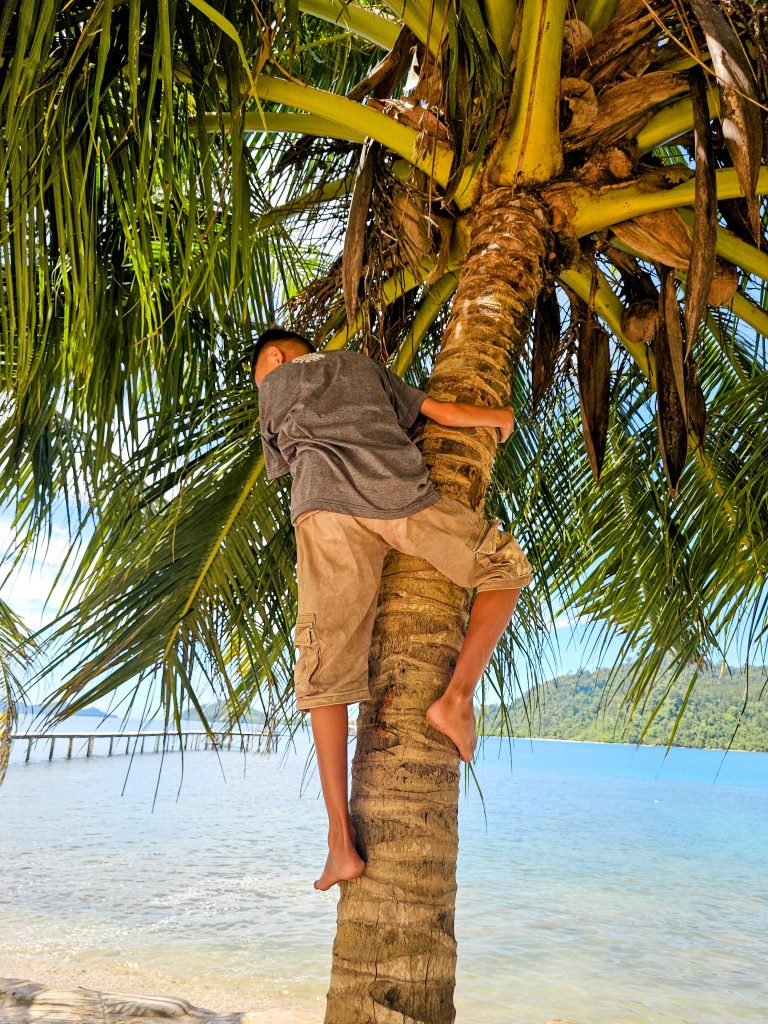
And suddenly I was waiting for a coconut the way coconuts have been harvested since the beginning of coconuts – with a person, a tree, a machete, and decent upper body strength.
When was the last time you waited for something genuinely real? Not Amazon-tracking real. Not ping-your-phone-when-it’s-ready real. Actually real. The kind of real that exists outside the algorithm’s understanding of what you want.
Twenty minutes later, it arrived. Still tasting of the tree it came from. I sat there sipping it, watching the tide, thinking about how rare this has become – waiting for something so simple. How strangely beautiful it felt. How completely absent from my curated feed this moment would be.
This was the first clue that I’d stumbled into something different. Something the travel algorithm problem had been hiding from me all along.
What Ricky Actually Built: Community-Based Tourism Beyond Algorithm Recommendations
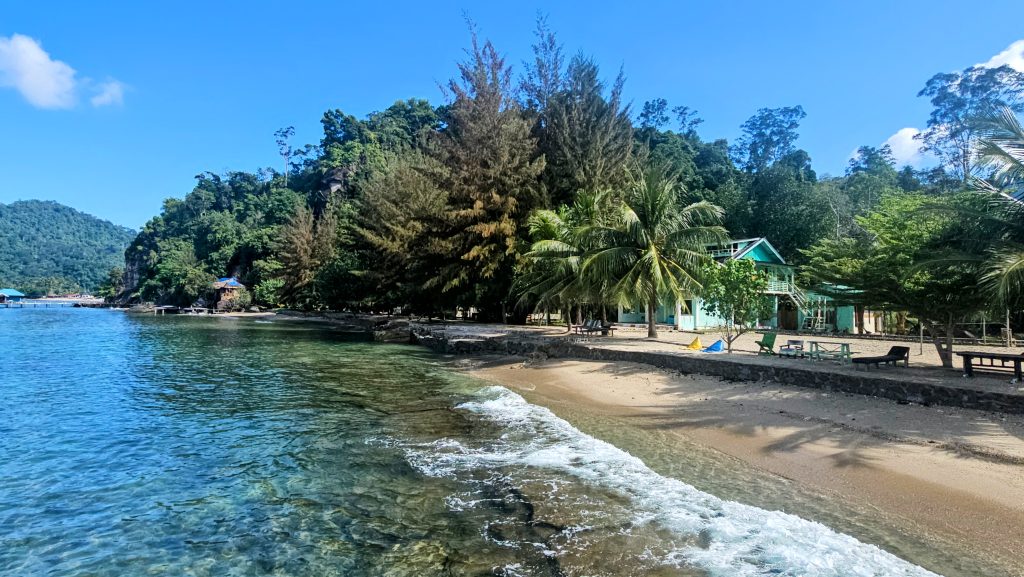
Here’s what you need to understand about Ricky’s Beach House in Sungai Pinang: it’s not about the beach. It’s not about the beachfront bungalows ten steps away from the shoreline, though they exist and they’re lovely. It’s not even about Micoh, the dog who appointed himself as my personal shadow and watched the waves like he owned them.
It’s about what one man who decided to do for his community through responsible tourism. Ricky.
Ricky built a training ground disguised as a guesthouse – a perfect example of sustainable tourism that benefits local communities.
Most of the staff come from nearby villages – families who live from the sea and the land, fishing and farming under the long sun. For many of them, opportunities to build new skills or imagine different futures aren’t exactly abundant, even when the desire burns bright.
So Ricky created something else.
The young people who work here don’t just work. They learn. Hospitality. Housekeeping. How to interact with travellers from dozens of countries. How to speak English and French and Dutch simply by being around people every day who speak those languages. How to gain confidence by being seen and heard and valued.
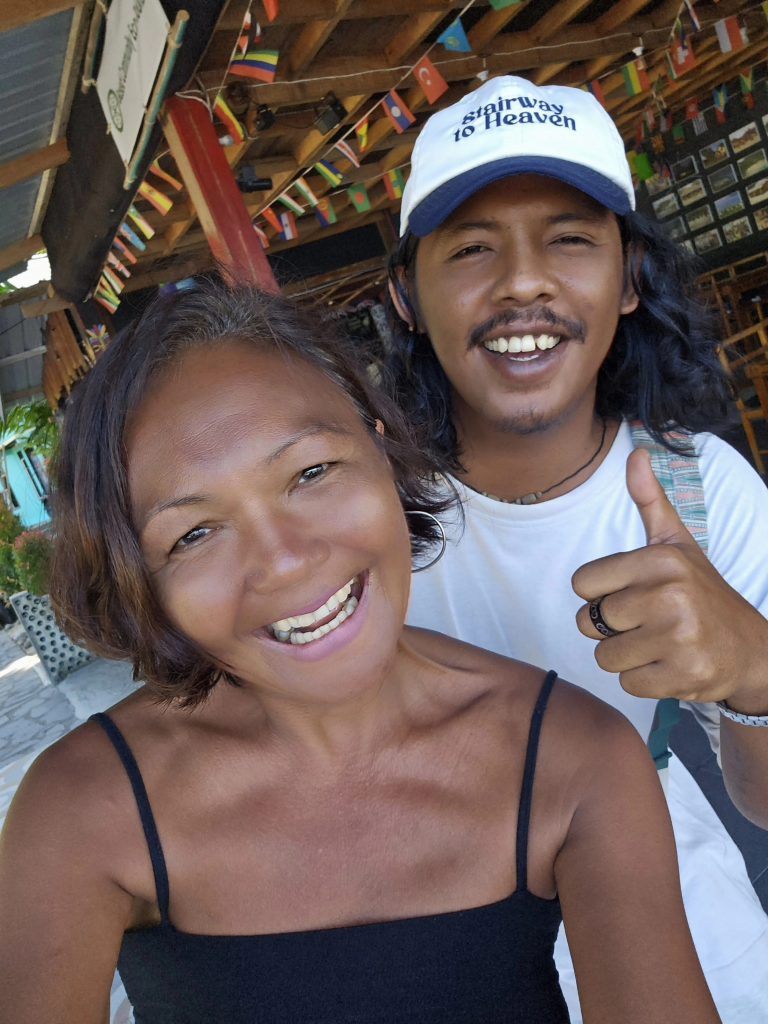
I spent hours talking with them – Pepe, Legga, Cibob, Geylang, Rian, Paul, Iwa. They all said variations of the same thing: that they’d learned more English here in months than in years of formal schooling. Not because they weren’t trying before, but because here, they get to practice with real people.
They hike with you. Take you out on boats. Play beach volleyball in the evenings. And somewhere between the laughter and the badly translated jokes, something quietly transforms.
This is Ricky’s quiet genius – building a model where everyone wins. Travellers get authenticity. Young people gain skills that actually matter. The village prospers. The cycle sustains itself.
I’ve stayed in beautiful places all over the world. Very few where the people behind the scenes are growing right alongside the guests. These are the places the travel algorithm problem keeps hidden because they can’t be reduced to a perfect photo, or a cinematic reel.
Education and Empowerment: The Real Story Behind Ricky’s Beach House – What Algorhythm Doesn’t Value
I visited the local school in Sungai Pinang on a Tuesday morning.
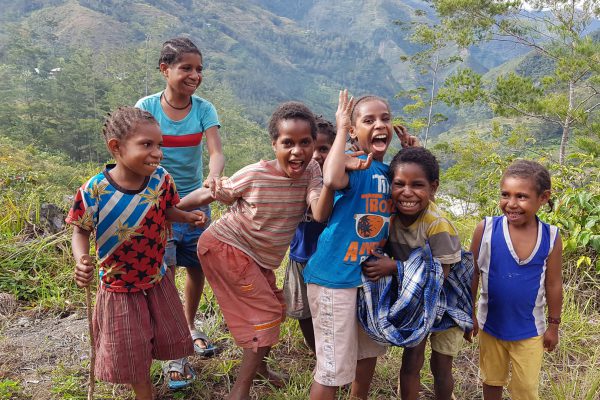
The children were on break, and suddenly I was engulfed – kids everywhere, pulling at my hands, desperate to show me everything. “Selfie! Selfie!” they kept saying, pressing close with smiles that could power a small city.
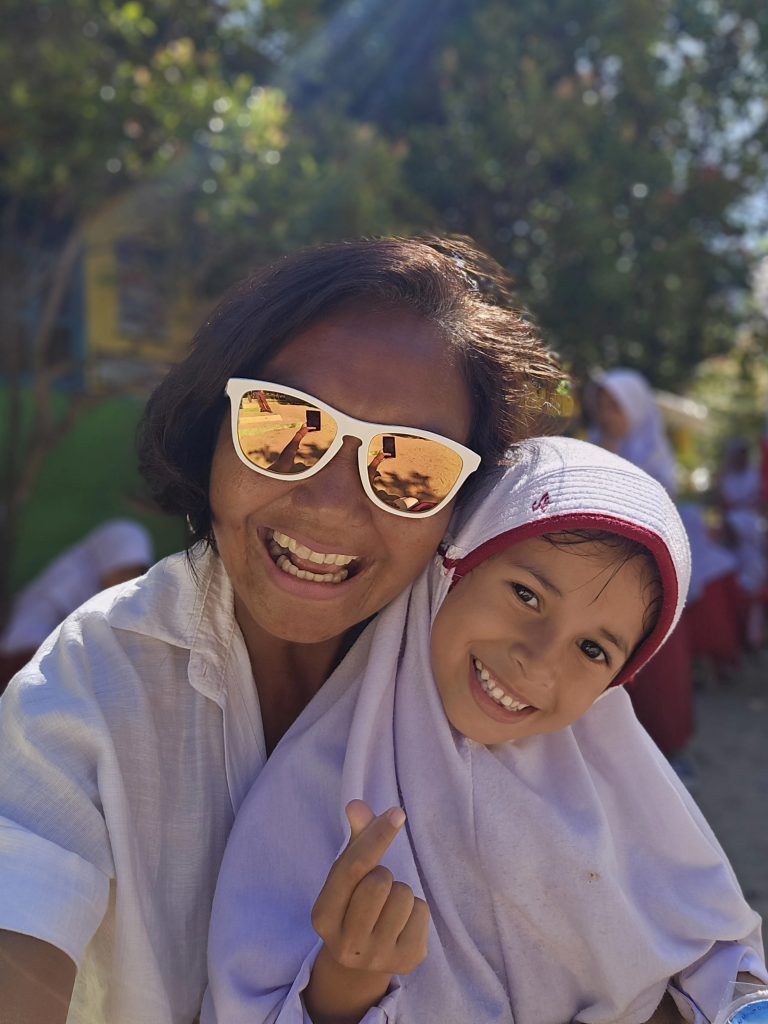
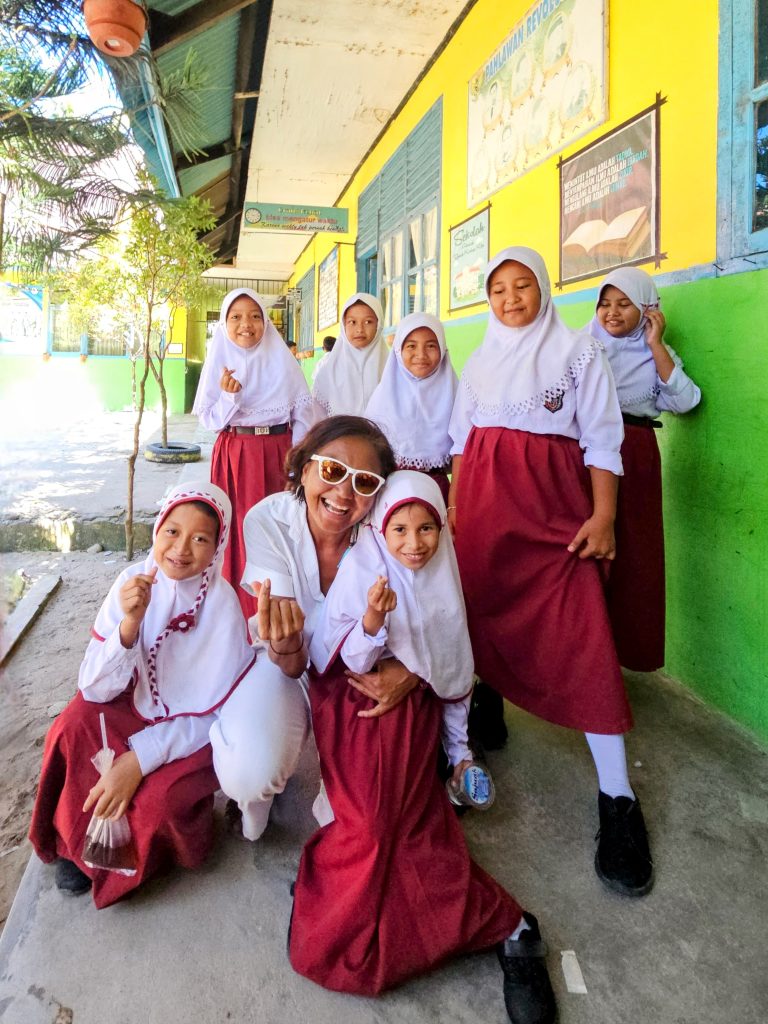
The building was old. Furniture broken or just missing. Some children sit on the floor during lessons because there aren’t enough desks. There’s no canteen – just village women waiting outside with three-wheeled carts, selling tiny bowls of cereal and small snacks.
The older kids ride motorbikes to local warungs for lunch. In their school uniforms. Weaving through the village like it’s completely normal, because here, it is.
And yet these children radiate joy. They’re curious, welcoming, making something beautiful from limited resources – a masterclass in resilience that puts my own life into stark perspective.

I kept thinking about my children back home. Their school has a swimming pool, technology in every classroom, the library with thousands of books, the canteen with hot meals and options for every dietary requirement. Resources are so abundant we don’t even notice them anymore.
However here’s what stopped me cold: these children, with their broken desks and floor-sitting and motorbike lunch runs, were just as bright. Just as curious. Just as deserving of every opportunity the world could offer.
And Ricky knew it.
It is in places like this that travel algorithm problem don’t exist.
The Edu-Camp: How One Lodge Changed Education in West Sumatra
That’s why Ricky built the edu-camp – a free learning centre for local children in Sungai Pinang. At his own cost.
Not because some organisation paid him to do so. Not for publicity or tax breaks or any external validation. Because these children needed it, and he decided to do something about it. He wanted to give something back.
The children learn English there. They discover art and music. They gain confidence that their voices matter, that what they create has value. Volunteers arrive from all over the world – travellers passing through who want to give something back, and these kids get to practice English with real people from different countries, different accents, different lives.

Every Sunday, local children pour through Ricky’s Beach House for what can only be described as structured creative chaos. They split into groups and are given a simple brief: create something. Anything.
Some compose music using bottles filled with sand, old stereos, pebbles. Others choreograph dances with the seriousness of professionals. A third group wanders the property collecting driftwood, shells, leaves, transforming them into art.
At the end of the day, they perform. They show Ricky what they made. What they imagined. What lives inside them.
Can you imagine what that does for a child’s confidence? To be told: here’s some time, here’s some space, now show us what you can do?
I wasn’t prepared when they arrived that Sunday. I was still in beachwear – mini skirt and casual top. Some of these girls wore headscarves. For a second, I wondered if I should change, but not one of them judged me. Not one uncomfortable glance or whispered comment. We just talked and laughed and danced like it was the most natural thing in the world.
Then we prayed together. I fit right in. And that acceptance – complete, unconditional – you can’t manufacture that. That’s what Ricky’s building. Not just a learning centre. A place where everyone belongs.
Watch how much funI had with these innocent souls here.
This is the kind of impact that exists beyond the travel algorithm problem. Human connection that can’t be measured in likes.
Beach Bonfires and Meaningful Connections: Why Soulful Travel Matters
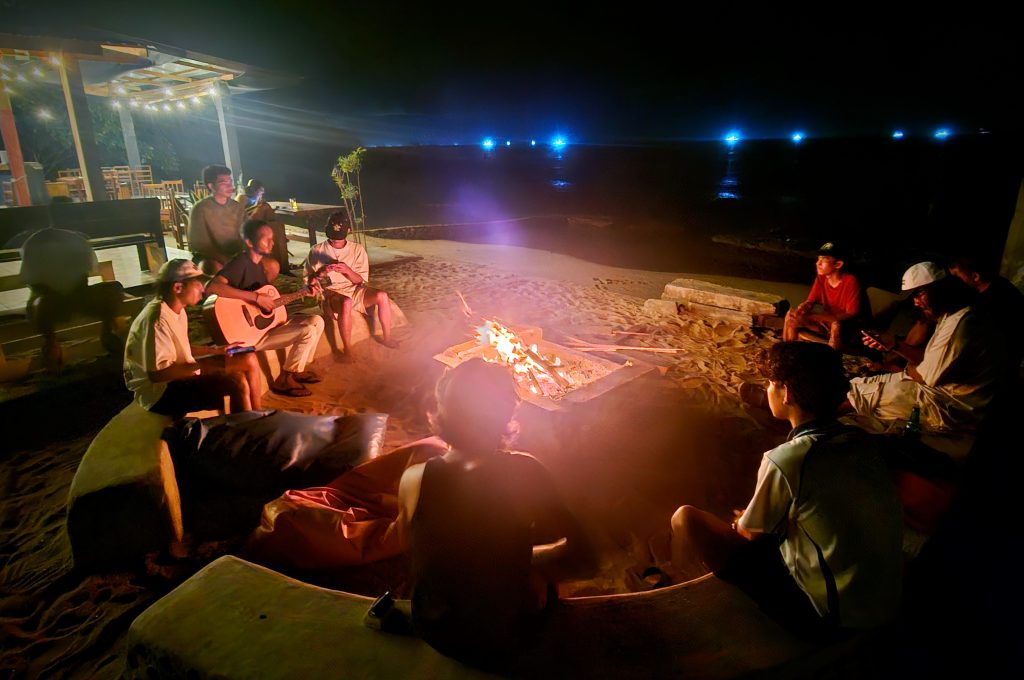
I’ve wanted a bonfire on the beach for years. The last one I had was almost four years ago. You know the image: flames against darkness, waves in the background, stars everywhere, the kind of scene that makes you believe in magic even when you’re far too cynical for such nonsense.
But there I was.
The bonfire nights at Ricky Beach House aren’t scheduled. They’re not on any website or itinerary. They simply happen, the way the best moments in travel always do.
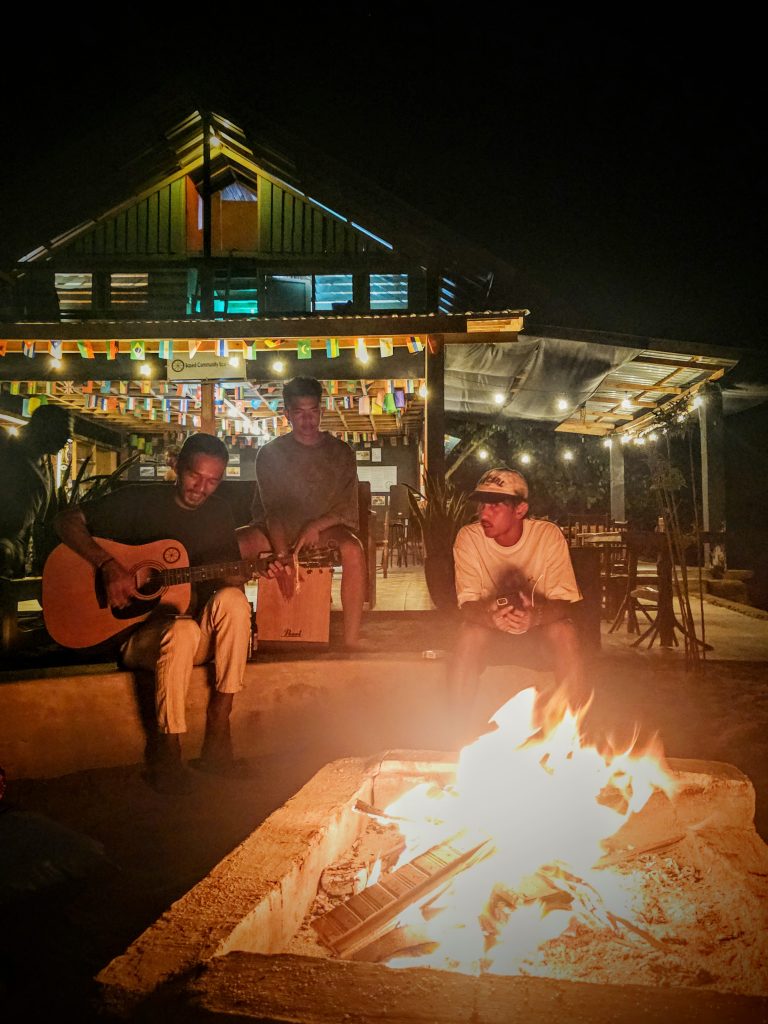
I was singing and dancing – sand in my toes, the sound of waves in the background, Robi playing guitar and Iwa on the cajón, and nothing about this moment would ever be replicated.
Everyone sang songs we half-remembered. There was laughter. Always smile and laughter. Someone missed a beat. Someone else invented a move that shouldn’t work but somehow did. The fire crackled. The music continued. And for those few hours, nothing existed except this circle of light and sound and shared joy.
This is how 2026 began for me. Totally away from travel algorithm problem. Not with resolutions or gym memberships or promises I’d break by February. But with this. Fire and music and complete strangers becoming friends over terrible singing and this overwhelming feeling that I was exactly where I was supposed to be.
Social Impact Tourism: What One Person Can Actually Change
Here’s what gets me about Ricky and his approach to sustainable tourism development. He’s improving the entire education system in this village without any external funding. No government grants. No charitable foundations. No corporate sponsorships. Just his vision, his commitment, and this community he’s built around a shared belief that everyone deserves a chance to be more than their circumstances would suggest.
One staff member told me he learned more English in six months at Ricky’s Beach House than in twelve years of formal schooling.
Twelve years.
Ricky’s training young people in skills that will actually help them. He’s creating opportunities where none existed. He’s building confidence in children who deserve every chance to shine, proving that with the right support, they absolutely will.
And he’s doing it all while running a beach lodge that never feels like it’s trying to be anything other than what it is.
How many people like this exist? How many souls dedicate themselves so completely to lifting an entire community without asking for recognition, reward, or even a thank you?
Not enough. Nowhere near enough.
And the travel algorithm problem ensures you’ll never find them, because they’re not optimised for engagement.
Island Hopping Adventures: Seronjong and Merak Island, West Sumatra
If you think the mainland is stunning, take the boat trip to Seronjong and Marak Island—two of West Sumatra’s most pristine and undiscovered islands.
The water is that impossible shade of blue that makes you question reality. Fine white sand. Not a soul in sight. Just you, the ocean, and pristine beauty that makes Greek islands look a bit ordinary. This is what off-the-beaten-path travel in Indonesia really looks like.
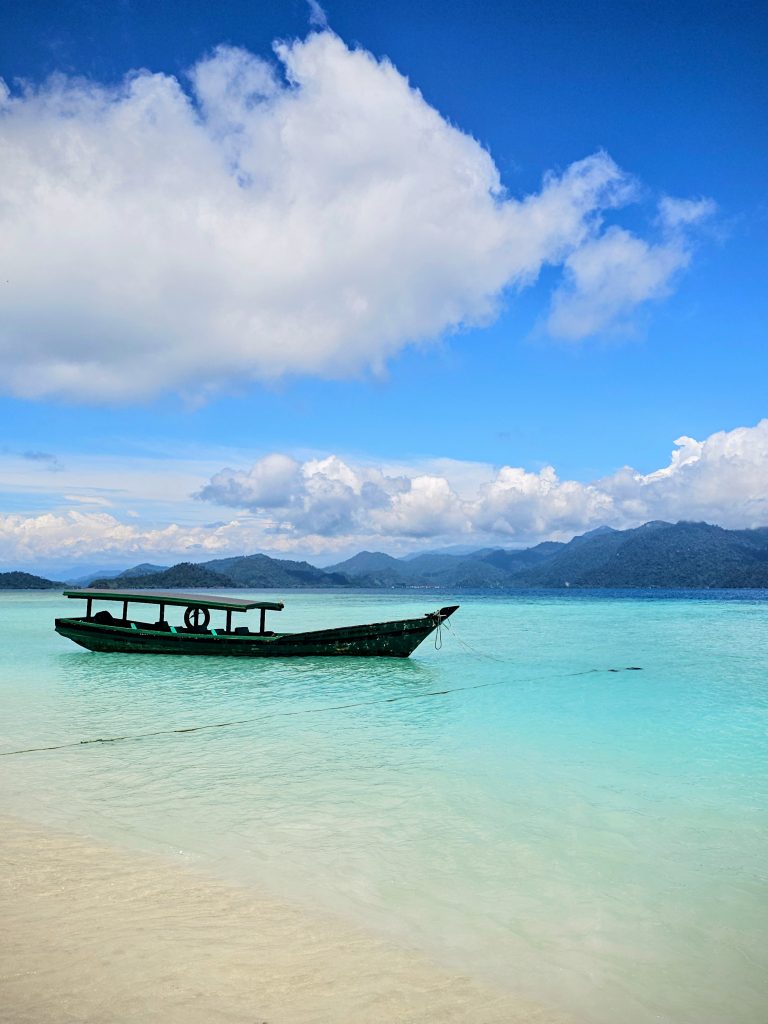

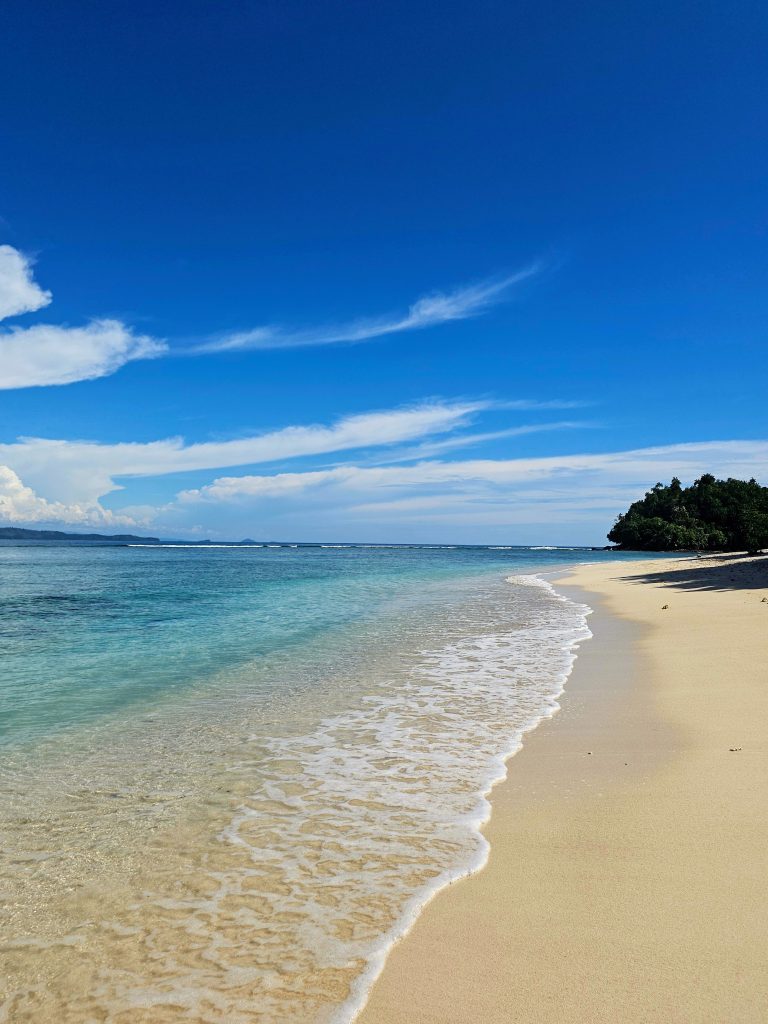
On the way to Marak Island, our boat pulled up alongside a cliff jutting from the ocean. Paul, the boatman who’d spent the journey chatting to me in English despite insisting he was “shy” and “not confident,” pointed up at two platforms carved into the rock.
“Five meters,” he said, gesturing at the lower one. Then, with a grin: “Ten meters. You want to jump?”
I’m fifty-one with a dodgy back. My knees were already wobbling just looking at the height. I’d come here to relax, not to test whether middle age and gravity were still on speaking terms.
But I kept looking at it. And thinking about how my heart would feel if I left without doing it.
So I climbed up. Stood at the edge. And jumped.
It was bloody awesome. Have a look at it here.
Here’s what gets me. I’ve been traveling to Indonesia since 1993. The more I explore this country and its beaches, the more I think there’s really no need to fly twenty-four hours elsewhere. Why would I, when this exists practically on my doorstep? Empty islands. Turquoise water. Cliff jumps for the foolishly brave. And not another tourist in sight.
This is what paradise looks like when it hasn’t been discovered yet – when travel algorithm problem hasn’t turned it into content.
What This Place Taught Me About Meaningful Travel Experiences
As I prepared to leave Ricky’s Beach House, watching the sunset paint the sky in impossible colors while Micoh snoozed at my feet, I realised this place had fundamentally changed how I think about travel and tourism.
It’s not about collecting destinations or ticking off bucket lists. It’s not about the photo that will get the most likes or the place that sounds most impressive when you mention it at dinner parties.
It’s about finding places that count hearts, not heads. Places that leave you different than when you arrived. Places where your presence contributes to something meaningful, where the exchange goes both ways.
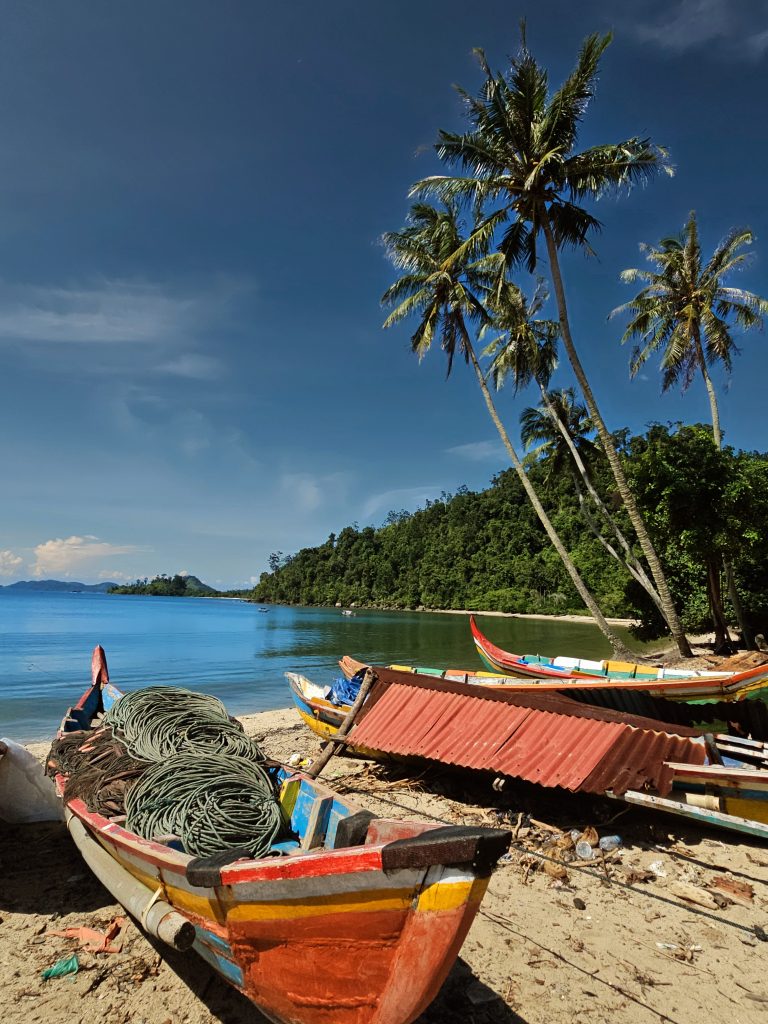
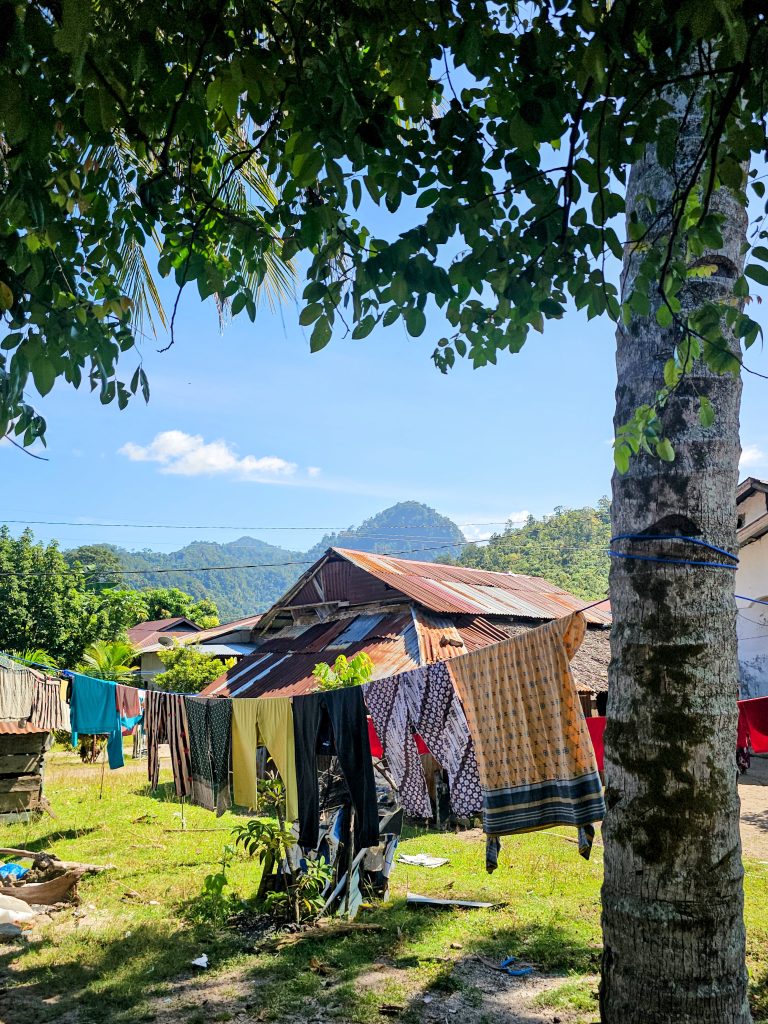
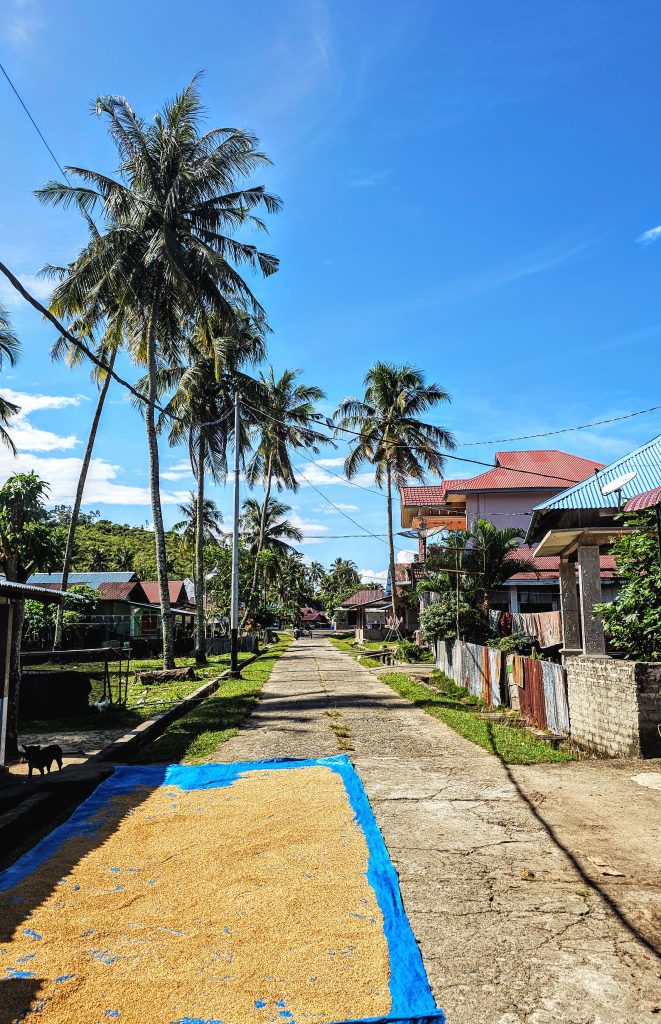
Walking through Sungai Pinang, I saw a community operating on principles most of the world has abandoned. Rice grains drying on tarps spread across roads. Anchovies curing in the sun on main thoroughfares. And everyone – drivers, pedestrians, motorbikes, simply navigating around them. No barriers. Just mutual respect and the understanding that we protect each other’s livelihoods.
On the beach, fishermen spent hours pulling massive nets under brutal heat, backbreaking work that feeds families and sustains the community. A stark reminder of where our food actually comes from, and the human effort behind every meal.
This is real. This is what exists when you solve the travel algorithm problem by following tiny roads on maps, when you zoom into coastlines and follow feelings you can’t quite explain.
The Future of Travel: Choosing Ethical and Responsible Tourism
In an era of overtourism and Instagram-driven travel, places like Ricky’s Beach House offer something increasingly rare: genuine connection to place and people. This isn’t poverty tourism or voluntourism with a guilty conscience. It’s ethical travel done right, where your presence actively contributes to community development and sustainable tourism practices.
What Ricky has created in Sungai Pinang is a blueprint for responsible tourism. One person decided to make a difference, built something meaningful, and attracted a community of like-minded souls to support it.

No massive investment. No complex organisational structure. Just commitment, consistency, and genuine care for the people around him.
The world is full of beautiful beaches. Algorithm will show you a thousand of them today alone. But how many of those beaches come with a man who built a school? With children discovering their potential? With young people learning confidence alongside hospitality? With a community transformed by education and opportunity?
How many come with a twenty-minute coconut, fresh from the tree, that teaches you something about patience and realness and what we’ve lost in our efficient, optimized, delivered-in-thirty-minutes-or-less lives?
This is an invitation. Not to Ricky’s Beach House specifically – though you should absolutely go there if this story speaks to you – but to a different kind of travel. To places that don’t dominate your social media feed. To experiences that transform rather than merely entertain. To communities that welcome you not as a walking wallet but as a human being with something to offer.
These places exist. They’re out there on tiny roads, at the end of coastlines, marked by small pins on maps that most people zoom right past….. places your feed will never suggest because they can’t be reduced to a hashtag.
All you have to do is be willing to follow them. That’s how you solve the travel algorithm problem. You simply choose to look elsewhere.
Ready to Solve Your Own Travel Algorithm Problem?
Ricky’s Beach House is located in Sungai Pinang, West Sumatra, Indonesia, approximately two hours drive from Padang (PDG airport). They welcome travellers year-round and volunteers who can teach English, art, music, or other skills. Come with an open mind, flexible expectations, and a willingness to be part of something meaningful.
For more details, I’ve written a more detailed section on Ricky’s Beach House here.